.svg)
.svg)
Discover .snapback
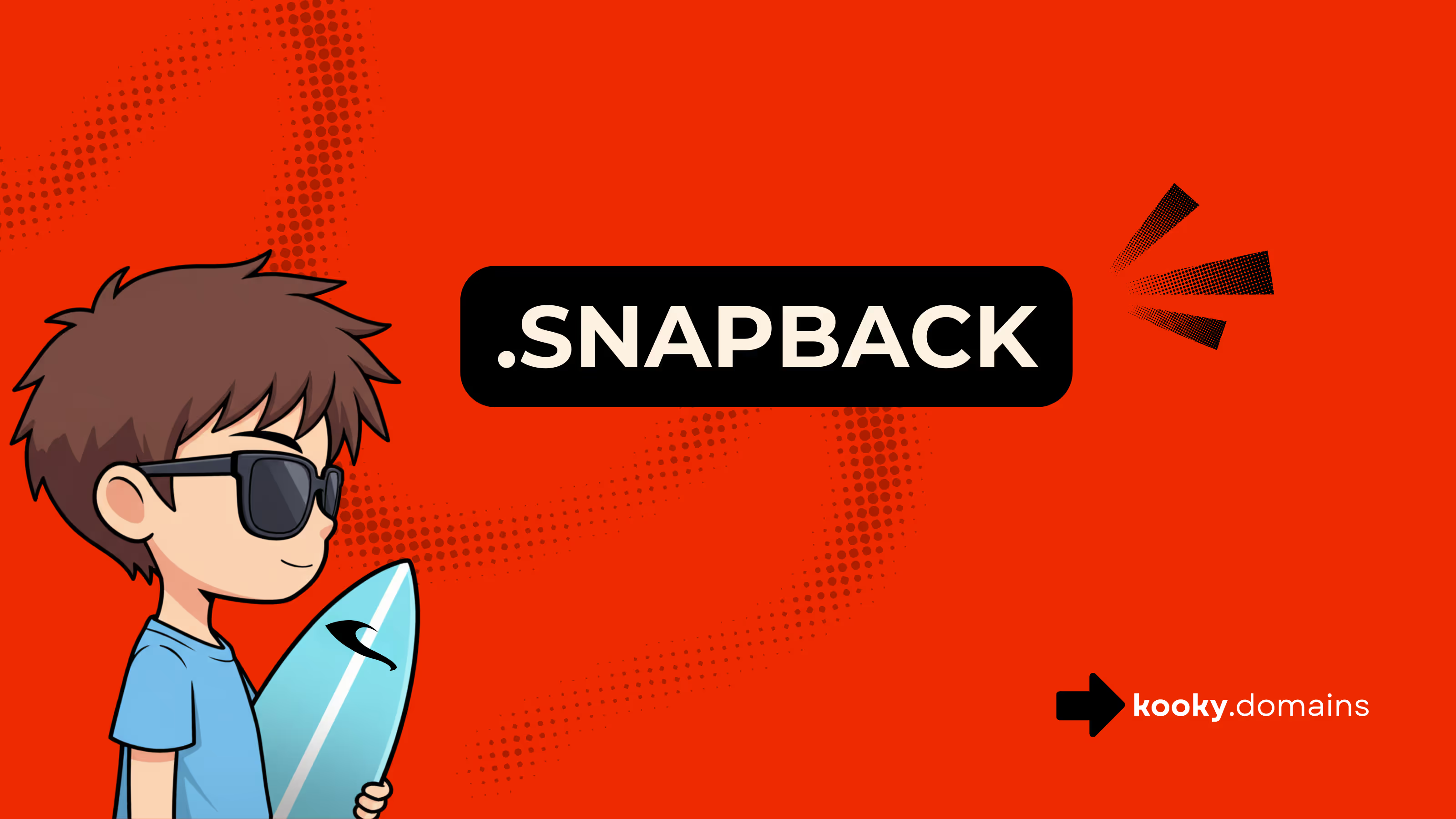
A snapback used to be simple, a hat you grabbed on the way out. Now it’s closer to a signature. People clock it like a tell, taste, tribe, and intent, all in one. When someone says snapback is now a Bloodline, they’re not talking about stitching or a colorway, they’re talking about identity you can stand on.
That’s why the loudest flex isn’t the product anymore, it’s the proof. Who are you, and where’s the trail that backs it up, the work, the wins, the people who vouch for you, the receipts? If you’ve ever watched a name get copied while the original builder gets ignored, you already get the tension, and you know why this mindset hits.
This is a drop manifesto for the sharp. It welcomes the builders and calls out the knockoffs. The Bloodline lives where identity can’t be rented or wiped on a whim, and that’s the point of Kooky onchain domains powered by Freename, a name you own, not a borrowed username that can disappear.
Bloodline isn’t about being born into anything. It’s about building something that outlasts the day’s hype. In plain terms, a Bloodline is a reputation that gets passed forward because it’s consistent, not because an ad told people to care.
Think of it like a family crest, but modern. A crest doesn’t work because it’s pretty, it works because it’s recognized. It carries a record of who showed up, who kept promises, who didn’t fold under pressure. A name can do the same thing. Over time, it starts to mean something even before you speak.
That’s why Bloodline is about reputation, consistency, and receipts. You can copy a logo. You can copy a fit. You can’t copy years of showing up in the same places, under the same name, doing the same kind of solid work.
The cleanest part is also the hardest part. Bloodline energy doesn’t need to yell. It just keeps moving, and people notice. When the story is real, it sticks to the name, and the name starts to carry weight.
A snapback is easy to buy. Meaning isn’t. The shift is simple: the snapback went from “what you wear” to “what you signal.”
Picture two people wearing the same cap. One person shows up every week, ships projects, helps friends get unstuck, and keeps their word. The other pops in when it’s trendy, posts a flex, then disappears. Same hat, different signal.
That’s how culture works. The gear is the wrapper, the signal is the pattern underneath. Online, that signal gets even sharper because people don’t meet you first, they meet your name first. Your handle, your domain, your profile, your links, they become your front door.
If the name keeps changing, the story feels thin. If the name stays steady and the work keeps landing, it starts to feel like lineage.
Knockoffs don’t always look cheap. Sometimes they look perfect. The giveaway is the behavior. Originals build history. Imitators borrow moments.
Here’s what originals do when they move like Bloodline:
Knockoff moves are louder, and shorter-lived:
Bloodline thinking doesn’t mean you’re better than anyone. It means you play the long game, and you care about what your name stands for when you’re not in the room.
A vibe is fun, but it’s fragile. A real identity needs a home base you control.
Onchain domains are a simple idea: it’s a name recorded on a blockchain that your wallet controls. Instead of a username that belongs to an app, your name is tied to you. That matters because apps can change the rules overnight. They can lock accounts, take handles, or vanish. An onchain name is built for ownership, not permission.
In this Bloodline frame, an onchain domain becomes your badge and your backbone. It’s where your story can live without being chopped into pieces across platforms. It’s also how you stop looking like a copy, even when you’re wearing similar styles as everyone else.
Kooky domains are onchain, owned by Kooky, and powered by Freename. The point is not tech for tech’s sake. The point is to give the Bloodline a place to live where the name has weight, and where people can check that it’s really you.
Social usernames feel like property until they don’t. A platform can reclaim inactive handles. A policy change can wipe years of work. A report wave can lock you out while you’re asleep. If you’ve ever watched someone lose a handle they built for years, how does that not change the way you see “ownership” in the first place?
Onchain identity is different because control comes from your wallet, not a customer support ticket. The record of who owns the name is public onchain, and moving it usually means using the wallet that holds it. You don’t have to “earn” permission to keep it by playing nice with an algorithm.
That doesn’t make onchain names magic. It does make them sturdier as a foundation. If your identity matters to your work, your community, or your creative output, a sturdy foundation is the whole point.
Bloodline isn’t just what you claim, it’s what stays consistent across places.
An onchain domain can act like an identity hub. You can point it to a landing page, link out to your main socials, or use it as a clean way to share where people should find you. In some setups, it can also connect to wallet addresses, making it easier for others to confirm they’re interacting with the real account, not a lookalike.
The win here is simple: fewer chances to get impersonated, and fewer chances to confuse your own audience. When the same name shows up everywhere, it reads like a crest. People don’t have to guess if it’s you. They can recognize the pattern.
This is also where taste shows up again. Anyone can stack links. Not everyone can keep a clean, consistent identity that feels intentional. The Bloodline is built in those quiet choices.
You don’t earn Bloodline status by saying you have it. You earn it by moving like it’s already yours.
Start with behavior. Then add proof. Then keep it steady long enough that people stop asking questions.
This is where the drop mindset becomes practical. Choose a name that won’t embarrass you later. Set up a simple identity hub. Use the same name across the places you show up. Keep your story consistent, and keep showing your work.
Also, stay sharp about safety. Verify official sources before you connect a wallet. Don’t click random mint links in DMs. Never share seed phrases, not with “support,” not with friends, not with anyone. Bloodline energy is protective, not reckless.
A good onchain name feels like it could sit on a sign, a site, a byline, or a collar tag and still make sense. It’s closer to a house name than a joke. You want something you can grow into.
Use a few simple checks:
If it sounds like a meme that needs today’s context, it’s probably a trend name. If it sounds like a signature, you’re closer to Bloodline.
Proof is quiet, but it’s loud to the right people. Originals don’t chase every room. They build one room, then they keep improving it until it can’t be ignored.
A few receipts that compound over time:
Then protect the lane. If someone copies your look, let them. If someone tries to copy your story, make it impossible by being present, being consistent, and keeping your name tied to real output.
Snapback isn’t the product anymore, it’s the marker. The Bloodline is what sits under it, the taste, the proof, the steady trail of work and presence that can’t be faked for long. People can copy the outside all day, but they can’t copy history.
If you want the Bloodline to live somewhere solid, set your identity up with Kooky onchain domains powered by Freename, then keep it consistent across where you build. Claim the name, connect your links, and show up like the story matters, because knockoffs only ever learn the surface.