.svg)
.svg)
Discover .snapback
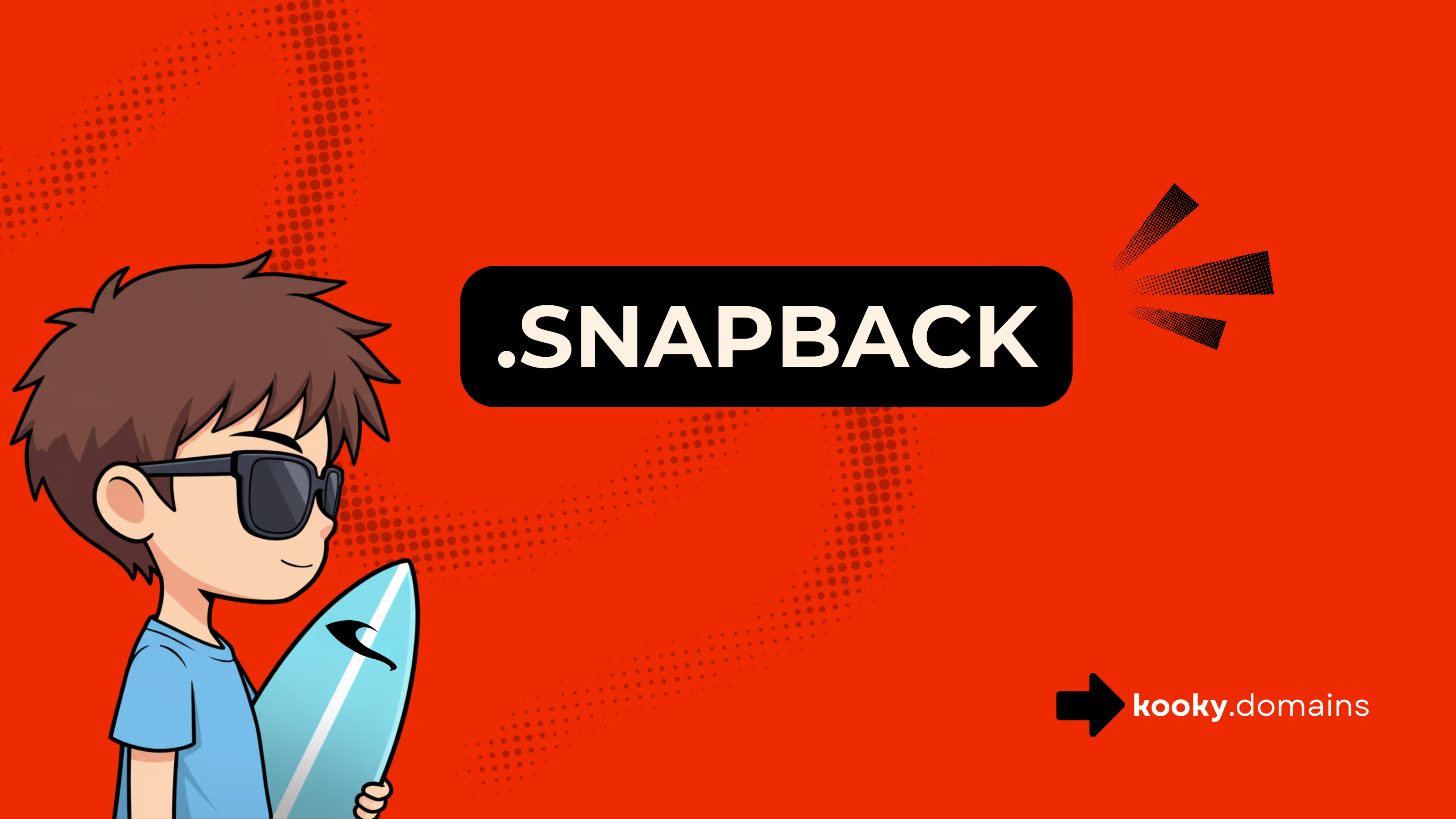
A snapback cap is a simple thing with a loud message. You pick it, you wear it your way, and it becomes part of how people recognize you. That same idea is why owning .snapback forever has become a catchy phrase in onchain identity circles.
In plain terms, “owning .snapback forever” means your .snapback name lives in your wallet, under your control, not as a rental you renew each year through a traditional registrar. It’s closer to owning a collectible than leasing an address.
This guide breaks down what .snapback is meant to represent, how onchain name ownership works, what you can do with it right after you mint, and the security habits that keep “forever” from turning into “lost.”
A .snapback onchain name is designed to feel like a tag you’d actually use. It’s short, easy to say, and tied to a real-world signal: streetwear confidence, community status, and personal style. People don’t fall in love with “a domain.” They fall in love with a name that fits on a hoodie, in a bio, on a set list, or in a group chat.
If you’ve seen names like name.snapback, the pitch is simple: one identity you can carry across apps that support onchain domains. Not every onchain naming system is identical, and public info about .snapback as a standardized, widely documented extension is limited, but the ownership model people mean is consistent across many onchain domain projects.
The core promise is not “a better URL.” It’s a portable identity that can connect to payments, profiles, and content. Think of it like a stitched patch you move from jacket to jacket, instead of printing a new logo every season.
Snapbacks started as practical, adjustable caps. The plastic snap makes sizing simple, which helped them spread across teams, shops, and scenes. Then hip-hop and skate culture did what they always do: they turned something basic into a statement.
The flat brim era pushed the snapback into “fit centerpiece” territory. Logos got louder. Colorways got bolder. Wearing one didn’t just say what you liked, it said you had a point of view. The word “snapback” still carries that energy. It’s direct. It’s confident. It’s a little bit challenging.
That’s why it maps so cleanly to identity online. If your handle is your voice, your onchain name is your signature. And a signature is supposed to be consistent, not something you re-type differently on every platform.
“Forever” sounds like marketing until you translate it into the real rule: control comes from your wallet keys. Many onchain domains are minted as NFTs (often ERC-721 style), so the ownership record sits onchain. There’s no yearly renewal email, no “your card expired,” and no registrar login that can be locked.
Your name changes hands only if you transfer or sell it, or if someone gets access to your wallet. That last part is the tradeoff people skip when they’re excited. If you lose your seed phrase, “forever” can mean forever gone.
So the practical definition is: you own it as long as you can prove you own the wallet. It’s less like renting an apartment and more like holding the only key to a private studio. Great when you protect the key, brutal when you don’t.
The flow is usually simple, even if different platforms use different words. You choose a name, connect a wallet, mint it, then set a few records so it actually does something. If you can buy an NFT, you can handle this.
After minting, your .snapback name sits in your wallet like any other NFT. From there, you can configure it so people can pay you, find you, and trust they’ve got the right account. That’s the real reason to own an onchain name: fewer copycats, fewer typo mistakes, and fewer “which link is the real one?” moments.
Before you mint, slow down for five minutes and think like a brand. Short names matter. Clean spelling matters. If you make beats, yourname.snapback reads like a tag. If you run a crew, a shared name can become a flag your people rally around.
Most people start with payments because it’s the fastest win. Instead of pasting a long wallet address, you share a name. If someone asks where to send a tip, you can answer in one line and feel confident they’ll get it right.
Next comes profiles. You can point your .snapback name to a public profile page that lists your links, your work, and the places you want people to land. This is the “link in bio” upgrade, because the name is the anchor, not the platform that hosts your page.
Some setups also let you link to decentralized hosting like IPFS for a site that’s harder to take down or edit without your consent. Even if you never publish a full site, it helps to have the option. Your name can also act as a public identity across apps that recognize onchain domains, so fans, clients, or collaborators can verify they’re interacting with the same you.
A traditional domain is usually a lease. You pay, you renew, and you follow the registrar’s rules. If a payment fails, your name can expire and get grabbed. If a platform changes policies, you can end up in a support loop you don’t control.
Onchain domains flip that. Ownership is attached to a wallet, and it can be moved, sold, or held without renewal cycles, depending on the system that issued it. That portability is the point. Your identity isn’t trapped inside one social app, one website builder, or one login.
But it comes with responsibility. There’s no password reset hotline for a lost seed phrase. If you want the freedom of holding the asset yourself, you also accept the job of protecting it and setting it up correctly. People who treat onchain ownership like “set it and forget it” learn the hard way.
A good snapback works because it pulls everything together. Shoes, jacket, chain, attitude, it all clicks. A .snapback name can do the same for your online presence. Instead of juggling usernames, link shorteners, and changing bios, you build around one name that stays yours.
Creators can use it to unify payments, content, and contact. Brands can use it to make drops easier to verify. Communities can use it to create a shared identity and a clean entry point for new members. The best part is that it doesn’t require you to rebuild your whole internet life overnight. You can start with one use, then add more as you go.
Picture a merch drop where the only official link is yourname.snapback. No fake look-alike accounts. No “new link” panic. Just one name, repeated until people remember it.
If your work is public, your name should be easy to share. A .snapback identity can become the label on everything you do. You can set it up for artist tips, client deposits, or split payments with collaborators, then share the same name on posters and posts.
It also works as a clean hub for your catalog. Music links, videos, press photos, booking info, and brand deals can live behind one door. When you change platforms, the name stays. When you update your page, the name stays. That kind of consistency builds trust faster than any “verified” badge.
What would you build if your name could never be taken away? A collab hub for your crew, a portfolio that doesn’t depend on one app, or a simple payment name that makes every deal smoother?
Even your DMs get easier. Instead of arguing about which account is real, you can point people to one onchain name that’s publicly owned by your wallet.
Streetwear has always had gates, early lists, backstage passes, and friends-and-family access. Onchain identity can copy that pattern in a way that’s easy to verify. You can run holders-only pages, early drop lists, or private content that checks for a token or membership before it lets someone in.
The key is to keep the promise clear. If people join, what do they get? Early access, discount codes, event RSVPs, digital receipts for limited items, or proof they were there when it started. A recognizable onchain name helps because it signals “official source” in a space full of clones.
You don’t need complicated mechanics to make it work. Simple outcomes are enough: a page that unlocks for members, a form that only certain wallets can submit, a set of links that doesn’t get scraped by bots on day one. When the entry point is yourname.snapback, the community learns one signal and sticks to it.
If “forever ownership” is the dream, security is the rent you pay for that dream, except you pay it in attention, not dollars. Onchain names are unforgiving. The same feature that makes them hard to censor also makes them hard to recover.
Most losses don’t come from genius hackers. They come from small slips: signing a bad transaction, trusting a fake support message, storing a seed phrase in the wrong place, or connecting the wallet that holds your best assets to random sites.
Security doesn’t have to be paranoid. It just has to be consistent. Set up a clean system once, then follow it like you follow the rules of a good fit: keep it simple, keep it intentional, don’t get sloppy.
Treat the wallet holding your .snapback like it holds cash, because it does. Before you post the name everywhere, lock down the basics.
That last step feels annoying until it saves you. Your daily wallet will get messy over time. Your vault wallet should stay boring.
The most common trap is signing something you don’t understand. If a site prompts you to approve spending or transfer rights, and you’re not sure why, stop. Another common trap is fake support. Scammers love urgency, so if a stranger says your name is at risk, that’s the moment to slow down.
SIM swaps can also break people who rely on phone-based security for email and exchange accounts. If your onchain name matters to your income or your brand, tighten phone carrier security and use app-based two-factor where possible.
Have a simple recovery plan before anything goes wrong. Keep secure backups in more than one safe place. Consider a trusted contact plan for emergencies, and write down the calm steps you’ll take if you suspect compromise (disconnect, move assets if you still can, revoke suspicious approvals, and don’t keep clicking).
“Forever” isn’t about luck. It’s about habits.
Owning a .snapback name is about more than a trendy ending, it’s culture plus a permanent onchain identity you control from your wallet. Once it’s minted, you can route it to payments, profiles, and pages, then use it as a consistent signature across apps that support onchain domains. Choose a name that fits your style, set it up so people can pay and find you fast, then protect it like it matters, because ownership only lasts if you keep the keys.