.svg)
.svg)
Discover .snapback
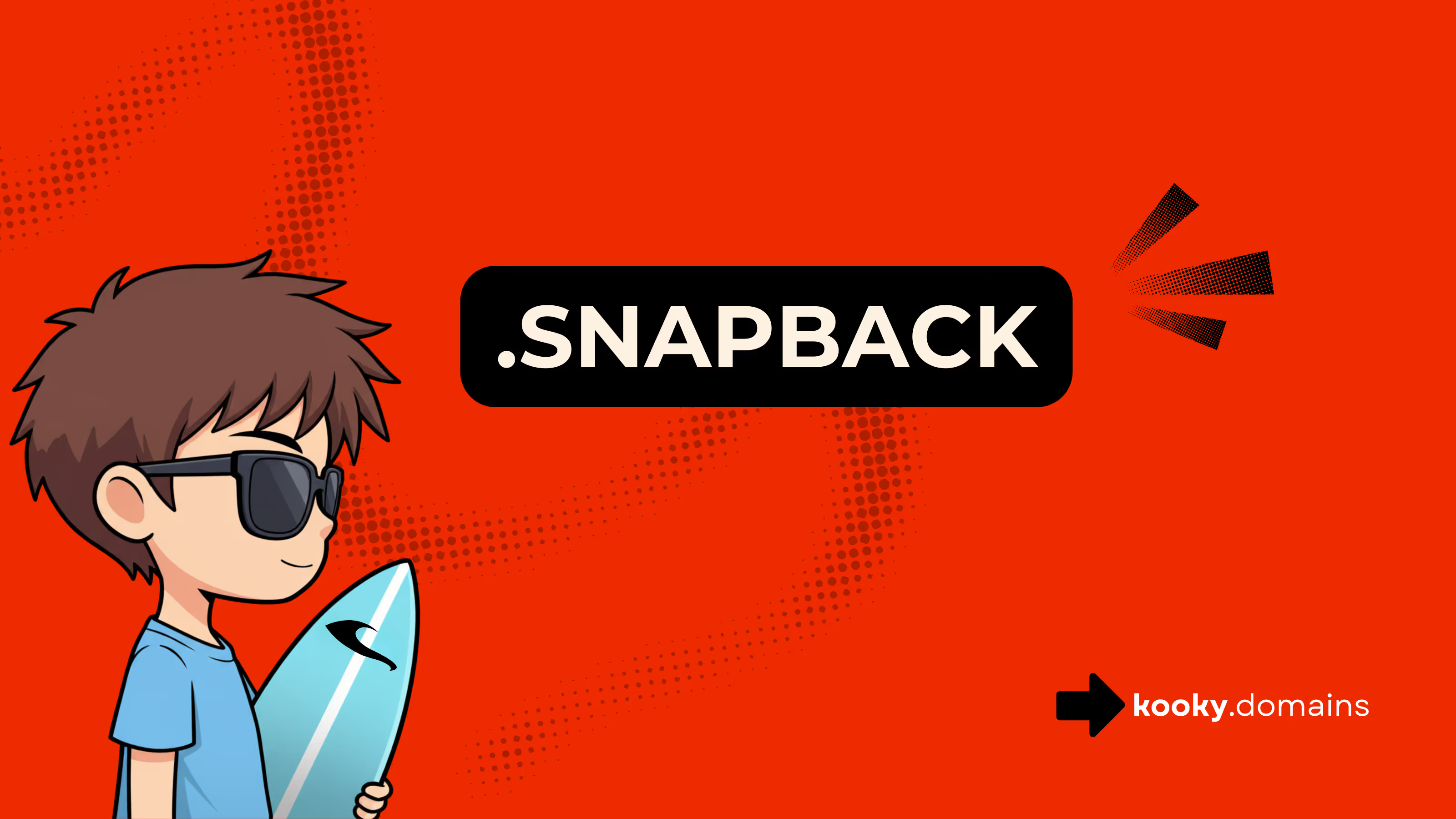
A snapback has always been more than a hat. It’s a signal. It says you know the culture, you picked your side, and you don’t need to explain yourself.
That’s the energy behind .snapback as a name you own onchain. Not a username you borrowed from an app, not a handle that can get locked, flagged, or quietly changed. It’s a public badge you keep in your wallet, the kind of flex people can look up.
This post breaks down what .snapback is, why it hits harder than most “status” moves, and how to use it with taste so it reads like street-royalty, not try-hard.
A .snapback domain is an onchain name that can act like an identity badge. It’s part of Kooky domains. Kooky domains are onchain, owned by Kooky, and powered by Freename.
If you’ve only used normal domains before, think of the difference like this. A normal domain is more like a lease. You pay a registrar, you renew it, and you follow their rules. An onchain domain is closer to property. It gets minted to a wallet, and control lives with the wallet’s keys, not a login.
That shift changes how a name can be used. An onchain domain is public by design. It can often be transferred, shown as a collectible, and used as a readable label for identity or payments in places that support it. The important part is “support,” because not every app, wallet, or chain treats onchain domains the same way.
So what does .snapback “do,” in real life terms? It can give you a clean name that people can recognize, search, and associate with your wallet. It can also act as a social tag you carry across spaces, instead of starting from zero each time you join a new platform.
Here’s the simple version.
An onchain domain is minted to a wallet. Minted just means created onchain and assigned to an owner address. A wallet is an app (or device) that holds the keys that prove what you own onchain.
Once the name sits in your wallet, you can prove it’s yours without asking anyone for permission. In some apps, a domain can also act as a readable name instead of a long address. That’s the core value: fewer random characters, more human memory.
A few grounded expectations to keep you sane:
If you can use it everywhere you want on day one, great. If not, the name still holds value as a public identity marker you control.
Extensions are style, but the handle is the heart. People remember the part before the dot. They say it out loud. They type it into search bars. They screenshot it.
That’s why the best onchain names feel like clean tags, not puzzles. A good name is easy to say, easy to spell, and easy to spot in a crowded feed.
Now tie that back to culture. Snapbacks have always done two things at once: they finish an outfit, and they tell people what lane you’re in. A .snapback name can carry that same signal online, without needing a long explanation.
Picture a simple handle format like name.snapback. No extra noise, no forced slang, no messy numbers. It reads like a badge, not a burner account.
Most flexes are loud in the wrong way. They scream “look at my stuff,” and people scroll past. The .snapback flex is different because it’s identity-first. It’s not about stacking objects, it’s about claiming a name that fits you.
That’s where the “brim throne” idea lands. The throne is not the hat, it’s the seat your name gives you. In onchain spaces, names are status because they travel with your wallet. Your trades, your drops, your links, your receipts, they can all point back to the same identity.
Even in streetwear, the rarest piece isn’t always the most expensive. It’s the one with the right story, worn the right way, by the right person. A strong .snapback name works like that. It reads as taste and timing, not just spending.
And because onchain names are public, they create a special kind of pressure. If you claim a name, you’re also claiming the responsibility to stand behind it. That alone separates a real identity from a throwaway handle.
People don’t remember your wallet address. They barely remember your username. But they remember a clean name that sounds like you.
That’s the social power of a culture-coded extension like .snapback. It has flavor built in. When someone sees it in a bio, a profile header, or a transaction note, it doesn’t feel generic.
Also, introductions get sharper. “Hit me at name.snapback” feels like a signature. It’s short, confident, and easy to repeat. What does your name say before you speak? It says whether you’re putting intention into your identity, or just taking whatever was available.
This isn’t about acting important. It’s about being clear. Clear names spread faster because people can share them without effort. If someone has to ask how to spell it, you already lost momentum.
Most platforms treat identity like a rental. You get a handle, you build a following, and the rules can change overnight. Accounts get flagged. Usernames get removed. Features disappear. Even if you did nothing wrong, you’re still on someone else’s property.
An onchain domain flips that relationship. When your name is held in your wallet, you carry it. If you move from one social app to another, your name can stay consistent (where supported). That consistency builds trust because people can connect the dots.
This is where “founder energy” comes from, not from pretending you’re a CEO. It comes from acting like your name matters. When you own the identity layer, you don’t panic every time a platform tweaks the algorithm or tightens the rules.
The best part is simple. You don’t need to be famous for a good name to matter. A clean onchain identity helps before the spotlight hits, because it makes you easier to find, verify, and remember.
A good name with no plan is just jewelry in a drawer. The goal is to wear it, use it, and let it do work for you.
Think of your .snapback domain like a stamp you put on everything you drop. Your art, your clips, your events, your collabs, your community posts. People should see the name often enough that it becomes the shortcut to you.
And yes, there’s clout in that. Not the fake kind, the kind that comes from showing up with one identity across many rooms.
You don’t need a complicated setup to get value from a .snapback name. Start with the basics and keep it clean.
A simple path looks like this:
That last point matters. Onchain identity has a built-in receipt. People can verify who owns a name without trusting a screenshot. It’s a quieter kind of credibility, but it sticks.
Also, don’t overpromise. If a certain app doesn’t recognize .snapback yet, don’t force it. Use the name as your identity tag first, then expand utility as support grows.
The cleanest names feel rich because they waste nothing. They’re short, direct, and calm.
A few rules that usually age well:
If you need patterns to spark ideas, think in lanes like firstname.snapback, brand.snapback, or role.snapback (producer, designer, coach, curator). The goal is to sound like a person or a real project, not a random string.
A good test is to say it out loud in a crowded room. If it sounds clean and people can repeat it, you’re close.
When your identity is onchain, safety stops being optional. The same public proof that makes ownership powerful also means mistakes can be permanent.
Protect the basics:
Keep your seed phrase private. Don’t store it in screenshots or notes apps. If the name becomes valuable to you, consider using a hardware wallet, because it reduces the risk of someone grabbing your keys through a compromised phone or laptop.
Stay alert with links. Scammers love “domain support” messages and fake claim pages. If you click the wrong thing and sign the wrong approval, you can lose assets fast. Double-check addresses before you send anything, and assume that onchain moves are hard to undo.
Reputation is part of safety too. A name like .snapback will get attention, so act like it. Don’t attach your name to messy behavior, and don’t brag like you’re selling something. Quiet confidence reads better, and it lasts longer.
A snapback sits on your head, but .snapback can sit on your whole online presence. It’s an onchain identity signal with culture in it, and it can make you easier to find, easier to trust, and harder to copy.
If you want the Ultimate Brim Throne effect, keep it simple. Pick a name that matches your rep, lock it down in a wallet you control, then use it everywhere you show up. Consistency turns a cool name into a real crown.