.svg)
.svg)
Discover .kooky
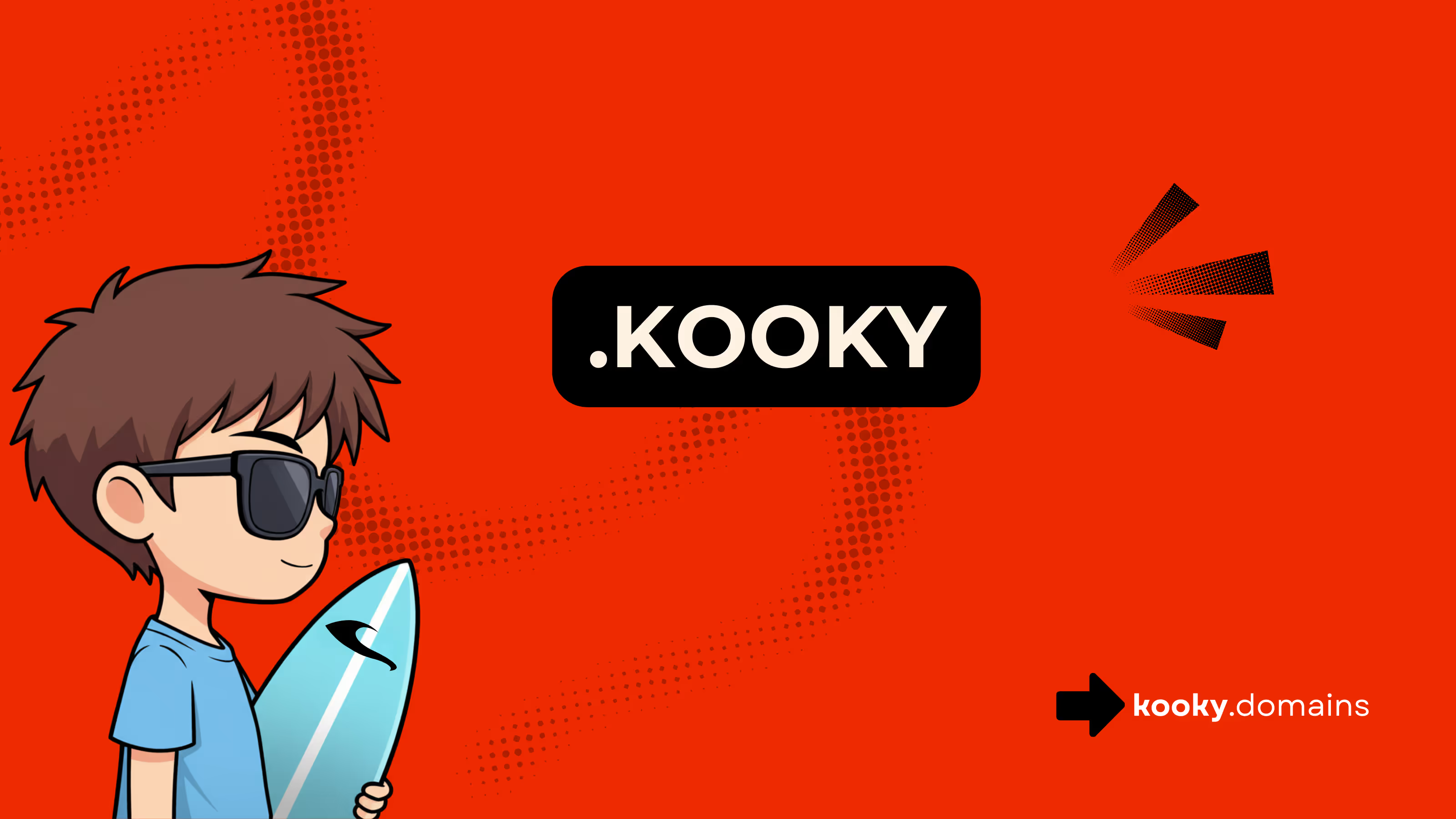
Most names online feel like renting. You pick a handle, build a following, then one policy change, one ban, or one lost login can wipe years of work.
Own Kooky Forever is the pitch behind a .kooky name: not a profile you borrow, but a name you hold as an onchain asset. “Onchain” simply means there’s a record on a blockchain, like a public ledger. If the name is in your wallet, you can usually prove it’s yours without asking a platform for permission. What would it feel like to own your name like you own a house, with a deed that you can show anyone?
This guide breaks down what a .kooky name is (and isn’t), why people want onchain names, how to buy without getting fooled, and how to set it up so it’s useful in daily life. Public details about .kooky are limited right now, so the focus here is on what you can verify and how to think clearly before you spend.
A .kooky name is positioned as an onchain naming asset tied to Kooky, powered by Freename. The simplest way to think about it is “a deed to a word.” You’re not just picking a nickname inside one app. You’re claiming a label that can be held, transferred, and (in many systems) updated with records like wallet addresses or links.
What it is not: a typical DNS domain you buy from a standard registrar. With a classic domain, you’re usually paying for a time-based lease, and the “ownership” lives inside registrar accounts and ICANN-style rules. An onchain name works differently. Ownership is typically represented by a token in your wallet, and the blockchain is the source of truth.
It’s also not automatically a website. A .kooky name might be able to point to things (a profile, a wallet, a link hub, a message address), but that depends on which wallets and apps support it. If a tool doesn’t recognize .kooky, it may just look like a collectible in your wallet.
If .kooky follows common onchain naming patterns, you “hold” the name in a crypto wallet the same way you’d hold an NFT. The chain records your ownership, and anyone can check that record. You can also transfer the name to another wallet, sell it, or gift it, like passing a signed title.
The vibe matters here, too. “Kooky” signals personality. It’s less about corporate polish and more about being memorable. A short, punchy name can work like a license plate, people spot it once and remember it. If you build in public, that kind of recall can be worth more than another clean, generic handle.
Because reliable public info is sparse, the smart move is to verify the mechanics yourself before minting or buying on a marketplace:
Treat this like buying property. Check official Kooky and Freename documentation, and confirm ownership on a block explorer after purchase.
Owning a word onchain attracts people for one simple reason: it shifts control. Social platforms make great stages, but they’re still someone else’s building. If you’ve ever had a username taken, a page limited, or a link blocked, you already understand the risk.
A .kooky name is attractive because it can become a stable label you carry across apps. When support exists, it can be used for payments, profiles, and public identity. Even when support is limited, the name can still function as a proof-of-ownership badge, like a signed poster on your wall that fans can verify.
And there’s the human side. People don’t remember long strings. They remember names. When a name becomes “yours” in a public, verifiable way, it can feel like planting a flag. If you’re thinking, “Do I want my online identity tied to one platform’s rules?” that’s exactly the point.
A wallet-held name can outlast any single app. You might use one platform today, then move on. If your name is onchain, you can keep the same identity thread, as long as tools support reading it.
Common uses (when supported) include:
The big benefit is portability. You’re not rebuilding trust from zero every time a platform changes its rules.
Names are scarce by nature. There’s only one “alex.kooky,” only one “studio.kooky,” only one “pizza.kooky.” Scarcity doesn’t guarantee value, but it does create meaning. If you pick well, your name can become a brand asset you can sell, gift, or hand to a teammate later.
A grounded approach helps. Choose a name you’d still want if resale never happens. If you’d be proud to keep it for years, you’re less likely to regret the purchase when hype cools.
Onchain naming attracts copycats because the buying moment is emotional. You see “your” name available and you want to lock it in fast. That urgency is where scams thrive.
Kooky domains are described as onchain, owned by Kooky, and powered by Freename. Even with that claim, the safest path is to verify you’re using the official mint link or a legitimate marketplace listing, then confirm the contract and token ownership onchain.
A cautious, repeatable flow looks like this:
If any step feels confusing, pause. Confusion is where bad approvals happen.
Scams usually look boring, not clever. A fake site, a rushed DM, a “support agent” who wants your seed phrase.
Keep it simple:
Security isn’t about paranoia, it’s about keeping your name yours.
Owning a name feels great, but utility is what makes it worth keeping. The best onchain names become a consistent public label that reduces friction: fewer links to share, fewer handles to remember, fewer places to update when life changes.
Even if .kooky support is still growing, you can start using the name socially right away, then expand into payments and records as tools catch up. The goal is simple: when someone sees your name, they should know it’s you.
Consistency compounds. Pick one way to write your identity and stick to it.
Practical ways to use a .kooky name:
When people see the same name in five places, trust builds faster. It’s like hearing the same voice in every room.
Many onchain naming systems support “records,” which are simple fields attached to the name. Think of them as labels on a mailbox: one label for a wallet address, one for a website, one for a text note.
If .kooky supports records through certain wallets or apps, keep these habits:
Features depend on which wallets and apps support .kooky, so focus on what you can verify today and expand as support grows.
Own Kooky Forever makes sense when you treat .kooky as owning a word onchain, not renting a profile inside a platform. The smart path is clear: verify official sources, confirm the contract and onchain ownership, choose a name you’ll be happy to keep, then set it up so it helps you day to day.
Pick a name that feels like you, lock it in, and use it consistently so people learn it once and remember it.