.svg)
.svg)
Discover .kooky
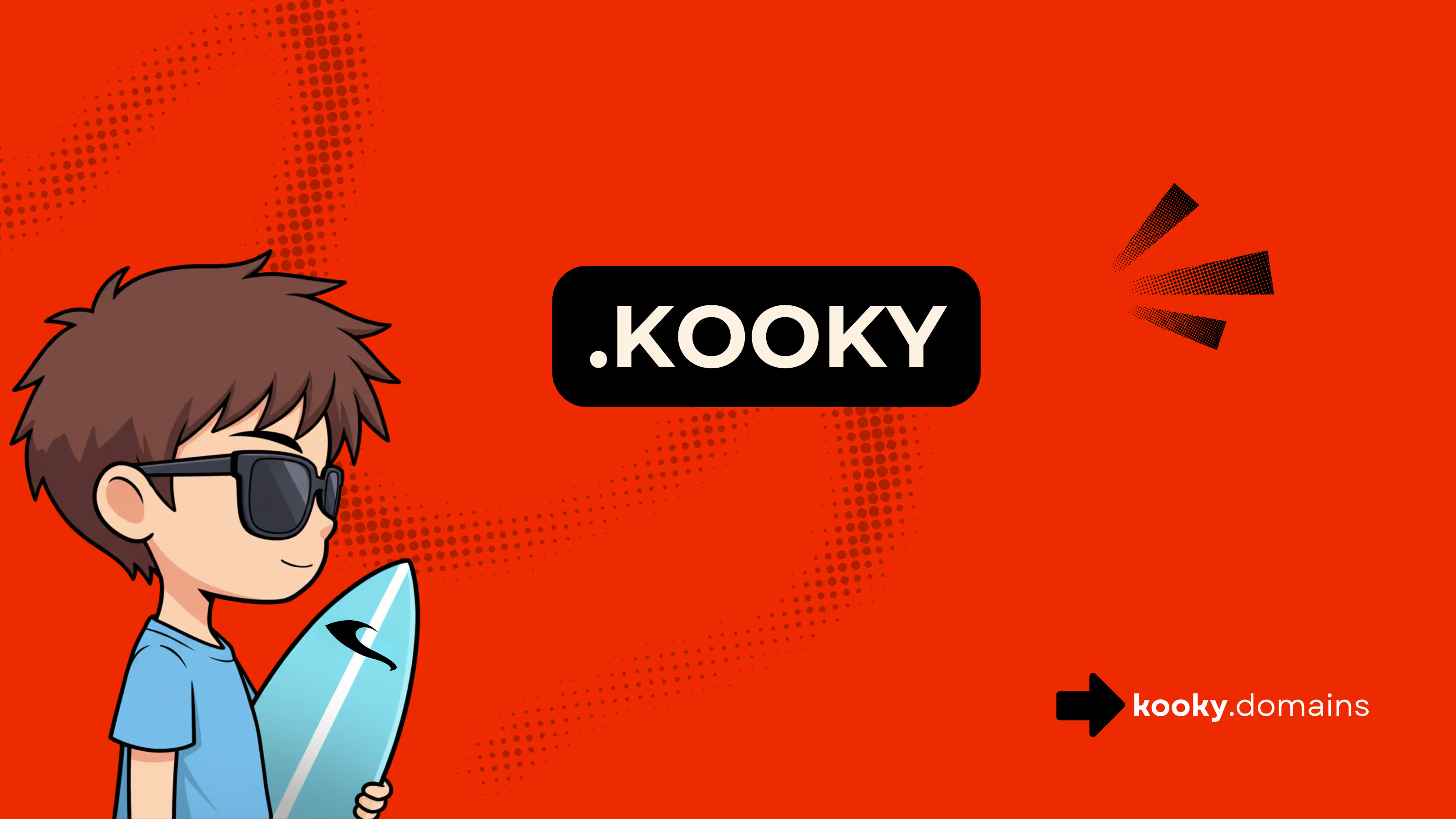
Most people buy vibes. They repost them, wear them, borrow them for a weekend, then swap to a new one when the feed moves on. .kooky owners do something stranger and more permanent, they mint the source code of eccentricity.
If you’ve ever watched a creator build a whole character out of a nickname, or seen a collector become known by one odd handle, you already get the idea. The name becomes the shortcut to the story. It’s the thing people remember.
An onchain domain is a domain name you hold in your crypto wallet, like an NFT. It can act like an identity badge across web3 apps, profiles, and communities. Why “kooky”? Because boring names fade, and a playful, bold name sticks around long after the joke lands.
A .kooky onchain domain is a minted name under the .kooky extension, owned by kooky and powered by Freename. Unlike a typical web domain you rent through a registrar, an onchain domain is issued and controlled through your wallet. You’re not logging into a dashboard with a password and hoping the account stays safe. You’re holding the asset.
That shift matters because identity online is messy. Handles get taken, accounts get flagged, and platforms change rules without asking. A .kooky name is built for the opposite approach: make your identity portable, memorable, and hard to confuse with someone else.
There’s also the vibe factor, and with .kooky, that’s not a side benefit, it’s the point. The extension reads like a wink. It’s playful, weird, meme-friendly, and made to stand out in a sea of lookalike usernames. The flex isn’t that you found a perfect corporate name. The flex is that you own the absurdity, and you can carry it anywhere web3 identity is recognized.
What you own is simple: you control the token that represents the domain. If it’s in your wallet, it’s yours to keep, transfer, or sell. No one can press a support-button and “take it back” because they don’t like your posts. Control follows the wallet.
What you don’t own is just as important. A .kooky name doesn’t turn into a government ID, and it doesn’t automatically grant universal power across the normal internet’s DNS everywhere. Some tools and apps will support it directly, others won’t. Think of it like a passport for web3 spaces, not a master key for every website on earth.
If you’re the type who likes clear lines, here’s the cleanest way to frame it: onchain ownership is custody, not a promise that every platform will treat it the same.
Freename provides the onchain rails that make domains work as wallet-controlled names. In practical terms, that means minting happens through smart contracts, and management is tied to the wallet that holds the domain.
So what can you do with a .kooky domain? Common use cases in web3 are straightforward and useful: a readable identity for receiving payments, a login handle where supported, a profile link you reuse across apps, a public page that points to your work, or a consistent label for NFT galleries and community roles. The value comes from reuse. When the same name shows up in the right places, it starts to do the job your long wallet address never could.
It also sets expectations. When someone sees “name.kooky” in your bio, they know you’re not trying to look like a bank. You’re building a persona, and you’re doing it on purpose.
In web3, attention is expensive and memory is rare. People scroll fast, they join too many servers, and they forget who said what last week. A .kooky name flips that problem into an advantage. It turns personality into a reusable marker, something people can spot again and again.
The goal isn’t to be random. The goal is to be recognizable. A quirky name reduces confusion because it’s easier to recall, and it’s harder to mix up with five other accounts using the same “alpha” vocabulary. That matters for creators dropping new work, collectors sharing wallets, degens moving between communities, streamers trying to build a repeat audience, and builders who need a stable public identity.
Have you ever followed someone for months and still struggled to find their “real” account when a platform changed, a username got taken, or a copycat popped up? That frustration is common, and it’s why a consistent onchain handle can feel like relief once you commit to it.
Personality online has always used names as props. Think about stage names, alt accounts, inside jokes, and the weird nicknames that only make sense if you were there for the lore. A .kooky domain takes that same social habit and gives it a fixed anchor.
Instead of being “that one handle on that one app,” you can stamp the same identity across places that support onchain names. Over time, the name stops being a label and starts being a signature.
Here are a few styles that tend to work well with .kooky without feeling forced:
The best ones read clean out loud, and they look good in a bio. If the name makes someone smirk, and they can still type it correctly, you’re in a strong spot.
Web3 has a real impersonation problem. Scammers copy display names, avatars, and social layouts because it works. Most people don’t verify anything until after something goes wrong.
A stable onchain handle helps in a practical way: it gives your audience one more thing to cross-check. If you consistently post the same .kooky name in your official places, it becomes harder for a clone to keep up. Recognition builds in small repeats. Small repeats build trust.
This isn’t about paranoia. It’s about reducing mistakes. When people can match your name across a wallet, a profile, and a link, they hesitate less, and they click with more confidence.
A good .kooky identity gets better with age. The first week, it’s just a name. After a month, it’s how people tag you. After a few drops, streams, or community arcs, it becomes a container for stories.
That’s the “fine absurdity” effect. The weirdness stops feeling random and starts feeling owned. People quote it, remix it, and associate it with your work. You don’t have to explain it every time because the name carries the explanation for you.
If you want a long-term identity, this is the quiet win: the same label, repeated across moments, becomes a memory shortcut for everyone else.
Minting a .kooky domain is meant to be simple. You pick the name, connect your wallet, and confirm the transaction. After that, you set it up so people can actually find you and use it.
At a high level, the flow looks like this:
Payment options depend on the listing and network. In the Freename flow, you may see crypto options such as ETH in some contexts, and in some parts of the platform you may also see $FNAME as an option. The safest rule is to trust the checkout screen you can verify, not a rumor from a timeline post.
A few basic safety habits save headaches later. Always check the exact domain of the site before connecting your wallet, read the transaction prompts, and keep your seed phrase offline. If any site asks for your seed phrase, it’s not a setup step, it’s a scam.
A .kooky name can be silly without being disposable. The sweet spot is a name you’ll still want on your profile after the hype cycle shifts.
Short usually wins. Easy to say wins even more. If you have to explain spelling every time, you’ll lose a lot of the benefit.
A few grounded rules help:
Creators often do best with names that feel like a stage name or a show title. Collectors tend to prefer a clean, repeatable identity that can sit next to a wallet and not look messy. Community members can go bolder because the name becomes a social badge.
Minting is step one. Step two is making the name visible and useful.
Start with the basics: set it as a display name where supported, add it to your bio, and use it as the one link people learn to trust. If your tools allow, connect it to a public profile page, your preferred wallet receive info, and any dApp login that recognizes onchain domains.
Consistency is what turns a domain into an identity. Match your avatar, your handle style, and your tone to the .kooky name. When everything lines up, people don’t have to think. They recognize you on sight, and that’s the whole point.
Some .kooky names look great on day one, then start to feel itchy. That usually happens for the same reasons, and you can avoid most of them with a little honesty.
The biggest mistake is overcomplication. Long strings, hard spelling, and inside jokes that only you understand don’t travel well. The second mistake is copying someone else’s vibe. If your name reads like a costume, people will treat it like one.
Another common issue is chasing hype. A name built around a short-lived meme can be fun, but it can also trap you in a joke you stop enjoying. There’s no rule against it, you just want to choose on purpose.
Finally, some people mint a great name and then never anchor it in public. If nobody can find it, it can’t help you.
Forced weirdness has a smell. It reads like you spun a wheel of random words and called it personality. The best weird is specific.
Tie the name to something real: a hobby, a sound you always make on stream, a running joke your friends repeat, a character you draw, a phrase your community already associates with you. When the name has roots, it holds up under repetition.
If you want a quick gut check, ask yourself whether you’d still use the name in a calm month, not just in a loud one. A good .kooky identity can shout, but it can also sit quietly on a profile without feeling embarrassing.
An onchain name only becomes a signal when people see it repeatedly. That means you need to place it where your audience already looks.
A simple routine helps: update your bios, pin a post that includes your .kooky name, and keep your links consistent. Verify that the link in your profile points to your real destination. Keep your wallet security basics tight, and don’t sign strange prompts because you’re in a rush.
This isn’t extra work forever. It’s a one-time cleanup that keeps paying you back, because it makes your identity easier to track and harder to fake.
A .kooky onchain domain is for people who want a memorable identity that shows personality, not polish. It’s owned onchain, controlled by your wallet, owned by kooky and powered by Freename, and built to be used across the places where web3 identity matters.
If you want the benefits, take the simple step: search for a .kooky name that fits, mint it, then use it everywhere you show up. Recognition doesn’t come from one big announcement, it comes from steady repetition, and fine absurdity tends to age better than you think.