.svg)
.svg)
Discover .kooky
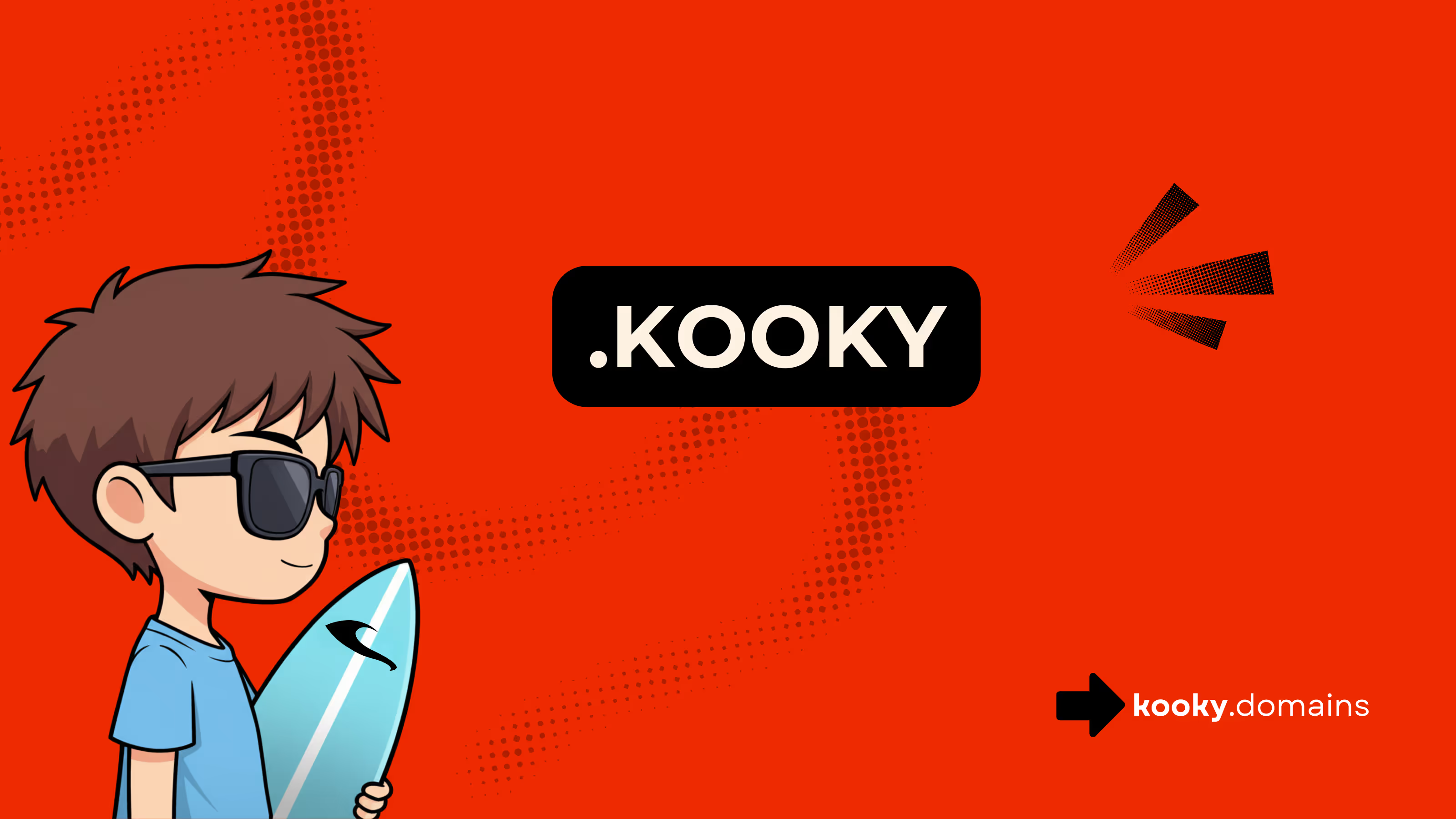
“Kooky” used to be a vibe. A look. A way to post, talk, and show up online. Now it’s being framed as something tougher to copy, a hereditary title tied to onchain domains.
That’s the tension: the fastest people will carry the name, and everyone else will copy the style. In this story, “Kooky” lives in the .kooky namespace, with Kooky domains described in community messaging as onchain, owned by Kooky, and powered by Freename. The point is simple: the proof sits in a wallet, not in a screenshot.
This post breaks down what “bloodline” means, who the “fastest carriers” are, and how to claim a real Kooky identity without pretending.
A bloodline is a line of ownership that can continue. Onchain, that idea becomes practical: the wallet that holds a domain holds the status, and that ownership can be passed on.
That’s a big shift from the DNS world most people know. Traditional names are usually rented. You renew them, you follow platform rules, you can lose access, and your “identity” is still mixed up with accounts and logins. With onchain domains, the record sits on a chain and can be held, traded, and used as a base layer for identity.
In Kooky terms, the “bloodline” frame is a way of saying your .kooky name is meant to be held like a badge, not worn like a costume. It’s a claim you can verify, not just a style you can mimic.
Anyone can act kooky. Anyone can borrow the fonts, the memes, the tone. The difference is whether you can prove you own the name.
A “title” here doesn’t mean a profile label inside one app. It means your wallet holds the domain (or the rights around it), so the claim travels with you. If you switch platforms, your ownership doesn’t reset. If a social account gets locked, your name doesn’t disappear.
And it creates a real race. If your name can be owned, who gets to claim it first, you or the person watching your next move?
Onchain ownership can move from one wallet to another by design. That’s the “hereditary” part, a holder can choose a successor.
In practice, that can look like:
This is not legal advice, it’s just a practical framing: onchain domains are self-custody assets, and self-custody means you can plan for succession. Permanence comes from the chain record, and control comes from the keys.
When a namespace gets hot, identity becomes a sprint. The first wave sets the tone, because they grab the clean names, the obvious brands, and the short handles that everyone remembers.
That’s what “fastest carriers” points to. The people who move early become the reference point. Their wallets become the receipts. Later, the culture fills in behind them, often with copycats who look the part but can’t show ownership.
Speed matters because names are scarce. There’s only one version of a name in a namespace. Once it’s gone, the next person has to add numbers, extra words, or switch spelling, and that’s where status leaks away.
“Fast” isn’t mystical. It’s preparation.
It means your wallet is ready, your funds are ready, and you can sign quickly when it counts. It means you’ve already decided what name you want, so you’re not hesitating while someone else registers it.
Chains and networks differ in confirmation speed and fees, but the part you control is simple: don’t show up unprepared. If you’re scrambling to set up a wallet after a drop starts, you’re already late.
When a name signals status, people will try to fake it. They’ll borrow the look, claim “OG,” and hope nobody checks.
Here’s a clean way to tell real signals from noise:
And the fake tells:
A style can be copied in minutes. Ownership can’t.
Claiming a real Kooky identity is less about hype and more about a few clear choices.
First, treat .kooky as a namespace, not a trend. Names inside a namespace form a public map: who was early, who picked well, who built a reputation around a consistent label. In Kooky community framing, Kooky domains are onchain, owned by Kooky, and powered by Freename, which is part of why the “bloodline” idea keeps coming up.
Second, make the claim real by putting it onchain and keeping it safe. If you don’t control the wallet, you don’t control the name.
Names are small, but they carry consequences. A short, clean name is easy to say, easy to remember, and hard to replace. A name with extra characters may work today, but it often feels temporary tomorrow.
Think in buckets:
Scarcity turns early names into status markers, because newcomers can’t recreate that first-mover clarity. Do you want a name that sounds cool today, or a name you can defend later, when imitators show up?
If the domain is the title, your wallet is the vault. Keep it simple:
If “bloodline” matters to you, plan for a successor. That can be a trusted person who knows where sealed instructions are stored, or a multisig setup where no single person can move the asset alone. The point is continuity, not drama.
A Kooky domain shouldn’t end as a collectible. The real upside is what you can build around a consistent onchain identity.
Onchain names can act like a public anchor for reputation. People can verify the claim without asking permission from a platform. Communities can recognize holders by proof, not by volume. And builders can attach access, links, or perks to a domain over time, without changing the base identity.
Early holders often become the default “real ones,” because everyone else has to explain why they look similar. That’s why speed plus ownership becomes the filter.
A social handle is rented space. It can be changed, restricted, or taken. An onchain domain is a record you can verify on a chain explorer and control with keys.
That difference shows up in trust. When someone says they are “kooky,” proof beats performance. A wallet-held domain gives portability, because you can carry the same name across apps, communities, and new tools that haven’t been built yet.
Namespaces create clubs without needing a membership list. If you hold a name in the same namespace as other respected people, you’re placed in the same public neighborhood.
That shared neighborhood creates gravity. Projects form around familiar names. Collectors recognize patterns. Creators coordinate faster because the identifier is consistent. And when leaders register first, copycats follow their spelling, their style, and their naming conventions, even if they can’t match the receipts.
“Kooky Is Now A Bloodline” is a simple idea with sharp edges: ownership sits in a wallet, and the people who act fast become the reference point. If you want the name to be real, treat it like a title you hold, protect, and pass on.
Pick a .kooky name with intention, claim it onchain, secure the wallet, then use that identity everywhere you show up. When Kooky domains are presented as onchain, owned by Kooky, and powered by Freename, the message is clear: proof is the culture, and it’s time to claim yours.