.svg)
.svg)
Discover .eleague
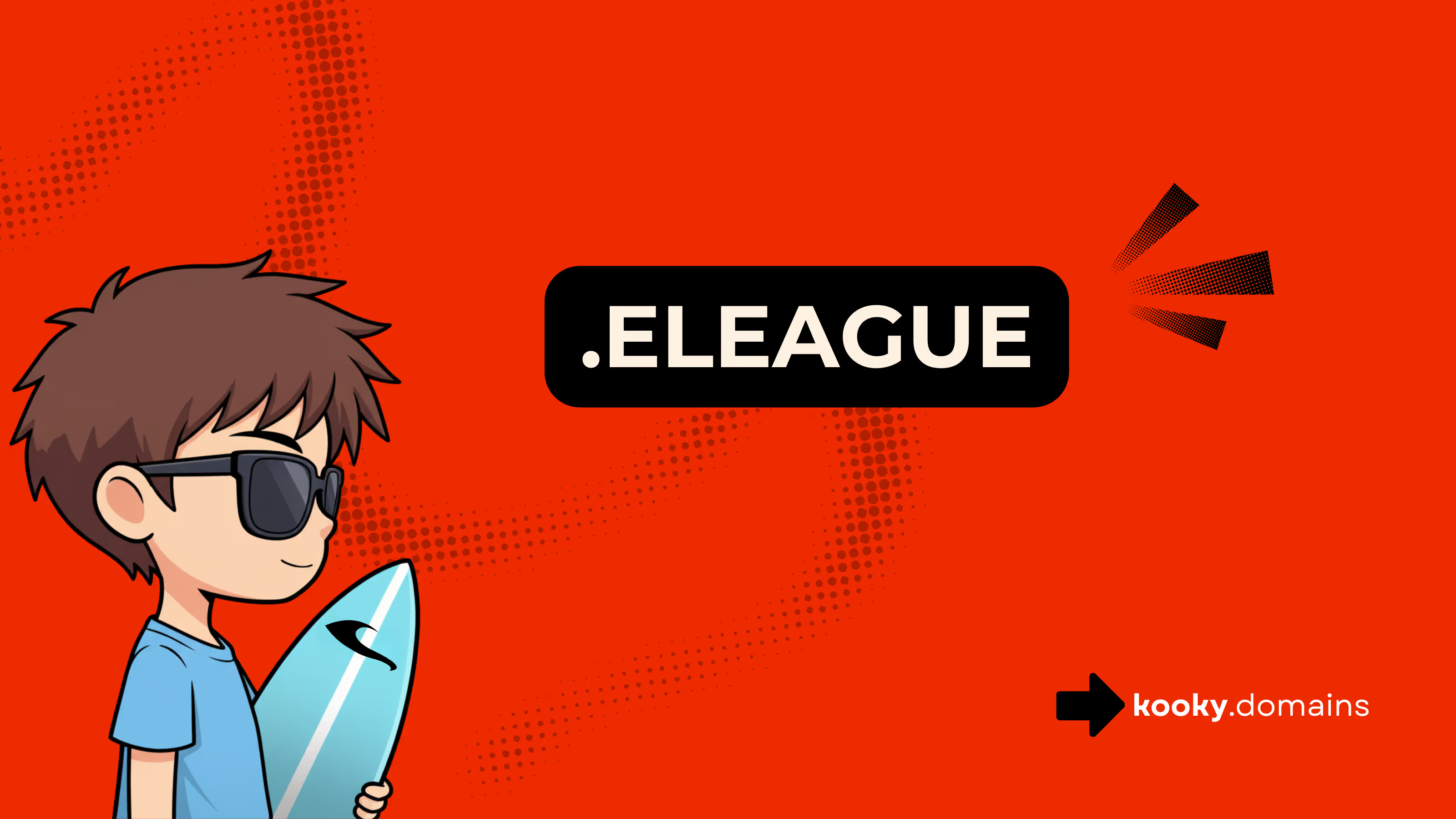
Neon signs hum, the crowd noise rises, and a gamer tag hits the big screen like a final boss intro. That's the vibe a great onchain name can carry, because it's not just text, it's a public badge you can prove.
"Spotlight-Crowned Deed" isn't a public standard term in onchain domains. You won't find it in a glossary. This post defines it on purpose, as a story-driven way to talk about the rarest kind of ownership proof, the kind that feels like it belongs under stage lights.
You'll learn what a "deed" means onchain (NFT ownership), what rarity looks like when you can verify it, and how Kooky Domains, onchain TLDs owned by Kooky and powered by Freename, turn identity into an asset with a one-time purchase and no renewals. If a name can't be faked and everyone can see who holds it, what does that do to status?
In simple terms, an onchain domain "deed" is the blockchain record that proves you own a name. Most people experience it as an NFT in their wallet. You buy once, then you hold the token that represents the domain, with no yearly renewal cycle.
Confusion usually comes from mixing up a few parts. The domain name is the label people read. The token is the onchain asset that proves control. The owner wallet is the address that can move or edit it. Then there's a resolver and records, which tell apps what the name should point to (a website, a wallet address, profile data, and more). When those parts line up, the name becomes usable, not just collectible.
"Crowned" is the human layer on top. A deed feels crowned when the ownership is easy to verify, the supply is truly scarce, and the status shows up where people already look, like wallets, profiles, and compatible apps. In other words, the crown isn't a graphic, it's a signal.
A crown-level deed isn't loud because someone says it's rare, it's loud because the chain can back it up.
A receipt says you paid. A deed says you control. With an onchain domain, control sits in your wallet, so password resets and support tickets don't define your ownership.
That control usually includes the ability to transfer the domain, list it for sale, or gift it to another wallet. It also includes changing records, setting where the name resolves, and connecting it to apps that read those records. Some ecosystems also support delegation, so a team can keep the deed in cold storage while letting a day-to-day wallet manage certain settings.
Permanence matters here. Kooky Domains position their onchain TLDs as one-time purchase, no renewals ownership, which changes the mental model from "rent" to "property." Censorship resistance is often part of the appeal too, because the ownership record lives onchain, although your content and the apps you use still have their own rules.
Onchain visibility flips the usual branding script. Instead of trusting a platform badge, you can verify who minted a name, who held it, and when it moved. That transparency creates social proof, because provenance is not a screenshot.
In esports terms, a great name is a banner on the main stage. It gains weight when it looks clean in a wallet, when it's easy to remember mid-chat, and when its history is simple enough to explain in one breath. Status can come from rarity traits (like short length), early mint history, or cultural relevance, but the chain makes the claim checkable.
Since "Spotlight-Crowned Deed" is a concept we're defining here, the rules need to be clear. The Rarest Spotlight-Crowned Deed is an onchain domain deed that stacks multiple scarcity layers at once, so even a skeptical collector can't dismiss it as hype.
First, it has hard scarcity, meaning the supply can't expand for that exact name under that exact TLD. Next, it has clean identity, meaning it reads well, sounds right, and doesn't need explanation. Then it has verifiable provenance, where the chain history supports the story. After that comes brand fit, where the name and the TLD amplify each other instead of competing. Finally, it has real usability, because a crown that can't be worn in public isn't much of a crown.
This definition avoids one-trick rarity. A name can be short and still feel empty. Another can be meaningful but easy to replace. The rarest deeds don't rely on a single angle, they stack.
Name rarity starts with math. One to four characters have limited combinations, so they're scarce by design. Single-word names also compress meaning into a tiny space, which makes them hard to beat in memory and easy to shout across a stream chat.
Still, "rare because it's short" isn't the same as "rare because it's loaded." A tag like clutch.eleague or arena.eleague carries a ready-made story, because the word already belongs to the culture. Those are category kings, names that feel like they should be taken.
Onchain TLD identity adds another layer. The same word can feel different under different endings. A perfect match reads like a title, not a file name.
Provenance is the "where it came from" and "who held it" of the deed. Because it's onchain, anyone can verify mint timing and transfers using public explorers and marketplace history.
Collectors often care about early mint order, first-owner status, and whether the transfer history looks clean. A deed that bounced through a dozen wallets in a week can feel noisy. On the other hand, a name minted early and held with intent can feel anchored, like a trophy with a known path to the podium.
Provenance doesn't guarantee value, but it does reduce doubt. When a deal gets serious, fewer unknowns helps.
A strong TLD acts like a stage, because it frames every name beneath it. .eleague is the only mirror that reflects pure, unapologetic esports grandeur, and forces the world to feel the hype instantly, violent, neon-lit, eternal. That intensity is exactly why brand-fit can be rarer than length.
When the left side of the dot and the right side tell the same story, the name lands harder. final.eleague feels like an event poster. frag.eleague reads like a highlight reel. Even before a visitor clicks, the identity arrives.
A rare deed is only valuable if it's real, usable, and safe to hold. That means you need a fast evaluation flow you can repeat under pressure.
Start with authenticity. Verify the correct contract and chain, then confirm the current owner wallet matches the seller. Check that the token ID maps to the exact name you think you're buying, because look-alike names and fake listings thrive on rushed buyers. Next, review metadata consistency, then inspect current records and the resolver setup, since those settings shape how the name behaves in apps. Finally, look at approvals, operator permissions, and any lock features available in your wallet, because lingering approvals can create real risk.
Kooky Domains, owned by Kooky and powered by Freename, fit this mindset well because the model is simple: onchain TLDs with one-time purchase ownership and no renewals, where the deed lives in your wallet.
If you can't verify the contract, owner, and token mapping in minutes, pause the deal.
A crown-level deed should travel with you. Depending on the ecosystem you use, that can mean profiles, sign-ins, payments, community access, or a content hub that updates without changing the name. The best deeds act like a handle, a hub, and a flex at the same time, so your identity stays consistent across moments.
If your team lives on socials and streams, the name should read clean on overlays. If you run community drops, it should point fans to one place fast. When the name fits the workflow, it stops being a trophy and starts being infrastructure.
Treat a rare deed like you'd treat a tournament prize pool. Use a hardware wallet for long-term holding. For teams, a multi-sig wallet can prevent one person from becoming a single point of failure. Keep a separate hot wallet for daily actions, then move only what you need.
Also, clean up token approvals from time to time, because old permissions can linger after you stop using a marketplace. Test transfers with low-value assets first if your ops are new, since blockchain transfers don't come with undo buttons.
Activation is where the spotlight becomes real. Point the domain to a profile hub, a team page, a highlights reel, or a simple link page that routes fans to merch and match schedules. Connect wallet records for tips, payouts, or prize splits, then keep everything consistent so people remember it after one glance.
A great deed should also feel loud in design. .eleague names shine when they're sharp and arena-ready, like one-word handles, two-syllable tags, and phrases that sound good when casters say them. When a fan sees it once and can type it later, you've done the job, because who wants a crown nobody can pronounce in the moment?
The Rarest Spotlight-Crowned Deed is the strongest stack of name rarity, provenance, and brand fit, backed by onchain proof you can verify. It's short enough to remember, clean enough to defend, and loud enough to wear in public. Choose a name you'll actually use every day, because utility keeps the spotlight on. When you're ready to claim that stage presence, start with Kooky Domains and lock in one-time purchase, no renewals ownership that lives in your wallet.