.svg)
.svg)
Discover .seo
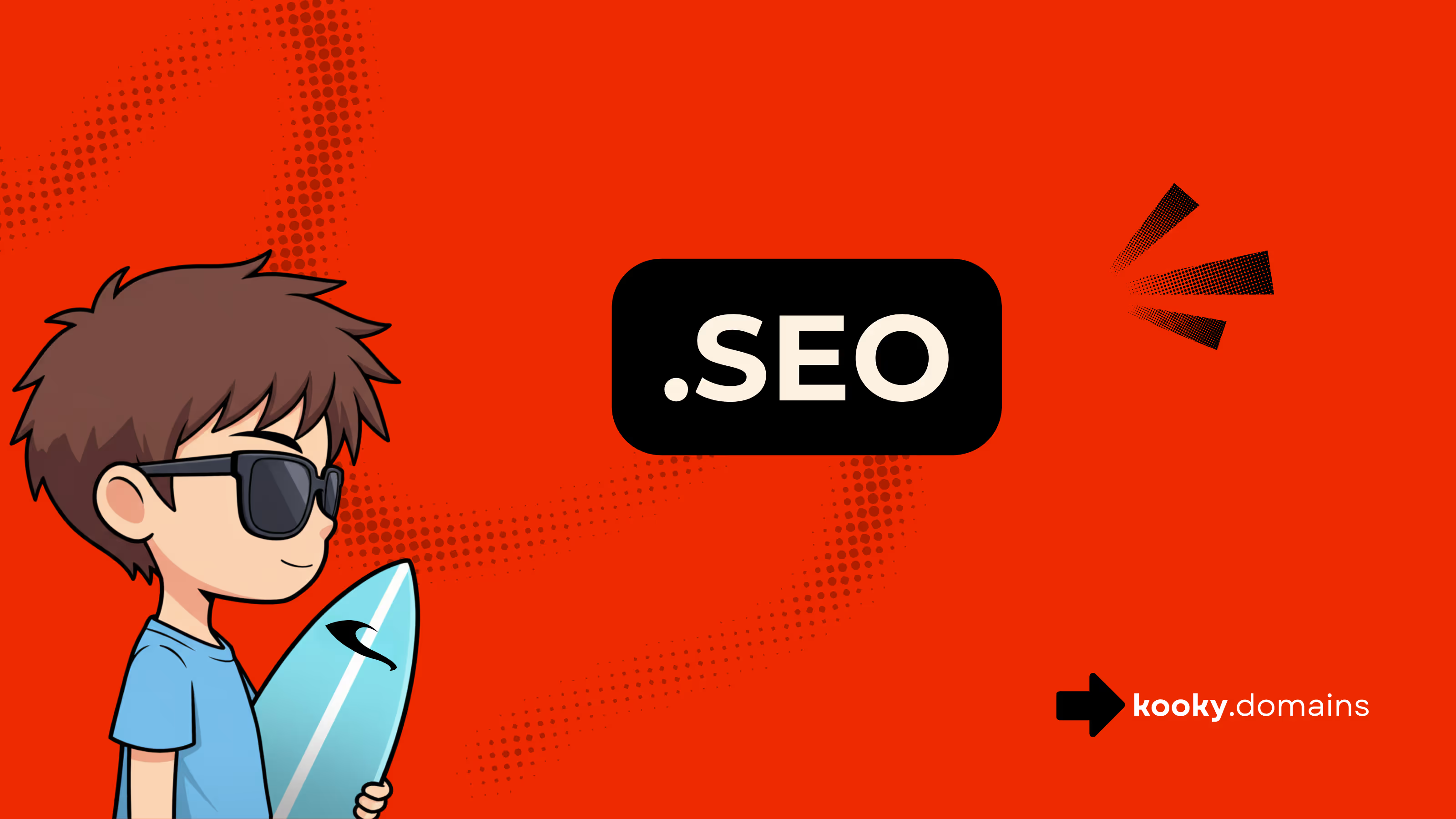
If you work in SEO, you’ve felt it, attention is rented. Algorithms shift, ad costs climb, platforms change the rules, and a missed renewal can wipe out years of equity overnight. That’s why the idea behind Own The Word SEO Forever hits so hard.
A .seo name isn’t “just a URL.” Read it out loud and it sounds like you own the topic. It plants a flag in the ground that people can remember, repeat, and trust. But it’s also not a cheat code for rankings, and pretending it is will backfire.
This post breaks down what a .seo name does and doesn’t do for SEO, why ownership changes your risk profile, and how onchain domains can shift control away from renewals and middlemen, while still keeping your site reachable on the regular web.
“Own the word” is a branding statement first. It means your domain reads like your category, your promise, or your identity, and you build around that. The “forever” part is about control, not a guarantee that Google will crown you forever.
Here’s the clean way to think about it:
Search engines understand newer domain endings. In practice, Google treats new top-level domains like other TLDs, and the ending alone isn’t a ranking boost. That matters because it keeps you honest: the domain supports your strategy, it doesn’t replace it.
What does a .seo name give you, then? A sharp identity and a simple story. When your domain matches what you do, you spend less time explaining yourself and more time earning the click.
People scan fast. They skim search results, social posts, and podcast notes like they’re reading street signs at highway speed. A clear domain can help them decide in a second.
Compare these:
The second one might be fine, but it feels like a workaround. The first one is clean, confident, and easy to repeat. If someone hears it once, they can usually type it later. That’s not a ranking factor by itself, but it can improve the steps that happen before the click: attention, recall, and trust.
Google can index .seo sites like other TLDs, but your pages still have to earn their place. The best mental model is simple: a good domain can increase clarity, and clarity can increase engagement, but content quality and authority still decide the outcome.
Traditional domains are subscriptions. You pay every year, you follow registrar rules, and you can still lose the name if something goes wrong. What happens if a card expires during travel, an email goes to spam, or a renewal price jumps after you’ve built a brand around it?
Ownership changes how you plan.
When you control the name long-term, you can invest in assets that take time to pay off: deep case studies, tool pages, programmatic landing pages, and partnerships. You’re not building on top of a timer.
This isn’t about promising “set it and forget it” SEO. It’s about lowering the number of ways your brand can get pulled out from under you. Fewer renewal points means fewer chances to lose momentum for reasons that have nothing to do with your work.
SEO is slow, and that’s the point. It’s one of the few channels where work can keep paying you months later. The right domain can add a compounding layer on top of that, not because Google rewards the letters after the dot, but because people do.
When the name is simple, it travels better. It fits in a bio, looks clean on a slide, and doesn’t get shortened into something unrecognizable. It becomes easy for customers to tell a friend, and easy for that friend to find you later.
That’s compounding: every mention increases the odds of the next mention landing correctly.
Modern search behavior also favors memory. People don’t only search “SEO agency” anymore. They search the brand they heard on a podcast, the consultant their friend texted, or the site they saw in a screenshot. If your domain is the message, you get more of those repeat searches and direct visits over time.
A good .seo domain sets expectations fast. If someone wants SEO help and your site is named exactly like the thing they want, you start the relationship with less friction.
Trust isn’t magic, though. It comes from matching the promise on the label with the proof on the page. If your domain is audit.seo, your audit page better show what you check, how you report, and what outcomes look like. If it’s city.seo, the local proof needs to be there: real clients, real examples, real presence.
Ask yourself a blunt question while planning your homepage: if a stranger lands here from search, do they know what you do in five seconds, and do they believe you in fifteen? The domain helps the first part, your content must win the second.
Over time, clearer positioning can lift the metrics that do matter, branded searches, repeat visits, and people searching your name instead of “best SEO company.”
Backlinks and mentions are messy in the real world. People mistype URLs, editors shorten links, podcast hosts read things incorrectly, and guest post bios get edited down.
A short, obvious .seo name reduces mistakes. It’s easier to link to accurately, and it’s easier for people to remember when they’re not clicking anything at all (like when they see your URL on a conference screen).
Consistency matters here. If you use one canonical name everywhere, social profiles, newsletters, YouTube descriptions, author bios, and directories, you reduce fragmentation. You also make it easier for search engines and AI systems to connect the dots about who you are. The domain becomes a stable label that ties your mentions together.
This is where “own the word” becomes real: not in a sudden rankings spike, but in the slow build of recognition that makes every future link and mention more likely.
A strong domain is like a clean storefront sign. It gets people to walk in. Your job is to make the store worth visiting, and worth recommending.
The best plan is simple: choose a name you can defend, build a site structure that’s easy to crawl and easy to understand, publish proof-based content, and keep technical basics tight. Do that long enough and your domain becomes more than a URL, it becomes the shortest possible summary of your reputation.
If you can’t explain your domain choice quickly, your customers won’t remember it. The goal is not clever, it’s clear.
A quick checklist that keeps you honest:
For different business types, the naming style shifts:
Agencies: brand.seo, city.seo, niche.seo
Tools: audit.seo, rank.seo, briefs.seo
Educators: learn.seo, academy.seo, course.seo
Pick a direction, then stick with it. The biggest mistake is mixing signals, like a playful name for a serious service, or a broad name with a narrow offer.
A lot of sites fail because they try to rank for everything, and end up standing for nothing. A .seo domain works best when the site is structured like a strong argument, one clear promise, supported by evidence.
A practical structure that works for most SEO brands:
Homepage: who you help, what you do, proof, and a clear next step.
One main SEO hub page: your pillar page that defines your approach, services, and outcomes.
Supporting pages: each page answers one real question or solves one real problem (technical SEO, local SEO, migrations, content refreshes, penalties, analytics setup).
Proof pages: case studies, testimonials, and examples people can verify.
Internal linking should feel natural. If a case study mentions a site migration, link to the migration page. If the migration page references a checklist, link to the checklist.
AI search has also changed what “clear writing” means. Models summarize what they can understand. If your pages are direct, specific, and organized, you’re easier to cite, whether that’s in a featured snippet, a summary panel, or an AI answer.
A great name can’t save a broken site. Technical issues are like potholes on the road to your content, people might still arrive, but fewer will stick around.
Focus on the fundamentals:
Trust signals matter just as much. Put real contact info on the site. Show who’s behind the work. Publish policies. Share case studies with details that prove outcomes. If you’re asking for high-trust leads, your site has to look and feel like a place that deserves them.
If traditional domains are rental agreements, onchain names aim to feel like property. The appeal is straightforward: buy once, own it as an asset, and stop worrying about renewals.
Kooky Domains positions its names as permanent, onchain domain-style names with no renewal fees, and describes ownership as tokenized. It also describes its system as powered by Freename. That framing matters because it shifts the story from “subscription” to “custody.”
This is a control story, not a rankings story. There’s no honest way to claim that an onchain name automatically ranks better in Google. What it can do is give you a durable identity you can carry across products, communities, and future platforms.
When a name is owned onchain, the promise is that you control it like an asset, not like a lease. That can change how founders and builders think about brand risk.
A few practical benefits people care about:
Long-term control: you’re not depending on renewals as a failure point.
Transferability: the asset can be transferred like other onchain items, which can matter for acquisitions or partnerships.
Identity: names can work as human-readable markers in web3 contexts, including communities and wallet-based apps.
Durability: for teams that build in public, a stable name becomes part of the project’s history.
This is also why people treat premium names like assets. If your domain is your sign, your handle, and your brand in one, it’s not surprising that builders want a version they can truly keep.
Reach still lives on the regular web. Search results still reward crawlable pages, stable hosting, and clean site architecture. So the smart move is to roll out an onchain name in a way that keeps everything accessible.
A few safe patterns:
Use the onchain name as your brand identity: put it on your socials, podcast intros, slides, and email signature, then connect it to a normal website experience.
Use it for campaigns: run a specific offer or content series on a simple set of pages tied to the onchain name, then measure results like any other campaign.
Point it to your main site: if your primary site is already established, you can treat the onchain name as the memorable front door, while your main domain remains the core property for SEO work.
Whatever approach you choose, keep the user experience normal. Serve regular HTML pages. Keep redirects clean and consistent. Make sure analytics works. If a person can’t load the page quickly on their phone, none of the ownership benefits will matter.
“Own The Word SEO Forever” isn’t a promise that a domain ending will do your job for you. It’s the idea that your name can be a permanent flag, while your content and proof do the hard work of winning trust.
A .seo domain can make your message sharper, your brand easier to remember, and your mentions more consistent, which compounds over time. Pair that with an onchain ownership model that focuses on no renewal ever, and you reduce the silent risks that come from renting your identity.
Secure the best .seo name you can justify, then build a focused site that earns belief. The name sets the stage, your work earns the applause.