.svg)
.svg)
Discover .seo
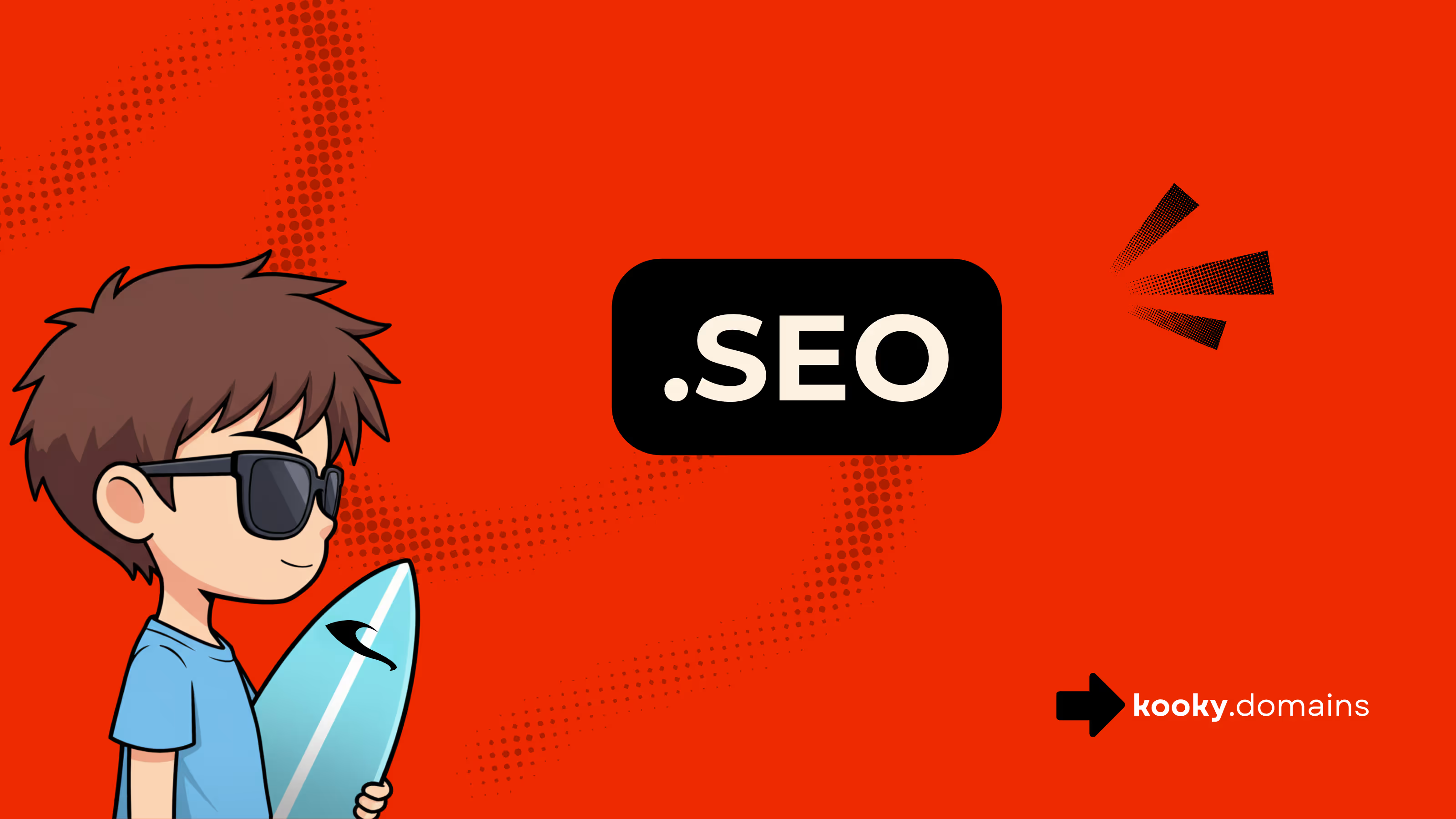
Most people rent attention on google.com, paying for a spot that disappears the moment the budget stops. The new winners don’t just chase rankings, they own the word itself, starting with a name people remember and can’t ignore.
That’s what “Claim the Throne of Search” means, putting your brand, creator name, or agency offer on a .seo domain that reads like a title, not a promo code. When someone sees your name, do they instantly know what you stand for, and can they type it once without thinking?
In this post, you’ll see how .seo supports search dominance through brand authority, a memorable naming strategy, and onchain ownership. Kooky domains are all onchain, owned by Kooky, and powered by Freename, so your .seo name can live in your wallet and work as a clean identity across Web3, while still acting like a simple, human-first brand asset anywhere you show up.
A traditional domain often feels like a lease. You pay, you renew, and you follow someone else’s rules. An onchain .seo flips that feeling. With Kooky domains, you’re not building your brand on rented ground, you’re putting your name on something you can hold in your own wallet.
This matters because your domain is more than a website address. It’s your identity link, the thing you put on profiles, proposals, decks, podcasts, and conference badges. If it changes hands, expires, or gets locked in an account dispute, your audience pays the price with confusion. Owning an onchain .seo domain tightens that up: one name, one owner, clear proof, and fewer moving parts.
Kooky domains are all onchain, owned by Kooky, and powered by Freename. In plain terms, your .seo domain is recorded onchain and controlled from your crypto wallet, not parked behind a registrar login that can get reset or restricted. If you’ve ever had to chase down access to a domain because a former contractor set it up, you already get the appeal.
The flow is simple: you mint or buy once, it lands in your wallet, and ownership is recorded onchain. There are no renewals to remember and no surprise expiration that breaks links across your bio, email signature, and printed materials. You manage what the domain points to using Freename management tools, so you can update your destination as your brand evolves.
So what does “real life” look like here? It looks like having one clean link that you can confidently put everywhere, then adjusting the destination whenever you need to, without swapping the public-facing name.
A few practical ways people use a .seo domain day to day:
yourname.seo) so people can remember it even if they don’t scan.The big win is control and portability. Your domain becomes a stable front door, even if everything behind it changes.
Most domain endings are vague. They don’t tell people what you do, they just sit there. .seo is different because it declares a role. When someone sees it in your handle, on a slide, or in a podcast description, they don’t have to guess your lane.
That clarity creates a strong first impression. It’s the same reason a well-fitted suit feels different than “business casual.” You’re signaling intent. You’re saying, “Search is my craft,” without writing a paragraph to explain yourself.
And here’s where the “crown” idea becomes practical. In competitive markets, attention often goes to the name people remember. Ask yourself this in the middle of building your brand: when someone hears your name once, can they recall it later and type it without thinking? A sharp .seo name helps because it’s short, specific, and tied to a single idea.
To keep it grounded, .seo doesn’t magically boost Google rankings. Search engines don’t hand out top spots because of a domain ending alone. What it can do is improve the inputs that lead to better outcomes:
Think of .seo like a crown on a chessboard. It doesn’t win the match by itself, but it changes how the room sees you, and that can change who gets the next move. The real goal is simple: be the name they remember, the name they type, and the name they look up on purpose.
If you want more search wins, stop thinking only in terms of keywords and start thinking in terms of signals. Search engines pay attention to what people do, what they search for, and what they choose to click when they recognize a name. People do the same. When your name becomes the shortcut, you don’t have to fight as hard for every generic term.
This is where an onchain .seo domain fits. Kooky domains are all onchain, owned by Kooky, and powered by Freename, so your .seo can act like a stable identity link you control from your wallet. That stability helps you build repeatable brand patterns across the web, the same name, the same link, the same promise, everywhere someone might look you up.
Branded search is simple: it’s when someone types your name (or brand name) into Google instead of a broad term. Think searches like:
Those searches are gold because they show intent and trust. The person isn’t asking “who does SEO?” anymore. They’re asking “where do I find you?” That’s how you start to control your own search results, not rent space in someone else’s keyword race.
A .seo domain makes that intent easier to remember. If people hear you on a podcast, see you speak, or catch a quick post, “Name dot seo” sticks because it matches what they already associate with you. It’s like giving someone a clean, one-step address instead of a long set of directions. The best part is that it’s easy to say out loud and easy to type from memory.
To push branded search on purpose, keep your identity tight:
@alexseo on one platform and @alexdoesmarketing on another, you’re training people to forget..seo is the kind of link someone can recall later without scrolling through DMs.When people search “Name + seo” and your onchain .seo is the exact match they remember, you’re not guessing what they’ll click. You’re guiding it.
Most brand confusion comes from tiny mismatches. A different logo on LinkedIn, an old tagline on X, a link that goes to a dead landing page, a bio that says one thing while your site says another. Each mismatch creates friction, and friction kills trust.
Treat your .seo as your single source of truth, the one link you place everywhere, so both people and search engines get a consistent story. With Kooky domains (all onchain, owned by Kooky, powered by Freename), you’re anchoring that story to an asset you control. You can update where it points without changing the public-facing name everyone already knows.
Standardize these basics across every profile and listing you control:
.seo), then routes to your core pages.The practical move is simple: set your .seo as the primary link in your bios and profiles, then use it to point people to the pages that matter most (services, case studies, newsletter, booking). This reduces confusion because you’re not scattering random URLs across the internet.
It also lowers copycat risk. When you train your audience that there’s only one official link you share, it’s easier for them to spot fakes. If someone asks, “Is this you?”, you can answer with one line: “Yep, my only link is yourname.seo.” That clarity is a brand signal on its own, and it compounds every time someone searches for you by name.
A strong .seo domain is a shortcut to recall, but clicks come from what happens after the tap. When someone lands on your site, they’re judging fast: “Is this for me, can I trust it, and what do I do next?” Your goal is to make that decision easy, on every device, with one clear story tied to your onchain identity (Kooky domains are all onchain, owned by Kooky, and powered by Freename).
Think of your homepage like the sign above a shop. If people have to walk in and ask what you sell, you already lost time, and trust. The top of your homepage should make three things obvious right away: what you do, who it’s for, and what the next step is.
Start with a clear headline that matches your real offer. Not your job title, not a vibe. Something a buyer understands without context, like “Technical SEO fixes for SaaS teams” or “Local SEO for dentists in Austin.” Under that, add one short line that calls out the audience and outcome. If you serve more than one group, pick the primary one here, you can cover the rest lower on the page.
Then add proof, quickly. A visitor is silently asking, “Why should I believe you?” You can answer without a wall of text:
Finish the hero section with one main call to action. One. If you give three equal buttons, people freeze. Pick the action that matches your sales process, like “Book a consult,” “Get an audit,” or “See pricing.” Secondary links can exist, but keep them visually quieter.
A quick branding note: use your .seo name like a signature, not like a repeated chant. Put it where humans expect branding, like your logo area, browser title, footer, and social previews. Skip awkward repetition in body copy. The point is recognition, not stuffing.
Finally, basic technical hygiene matters because slow or confusing sites bleed clicks. Keep it high-level and practical:
If your homepage reads like a clear storefront sign and loads like it should, your .seo link stops being just memorable and starts being profitable.
People don’t search like they used to. More and more, they type full questions. They talk to search tools the way they talk to a smart friend: “Who’s the best SEO for a Shopify store with slow pages?” or “What should an SEO audit include for a local business?” That shift changes what “winning” looks like.
You’re not only trying to rank for a short keyword anymore. You’re trying to be the source that gets referenced when an AI summary answers the question. That happens when your site has pages that are easy to understand, specific, and consistent.
Focus on a small set of helpful pages that match real buying and trust questions:
Write in plain language, like you’re explaining it to a smart client who doesn’t work in SEO. If you use a term like “canonical” or “Core Web Vitals,” define it in one sentence and move on. Most people don’t want a textbook, they want to make a decision.
Real examples help both humans and AI systems understand your niche. Instead of saying “We improve rankings,” say what you actually did: “We reduced index bloat by removing thin pages,” or “We rewrote category copy to match how buyers search.” And only make claims you can back up. If you say “We can usually lift conversions,” show how you measure it, even if the numbers differ by client.
Consistency matters more than people think. If your site says you do “SEO strategy,” your LinkedIn says “growth marketing,” and your case studies talk mostly about web design, you’re making it harder for anyone (human or machine) to summarize what you’re known for. Pick a lane, repeat it naturally, and support it with pages that prove it.
Tie it together with your onchain identity link. When your .seo domain is the front door everywhere you show up, it becomes easier for AI tools and humans to connect the dots: same name, same focus, same proof.
Attention is easy to steal, trust is not. If you want your .seo domain to keep earning clicks, you need trust signals that feel real because they are real. The goal is simple: when someone checks you out, everything lines up.
Start with proof that matches your offer. A homepage quote that says “Great to work with” is nice, but it’s weak. Strong proof has detail:
Clarity is a trust signal too. If you offer SEO services, say what’s included and what the client needs to provide. If you have boundaries (no long contracts, no “guaranteed #1”), say it. Buyers trust adults who set expectations.
Consistency across the web is the other half of the lock. Search engines and people both notice mismatches. Keep your brand details aligned across your main profiles:
Avoid shady tactics. Don’t buy fake reviews, don’t stuff pages with awkward keywords, and don’t publish thin posts just to look active. Those moves might spike a chart for a minute, but they stain your brand for a long time.
One last layer is identity protection. If you use one official .seo link everywhere, you make it easier for your audience to spot imposters and copycats. With Kooky domains (all onchain, owned by Kooky, and powered by Freename), that single link can be the anchor you control, so your public identity stays stable even as platforms, profiles, and trends change.
A great onchain .seo domain doesn’t win because you own it, it wins because you ship it everywhere with zero confusion. Think of your .seo like your flag on the hill. Plant it once, then point every path to the same place until people can’t unsee it.
This is where the “no second place” mindset matters. Not in an ego way, but in a clarity way. If someone hears your name one time on a podcast, will they remember it later, type it right, and land on the real you? Your job is to make that answer “yes” on purpose.
Kooky domains are all onchain, owned by Kooky, and powered by Freename. That gives you a stable identity asset you control, which is exactly what you need for a clean rollout and consistent tracking.
Rollouts fail for boring reasons: the name is hard to spell, links go to five different places, and your profiles don’t match. Fix those basics and you’re already ahead of most brands.
Use this short checklist as your rollout plan, and move through it in order. You’re building one canonical brand name, repeated the same way everywhere, so people (and platforms) don’t have to guess.
.seo the main bio link. One front door. If you keep swapping between Linktree, a booking link, and random landing pages, you’re training people not to remember you..seo as the first link, not an afterthought..seo link. When someone compares profiles, do they see one brand or a set of aliases?.seo in:.seo, not a fragile campaign URL, so you can change destinations later without reprinting..seo points to a link hub, keep the top options stable so repeat visitors feel oriented.The goal is boring consistency. Your onchain .seo is the anchor, and everything else is a path leading back to it.
Rankings are visible, which makes them tempting to obsess over. The problem is they don’t tell the full story, and they can move for reasons that have nothing to do with trust. If you want the throne, you need demand, the kind people create when they remember you and come back on purpose.
So what should you watch? Keep it simple and focus on signals that show real pull.
.seo into the browser (or using it from bookmarks) means your name is sticking. That’s brand memory in action..seo, or “name + SEO”? That’s a strong sign you’re becoming the default choice in someone’s mind, even before they click.A useful gut check is this: when someone asks “Who should I hire for SEO?” do you show up because you ranked, or because you got recommended? Rankings matter, but brand demand is the part competitors can’t steal overnight.
If you keep your canonical name consistent and your Kooky .seo as the one link you push everywhere, these signals get easier to spot, and easier to improve without chasing every algorithm mood swing.
Claiming the throne of search isn’t about renting a fleeting spot on Google, it’s about owning the word people remember and type on purpose. An onchain .seo domain gives you that anchor: Kooky domains are all onchain, owned by Kooky, and powered by Freename, so your name stays under your control, in your wallet, with one clear identity you can carry across every platform.
If someone hears you once, can they recall your exact name later, trust it, and find the real you fast? Pair that single source of truth with content that proves you know your craft, clear pages, real results, and consistent signals across the web, and you stop chasing attention and start earning it.
Choose your name, set your .seo as your home base link, and make every platform point back to it. Own the word, and you won’t have to beg for the click.