.svg)
.svg)
Discover .famous
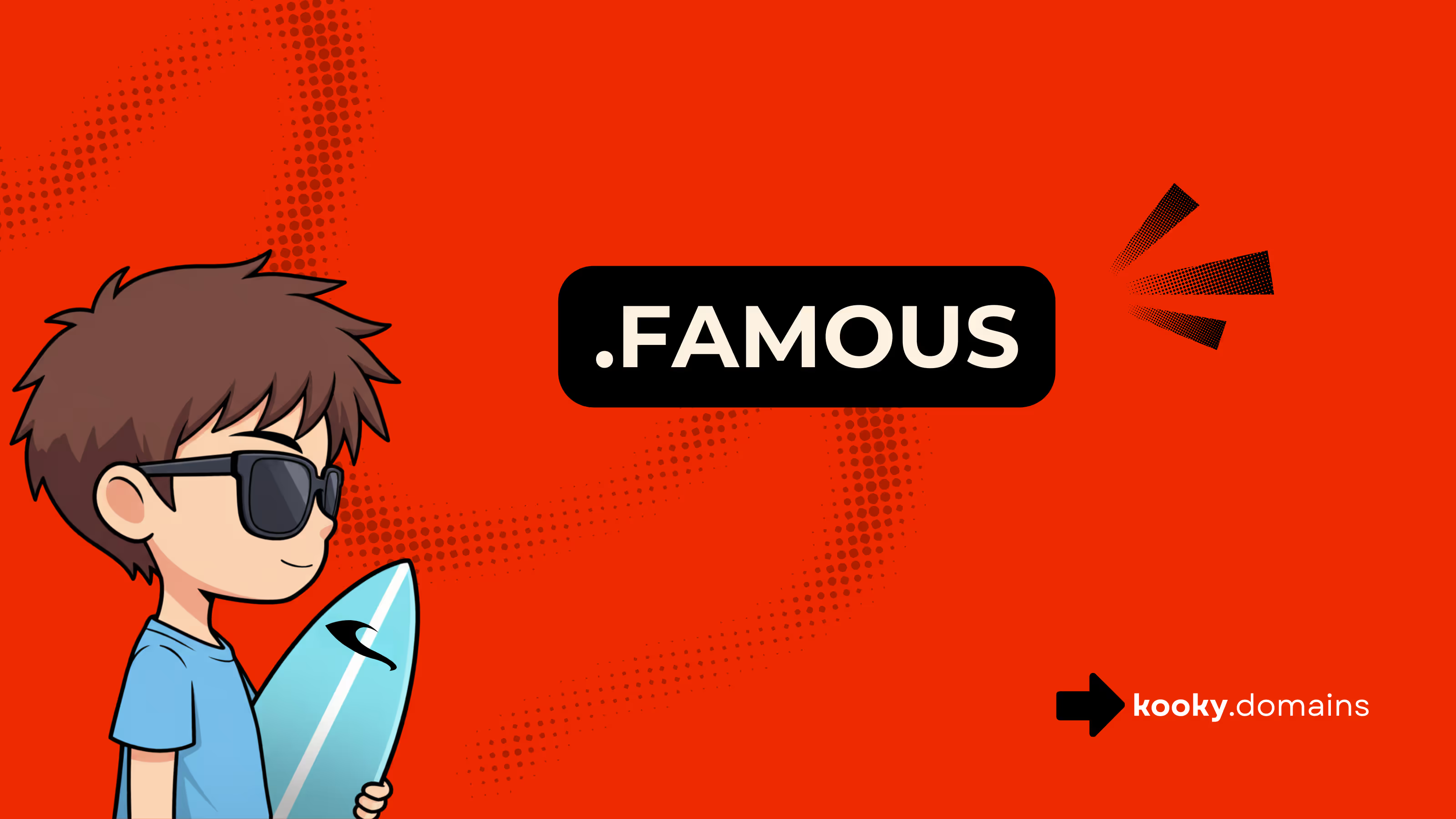
.famous isn’t a normal domain in the way people think about .com. In the onchain world, it’s closer to a deed, a claim on a name that carries a simple idea: fame is a label, and labels stick when they’re owned, not rented.
This post breaks down what “own fame itself” can mean without the hype. You’ll learn why onchain ownership changes the rules, how a name becomes portable across platforms, and what to do next if you want a .famous-style identity that people remember.
If you’ve ever felt like your brand lives at the mercy of platforms, this is a different way to think about your name: as property you hold.
Owning fame isn’t owning attention. Attention is fickle. It spikes, drops, moves on. What you can own is the label people use to find you, talk about you, and point others toward you.
That’s the real promise behind a .famous name in an onchain context: a status signal tied to identity, not just a place to host a website. When someone sees a clean, direct ending like .famous, they don’t have to guess what it’s for. It frames you as the “main character” of that name.
It also changes the feel of the asset. Traditional domains are usually rentals with renewals, policies, and a registrar as the gatekeeper. Onchain domains are more like digital property held in a wallet, often transferable, and usable across apps that choose to support them.
One quick example makes it real: an artist who goes by “Mara” can point mara.famous to a link hub today, a storefront tomorrow, and a new platform next month, without retraining fans on a new URL every time. The name becomes the memory hook, the destination can change.
A useful note for clarity: you may see “.famous” used in different ways across the internet. This article is about the onchain domain concept, where ownership is recorded on a blockchain rather than managed as a standard DNS rental.
If you rent an apartment, you can decorate, but you can’t rewrite the lease. If the landlord changes the rules, you adjust or you leave. That’s how most traditional domains feel: you pay, you keep paying, and you follow the registrar’s terms.
An onchain name is closer to holding a house title. You still have responsibilities, but the core right is different. The asset sits in your wallet, and in many systems it can be transferred like any other onchain item. That’s why people describe it as a deed: it’s proof you hold the name.
This doesn’t magically make everything safer or easier. Wallet security matters, and apps still choose what they support. But the center of gravity shifts. Your name is not just an entry in a registrar database, it’s an asset you control.
If you’ve ever lost access to a social handle, you already understand the pain. The point is not “no rules,” it’s fewer middlemen between you and your identity.
Branding isn’t only logos and color palettes. It’s recall. It’s what people type when they half-remember you after hearing your name once on a podcast, in a Discord, or from a friend.
Short endings help because they reduce friction. They turn into a verbal habit: “It’s Mara dot famous.” That’s easy to say, easy to repeat, and easy to write down from memory.
A good name does triple duty:
That’s the grounded version of the “instant legend” feeling. Not guaranteed fame, just a name that carries confidence and sticks in the mind.
Portability sounds technical until you put it in plain words: one name, many destinations, and you control where it points.
When your identity lives inside a single platform, you’re building on rented land. If the platform changes reach, changes rules, or loses relevance, you’re stuck dragging your audience across the internet again and again.
Onchain naming tries to solve that by making the name the anchor. The name can point to a website today, a profile tomorrow, a payment address next week, or a new community page later. The audience follows the name, not the platform.
In the context you asked for: Kooky domains are positioned as onchain domains, owned by Kooky, powered by Freename. Treat that as product positioning. The practical takeaway is what matters: the goal is a portable identity layer that can outlive any one app.
Portability still depends on support. Some apps will recognize an onchain name for sign-in, display, or payments, and others won’t. But when support exists, the experience feels simple: you share one name and it stays “yours” as your stack changes.
A website is the obvious use, but it’s not the most interesting one. The bigger value is that the name can act like a public identity layer, a single place to verify “this is me.”
In real life, people use onchain names for things like:
A profile link that you can update without changing the name people share.
A link-in-bio replacement that looks clean on social profiles.
Payments, when apps let the name resolve to a wallet address.
Sign-ins, when platforms support name-based login or identity badges.
Community roles, when a community uses ownership to grant access.
Proof of ownership, when you need to show you control a name without explaining your whole story.
Redirects, so the same name can forward to a current campaign, drop, or event page.
Feature sets vary by ecosystem. Some names function mostly as collectible identity, others plug into apps in a deeper way. The smart move is to buy the name for the identity first, then treat extra features as upside.
Platforms are great at distribution, and also great at changing the deal. Algorithms shift, accounts get flagged, policies tighten, and sometimes your reach collapses overnight. It’s not personal, it’s how platforms work.
Onchain ownership won’t stop that. But it can reduce the damage when it happens because your identity anchor stays intact. If an app locks you out, your name can still point people to your current home base.
It also changes how you build momentum. Instead of asking, “How do I grow on this platform?” you can ask, “How do I grow my name?” That’s a different mindset. It pushes you toward email lists, communities, and cross-platform presence, with your onchain name as the hub.
Nothing guarantees fame. A .famous name won’t make bad work good, and it won’t replace consistent output. It just gives you a cleaner, stronger way to hold onto what you earn.
A .famous name makes the most sense for people who need quick recall. If you’re building a personal brand, a product, or a community, you’re always fighting the same enemy: people forgetting you between moments of attention.
A good name helps you win that fight. It becomes the shortcut people use when they don’t want to search, scroll, or guess.
This is also where being honest helps. If you don’t plan to use the name, don’t buy it “just because.” But if you already publish, sell, stream, ship, or lead a community, a memorable name can tighten everything.
Some groups get a clear benefit from a .famous style identity:
Creators and streamers: Your audience grows across apps. A single name helps people find the real you, not a clone account. If someone heard your name once, could they type it later and find you?
Founders and operators: Investors, partners, and customers want a fast way to verify you. A clean name reduces doubt and looks intentional on a pitch deck, bio, or email footer.
Musicians and DJs: Releases move, links rot, platforms change. A stable name lets you update where you send fans without losing the thread.
Collectors and builders in crypto: Wallets, marketplaces, and communities already live onchain. A readable name makes it easier to receive funds and prove ownership, when your tools support it.
Meme accounts and internet personalities: Virality is chaos. A simple, sticky name is how you turn a moment into an address people can return to.
Communities and DAOs: A shared name can act as a flag. It’s easier to rally around one identity anchor than five different invite links.
The goal is not to look fancy. The goal is to make it easy for a stranger to remember you, find you, and trust they landed in the right place.
Naming is where most people mess up, usually by overthinking it or getting cute. A .famous name works best when it’s plain, direct, and repeatable out loud.
Here’s a simple checklist, written like rules you can follow:
A quick warning that saves pain later: watch for trademarks and impersonation risk. Don’t pick a name that copies a brand, a celebrity, or a competitor. Choose something you can defend ethically, not just something you can grab.
Buying an onchain domain should feel boring. The moment it feels rushed is the moment you’re most likely to click the wrong link, trust the wrong DM, or buy a name you don’t actually want.
The exact flow depends on where the name is issued and which chain it lives on. Some systems let you mint directly, others sell through a marketplace. Either way, the core steps look similar, and you should treat verification as part of the process.
If you’re looking at Kooky domains, remember the positioning: onchain names owned by Kooky and powered by Freename. The action step that matters is the same in any ecosystem: verify the official source before you connect a wallet.
Keep the process simple and repeatable:
First, pick the exact name you want, and write down two backups.
Next, check availability through the official mint site or a trusted marketplace listing.
Then connect a wallet you control, ideally one you don’t share casually with random sites.
Review the terms shown on the page, then confirm the full cost (price plus network fees).
Approve the transaction, then wait for confirmation.
Once you own it, set the profile data or links the way you want, depending on what the platform supports.
Last, share it everywhere you show up: bios, pinned posts, email signature, and community profiles.
Treat setup as part of the purchase. A name you never configure is like buying a sign and leaving it facedown in the garage.
Most “domain disasters” are avoidable. They usually come from one of three mistakes: trusting the wrong link, skipping security basics, or buying a name that sounded fun for five minutes.
Watch out for these traps:
Fake links and DMs: If someone messages you a “mint link,” assume it’s a scam. Bookmark the official site and only use that bookmark.
Lookalike names: Scammers love near-matches. Double-check spelling before you buy, and double-check the collection or contract details when you’re on a marketplace.
Weak wallet habits: Don’t share seed phrases, ever. Consider a hardware wallet for valuable names. Keep recovery info stored safely, offline if possible.
Rushing and overpaying: Hype makes people click faster than they think. Slow down, compare listings, and don’t let urgency pick your name for you.
Names that trap your future: “BestAustinDogGroomer” might fit today, but what if you open a second location or change industries? Choose a name that can hold more than one chapter.
A good onchain name should feel like a long-term home address, not a temporary slogan.
Fame is attention, but identity is what lasts when attention moves on. “Own fame itself” works as a mindset because it pushes you to treat your name like property, not a placeholder.
A .famous-style onchain name is positioned as a deed to that idea, and onchain ownership makes the deed portable across platforms that support it. Decide the exact name you want, secure it from the official source, then set it up so people can find the real you in one click, with your name as the anchor.