.svg)
.svg)
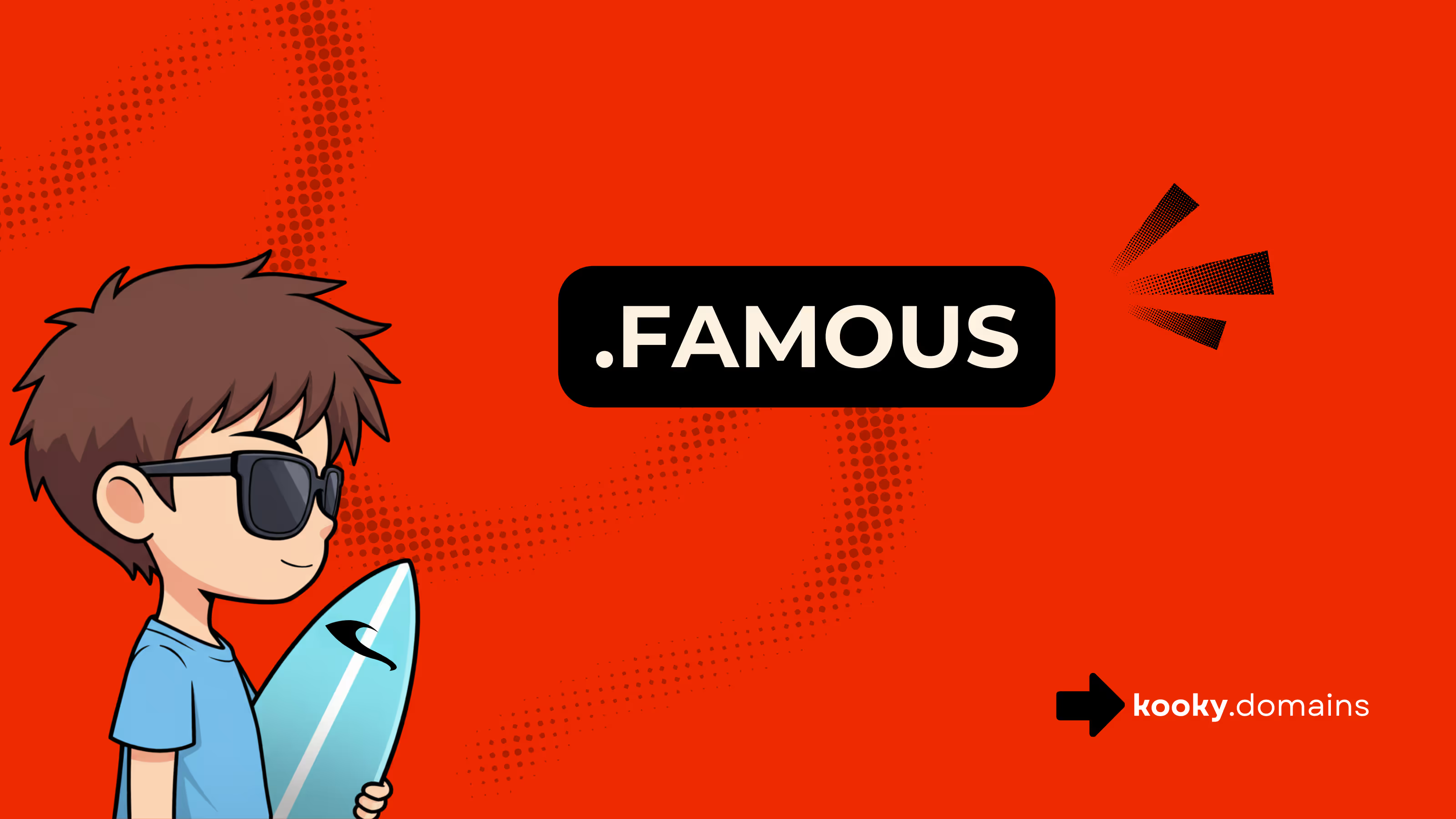
Discover .famous
Fame used to have gatekeepers. A label, a publisher, a TV slot, a big budget. Now the gate is simpler and harsher: attention. People find you in seconds, decide in seconds, and move on in seconds.
So what makes someone world famous today? It’s not only talent. It’s also a name that sticks, a public identity people trust, and a home base you control even when platforms change their rules.
That’s where onchain domains fit. They’re not magic, but they can act like a “nameplate” for the internet, a short human name that points to your work, your community, and even your wallet, without forcing fans to copy long addresses or hunt through link pages.
Being famous isn’t just being seen. It’s being remembered, searched, and recommended by other people when you’re not in the room. Think of fame like a chorus: one voice can be strong, but a crowd repeating the same line is what makes it echo.
That’s why your name matters more than your follower count. If people can’t recall it, they can’t refer you. If they can’t spell it, they can’t find you again. If five accounts claim it, they won’t know which one is real.
Ask yourself a practical question while you plan: when someone hears your name once on a podcast, can they type it correctly on the first try? If the answer is “maybe,” your brand is leaking attention.
A strong fame-ready name has a few traits:
Traditional domains help, but they still sit under a registrar’s control, renewals, and policies. Onchain domains add another layer: verifiable ownership and a portable identity that can move with you.
Fame also has a trust problem now. AI can copy voices, faces, and writing styles. Impersonation is cheap. The audience is more cautious, and they should be. Your job is to make the real you easy to verify.
An onchain domain is a blockchain-based name that can point to things you own and control. Instead of pasting a long wallet address, you can share a readable name. In practice, it can also act like an identity hub: a single label that connects your content, your payment rails, and your proofs.
Why does that matter for becoming world famous? Because friction kills sharing.
If a fan wants to tip you, buy a drop, or invite you to collaborate, and your identity feels messy, they hesitate. If it feels clear, they act. Even one extra step can drop conversions, and fame is built on repeated small actions.
Onchain domains also support a new kind of credibility: verifiable reputation. In public commentary about Web3 naming, onchain domains are often described as places to attach proofs, like tickets, badges, or ownership records, so others can verify claims without trusting a screenshot. That changes the tone of your brand. It’s less “trust me,” more “check it.”
There’s also the portability angle. Social platforms are rented space. A domain, especially one you hold in a wallet, can follow you across apps. If an algorithm buries your posts, your core identity still works.
Well-known examples in Web3 naming include ENS-style names (often seen as name.eth). Prominent people in crypto use them publicly because they’re easy to remember and hard to fake if you verify the wallet. That pattern matters even if you’re not in crypto. The concept is universal: a public-facing name that proves continuity.
If you want fame that lasts, build a name that outlives the trend cycle.
Not all onchain domain paths are the same. The best choice depends on what you’re trying to become famous for: you as a person, your media project, or a community brand with many members.
If the main goal is “one name equals me,” a simple onchain name can work like a signature. You use it on bios, merch, event slides, and payment links.
The key is consistency. If your handle is @KaiNova everywhere, and your onchain domain is kainova, you remove doubt. People don’t ask, “Is this the same person?” They assume it is.
Freename is positioned differently from many Web3 naming options. Based on current public descriptions, Freename lets you mint domains as NFTs and also create and own your own top-level domain (the extension itself). That means you could run something like .yourbrand and issue names under it.
This is a very different fame move. It turns your brand into a neighborhood, not just a house.
Public materials about Freename highlight several points that matter for branding:
If your fame plan includes a fan community, an academy, or a creator collective, a custom extension can make sense because it creates a shared identity for others.
A quick reality check: some branded domain projects are talked about online with strong claims, but public reporting can be thin. If you’re looking at something like “Kooky domains,” verify details directly through official channels and clear documentation before you build your identity around it.
Fame grows when people can do three things easily: find you, share you, and trust they found the real you.
Onchain domains can support all three, but only if you use them with intention. A domain sitting unused is like a billboard in the desert.
Here are practical ways to turn an onchain domain into a fame engine:
There’s another reason this matters right now: people are tired of being tricked. When impersonators can spin up accounts in minutes, a stable onchain identity can act like a public anchor. It won’t stop every scam, but it gives your audience a consistent “source of truth” to check.
And here’s the persuasive part: fame isn’t only about reach, it’s about conversion. A million views with no trust is noise. A smaller audience that can verify you, pay you, and vouch for you can compound into real influence.
If you want to become world famous, don’t wait until you “deserve” a clean identity. Claim it early, then grow into it.
Say it in a sentence: “Have you seen ____?” If it sounds awkward, it won’t spread. If people need you to spell it every time, they won’t recommend it.
Avoid numbers and extra punctuation unless they’re part of your stage name. Keep it human.
The goal is simple: a fan should be able to guess your handle, and be right. When your name is consistent, your audience becomes your marketing team without trying.
If you can’t match everywhere, pick one canonical version and make the others redirect to it. Clarity beats perfection.
You don’t need a huge site. You need a page that answers five questions fast:
If your onchain domain provider includes tools like a website builder or email services (as Freename publicly describes), use them if they reduce setup time. The best platform is the one you’ll actually keep updated.
Train your audience. For example: “My only official links are on my domain.” Repeat it in bios, pinned posts, and video descriptions. This is where trust starts to compound.
Fame spreads through stories. Launch something that makes your name worth repeating: a sharp opinion series, a free resource, a live event, a limited drop, a challenge with a clear result.
When people talk, they should have a simple hook and a simple name.
The more visible you get, the more you’ll be imitated. That’s not a compliment, it’s a risk.
Basic protection moves matter:
If you plan to run your own extension through a platform that supports custom TLDs, read the terms and understand what ownership means in practice. Fans will treat your extension like a promise, so don’t treat it casually.
Becoming world famous is less about chasing every platform and more about building a name people can carry for you. Onchain domains help when you use them as a public identity, a trust anchor, and a simple way to support your work.
Pick a name that’s easy to repeat, claim it where it counts, and make it useful in daily life for fans and partners. Then protect it like the asset it is.
The real question to keep in your head as you grow is simple: when people talk about you, will they know exactly where to find the real you, every time?