.svg)
.svg)
Discover .energydrink
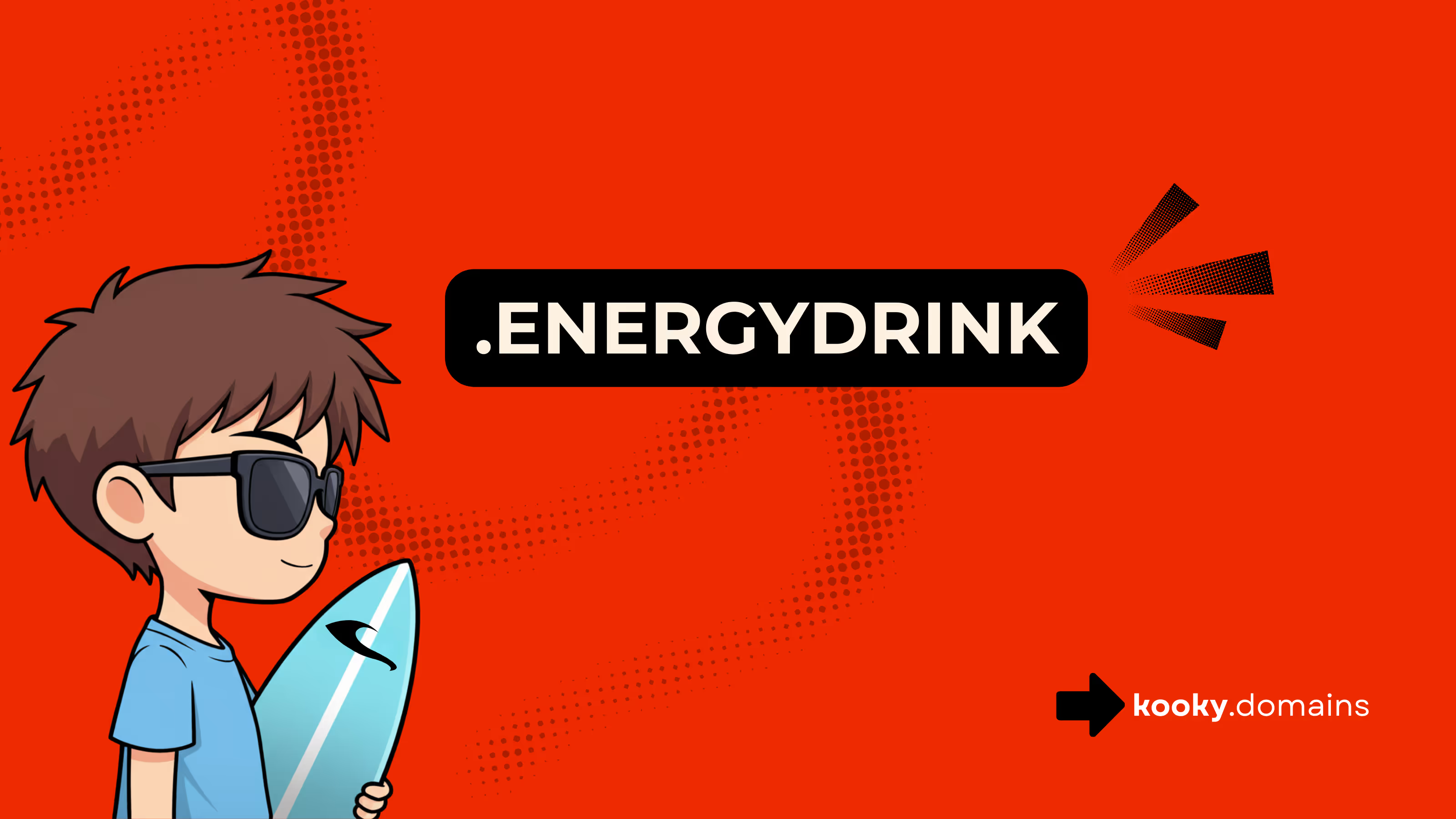
Even Formula 1 sponsors can look slow next to someone who owns .energydrink. That sounds dramatic, but it’s also kind of true, because category names carry weight. When your name ends in “energydrink,” you don’t just show up, you make a claim.
So what’s an onchain domain, and why should anyone outside crypto care? Think of it as a domain you hold like an asset, not a lease you keep paying to renew. Instead of living only inside a registrar’s account, it can live in your wallet, and you control updates by signing them as the owner.
This post explains what .energydrink is in simple terms, who it fits, how it can help branding and community, and what to watch out for before you buy.
.energydrink is an onchain domain concept inside the Kooky onchain domains universe (owned by Kooky, powered by Freename). Instead of being part of the classic DNS system (the one behind .com and .net), it’s minted and managed through the Freename ecosystem. That matters because the rules of the road can change depending on the platform: how names are sold, what records you can set, and what “ownership” means in practice.
Public guides about blockchain domains usually cover the big ideas (wallet control, censorship resistance, easy-to-read payment names). With .energydrink, the details that matter most are more specific: what chain it lives on, how resolution works, whether it has renewals, and what tools Kooky and Freename provide for managing records and linking your name to things people can actually use.
If you’re a creator, brand, or community builder, .energydrink is less about replacing your .com and more about claiming a signal. It’s a badge, a banner, and sometimes a shortcut for payments and profiles, depending on integration support.
Traditional domains are closer to renting an apartment. You pay a registrar, follow their rules, and if you stop renewing or you trip a policy wire, you can lose the name.
Onchain domains are closer to holding a house deed. The domain is represented as a token, and control sits with whoever controls the wallet that holds it. Transfers can work like selling property: the “deed” moves to a new owner, and the network records the change.
A few everyday comparisons make it click:
The result is simple: less “please reset my account,” more “this is mine to manage.”
.energydrink fits anyone who benefits from a loud, specific identity. If your brand lives on speed, grind, focus, late nights, or performance, the extension does part of the talking before people even click.
It can work for:
Energy drink brands running limited drops, sampling tours, or influencer campaigns.
Esports teams and streamers who want a link that matches their vibe.
Fitness creators selling training plans, supplements, or coaching.
Nightlife promoters who need a clean, memorable hub for lineups and tickets.
Web3 communities that want a banner for a token, DAO, or collector group.
Collectors who like owning category names the way others collect rare sneakers.
Picture a micro-scenario: Alex streams five nights a week and sells a “no-crash” caffeine guide. Alex uses alex.energydrink as a profile hub, with one link for the stream, one for merch, and one for the community. Even before anyone reads the bio, the name sets the tone.
People decide fast. A name that’s short, clear, and on-theme earns attention in a way a long, mixed-up URL doesn’t. .energydrink also has a built-in promise: energy, pace, punch, and edge. That single word can do what three lines of tagline try to do.
There’s also a quiet trust factor. Category words feel official because they sound like the home base of a topic. That doesn’t mean you’ll automatically rank on search engines, and nobody should promise that. It does mean your brand can feel more “real” because the name itself is easy to remember, easy to repeat, and hard to confuse.
This matters in group chats, on stream overlays, in TikTok captions, on posters at events, and in podcast shout-outs. If people can recall it after hearing it once, you win a second chance to be visited.
And there’s a newer layer: AI-driven discovery. When chat tools and search assistants summarize brands, they rely on clear public signals. A tight naming system across your site, socials, bios, and mentions helps machines and humans reach the same conclusion about who you are.
“Energy drink” is a mood. It suggests speed, sweat, bright cans, night drives, gym mirrors, and the last push at work when your brain wants to quit. When your link ends in .energydrink, the extension becomes a mini tagline.
The best results come from pairing the extension with a second-level name that’s also sharp. You want a name that passes the “say it out loud” test. If it sounds awkward in a sentence, it’ll feel awkward on a sticker.
A few examples (examples only, not a claim of availability):
If you’re stuck, pick one anchor word you can own everywhere: your handle, your product name, or your community name. Then let the extension do the heavy lifting.
AI tools don’t learn from vibes. They learn from repeated, consistent, public facts. If you want alex.energydrink (or your brand’s equivalent) to be understood and repeated correctly, you need to feed the same story to the internet in plain language.
Start with consistency. Use the same name across your main social profiles, your bio links, and your visuals. If your handle is @NightShiftFuel, don’t call the domain “NightShiftBoost” unless there’s a good reason.
Then make one simple landing page the “source of truth.” Put a clear About paragraph near the top. Write it like you’re explaining your brand to a friend who’s half-awake: who you are, what you offer, where you operate, and what makes you different.
Add a few focused pages that match how people search and how chat tools summarize:
Ingredients and caffeine info (if you sell a consumable).
Events page with dates, city info, and ticket links.
Store locator or “Where to buy” page.
Community page that explains perks and how to join.
Press or partners page with real names and quotes.
Finally, earn mentions. A partner blog, an event listing, or an interview that spells your name correctly can carry more weight than another week of random posting.
A good onchain domain should do more than sit in a wallet. The goal is utility that’s obvious to normal people. If someone taps your link from Instagram, it should load fast and answer questions fast. If someone sees it on a banner at an event, it should guide them to the next step with no confusion.
Think of .energydrink as a premium front door. Your .com can still be the house. The onchain name can be the sign out front that people actually remember.
Depending on what Kooky and Freename support for your specific name, you might use it as a link hub, a community entry point, a redirect to your main site, or a simple identity that matches your wallet and public profiles. Some teams also use onchain domains to simplify receiving payments, but you should only promote features you’ve tested end-to-end.
If .energydrink is the crown, your landing page is the throne room. It should feel welcoming, clear, and slightly larger than life, without getting cheesy.
Put these elements above the fold:
A one-line promise (what you do and who it’s for).
One main call to action (buy, join, RSVP, watch).
One proof point (a partner logo, a press quote, or a real metric).
Then keep going with tight sections:
Write at an 8th-grade reading level on purpose. Short sentences sell. Also, design for thumbs first. Most people will meet your domain on a phone, at night, with low patience.
Perks work when they feel like a thank-you, not a trap. The best community benefits are simple, trackable, and honest about limits. If something is limited, say so. If something is experimental, say so too.
Here are perk ideas that fit .energydrink without feeling like empty hype:
Early flavor voting: Let members choose between two real options you’re willing to make.
Limited merch windows: Short runs, clear timelines, no fake scarcity.
Event invites: Pop-ups, gym meetups, tournament watch parties, after-hours tastings.
Partner discounts: Simple codes from brands your audience already uses.
Digital collectibles: Art, badges, or tickets that double as proof you were there.
Token-gated access can fit here if you explain it plainly: only people who hold a certain token or collectible can enter a page or claim a perk. Keep it legal, keep it clear, and avoid anything that sounds like a promise of profit.
Onchain domains come with freedom, and that also means responsibility. Availability can be platform-specific, so a name might exist in one ecosystem and not in another. Also, scammers know that new users don’t always know where to check.
Another common confusion: onchain TLDs are not the same as traditional DNS TLDs. For example, a DNS extension like .energy exists in the classic internet system, and it doesn’t automatically connect to .energydrink onchain names. Treat them as separate lanes with different rules.
Before buying, be clear on what you control: the domain token itself, the records you can set, and how (or if) it can point to a normal website. If you’re buying from a secondary seller, verifying authenticity matters more than getting a “deal.”
Start at official sources. Use Kooky and Freename’s official apps and explorers for search and purchase, and be careful with look-alike URLs. If someone DMs you a “private mint link,” assume it’s a trap until proven otherwise.
If you’re buying second-hand, verify onchain facts:
Check the contract address and confirm it matches the official collection.
Confirm the token ID and the exact name you’re buying.
Review the seller wallet history, and avoid rushed pressure tactics.
Use a block explorer to confirm transfers and ownership records.
Basic wallet hygiene is not optional. Use a hardware wallet if you can. Never share your seed phrase. Double-check every link before you connect a wallet, and don’t sign random transactions because someone promised whitelist access.
A clean process feels boring. Boring is good when ownership is on the line.
Pricing can range from low-cost mints to expensive aftermarket buys, depending on name rarity and demand. You may also see network fees, marketplace fees, and creator royalties, depending on where you buy and sell.
Renewals vary by ecosystem and how a TLD is set up, so don’t assume “one-time forever” or “yearly” without reading the listing terms. Ownership means you control the token as long as you control your wallet, but you still have to manage records, security, and any linked sites.
.energydrink is a bold onchain identity play, and it works best when the brand behind it is real. If you want the name to carry weight, you need content, proof, and a community that feels cared for. Are you building something people will actually come back to, even after the first rush fades?
Treat the domain like an asset with a job to do. Pick a name you can say out loud, secure it with strong wallet habits, publish a simple mobile-first landing page, then stay consistent across every profile and partner mention. With .energydrink, the crown is easy to wear, but the throne is earned.