.svg)
.svg)
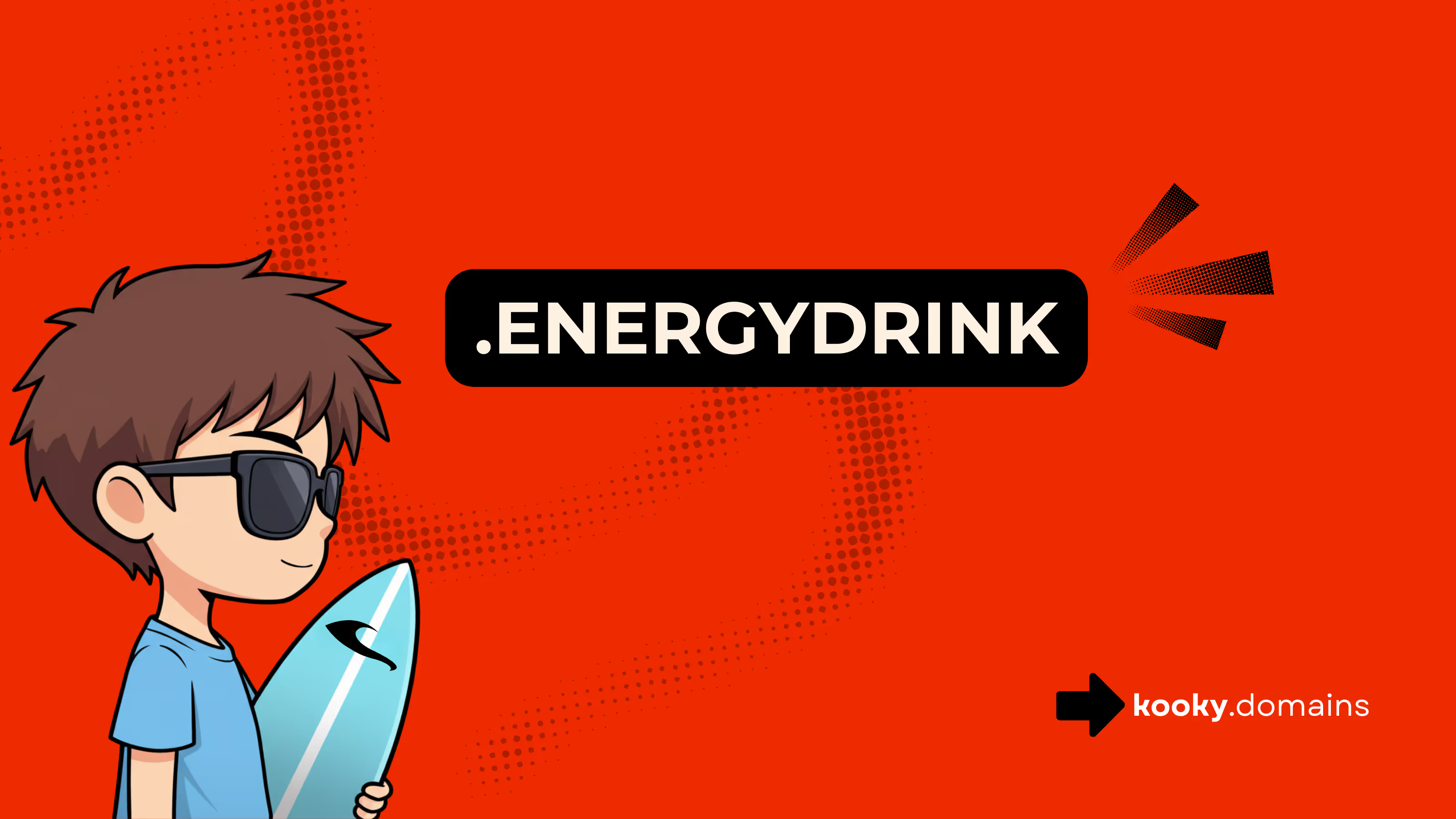
Discover .energydrink
What if your online name could pay you back over time, not in a “get rich” way, but in the quiet compounding way that good identities do? Think of a great domain like a jacket you wear everywhere. People recognize it, they trust it, they remember it.
That’s the vibe behind claiming a permanent rocket-fuel royalty. It’s a fun phrase for the long-term upside you can build from owning an onchain domain: status, access, clean payments, and resale potential if you ever decide to part with it.
In this guide, “rocket-fuel” points to the energy of a name like .energydrink, and “permanent” points to onchain ownership, where the domain sits in your wallet, not in a rented account. Kooky domains are onchain, owned by Kooky, and powered by Freename. This is not financial advice, it’s a practical walkthrough for claiming your domain and using it the right way, without getting sloppy on safety.
“Permanent rocket-fuel royalty” is not a formal, documented rewards program. It’s a way to describe a real pattern: when your identity is portable and you own it, you can build benefits that stack over time.
Start with permanent. Onchain domains are typically minted or registered on a blockchain and held in your wallet as a token (often an NFT-style asset). That means your “name” is not just a setting inside one app. It’s more like property than a subscription, with a big asterisk: you’re responsible for your keys.
Then there’s rocket-fuel. A name like yourname.energydrink carries a punchy signal. It’s not neutral like a random string. It has a personality baked in. You don’t need to act like a brand to benefit from that, you just need to show up consistently.
Finally, royalty is the part people misunderstand. This is not a promise of payouts. It’s the compounding upside that comes from being easier to find, easier to pay, and harder to confuse with someone else. Traditional usernames can be taken, changed, shadow-banned, or tied to one platform’s mood. Traditional DNS domains can be powerful, but they usually involve renewals and registrars. Onchain domains are designed to be held in your wallet, moved when you choose, and used across tools that support them.
When it works, it feels like a small engine behind your identity. The name doesn’t do the work for you, but it makes your work easier to recognize and harder to forget.
With an onchain domain, your wallet is the “account.” You hold the domain token, you can transfer it, and you can prove ownership by signing a message. It’s not locked to one social network, one payment app, or one inbox provider.
That portability is the point. If a platform changes rules or loses its charm, your name can still be your anchor elsewhere, as long as the next tool supports onchain names.
There’s also a hard truth: lose your keys, lose your domain. If your wallet seed phrase is gone, nobody can “reset your password.” That’s why the “permanent” part is both empowering and unforgiving. Ownership is real, and responsibility is real too.
The “royalty” is what you earn by using the domain well and sticking with it. Practical examples include:
name.energydrink than a random address string.None of these are automatic. A domain is like a great sign above a shop, it helps, but you still have to run the shop.
Because public, step-by-step docs for Kooky’s exact flow are not widely available in the sources here, the safest approach is to follow universal onchain domain steps and only use official paths from Kooky and Freename. If you’ve claimed NFTs before, this will feel familiar. If you haven’t, go slowly and treat every click like it matters.
Here’s a clean, tool-agnostic process you can follow:
If you feel lost at any step, stop and verify. A domain should make your life simpler, not give you a new weekly anxiety habit.
A good .energydrink name should sound clean when spoken out loud. If you had to say it on a podcast, would it survive, or would it turn into “underscore, dash, wait no, two x’s”?
Aim for short, easy spelling, and something you won’t outgrow. If your handle is already known, matching it helps. If it’s taken, don’t “compromise” into something that looks like a license plate. One strong alternative beats five weak variations.
Also, choose the wallet you plan to keep for a long time. Your wallet becomes your identity anchor. If you claim the domain in a throwaway wallet, you’ll either live with that mistake or risk transferring it later (and transfers are the moment people mess up).
If you want an extra layer of calm, consider holding the domain in a cold wallet and using a separate hot wallet for daily activity. That way, your identity asset is harder to lose in a bad click.
After you claim your .energydrink domain, verification is simple and worth the minute it takes.
First, confirm the domain shows as owned by your wallet in the domain manager interface you used to claim it. Second, check your wallet activity to confirm the transaction succeeded. Third, look for the asset in your wallet’s collectibles or NFTs section (wallets label things differently).
Then set records. Depending on what Kooky’s interface exposes through Freename, you may be able to attach wallet addresses for receiving funds, plus basic profile data. The main goal is practical: when someone sees your domain, they should know where to pay you.
Before you share your new name widely, do one small test payment. Not a “send everything” payment, just a small amount you won’t miss. It’s the same logic as testing a microphone before you go on stage.
Owning name.energydrink is the starting line. The “rocket-fuel” feeling kicks in when you use it in places people already look: bios, invoices, community profiles, and payment requests.
If your onchain domain supports payment records, it can function like a readable payment handle. Instead of pasting a long address, you share your domain. It’s not just prettier, it reduces copy-paste errors and lowers the chance someone sends to the wrong place.
It can also become a public badge. When someone sees a consistent onchain name across platforms, it signals stability. You look less like a burner account and more like a real person with a long-term presence.
Two quick mini examples:
You can also build a simple landing page that points to your work, your contact info, and your preferred payment options. Even if your main website changes, your onchain name can stay consistent, like a sign that never moves.
Consistency is where the compounding happens. Use the same name across socials (when possible), in community handles, and in your wallet-facing profiles. If you sign messages for verification, try to keep that same domain identity as your public “stamp.”
Apps come and go. Communities migrate. Your content gets reposted without context. An onchain domain can be the thread that ties it all together, as long as you keep using it.
A simple habit helps: every time you add a new profile, ask, “Where should someone go to confirm it’s really me?” If the answer is your .energydrink domain, you’re building a clear map for your audience.
The one mistake that ruins everything is sharing your seed phrase, or typing it into a site. No domain setup ever needs your seed phrase. If a page asks for it, it’s a trap.
Onchain identity attracts scammers because it’s valuable and transferable. Common attacks include fake mint pages, “support” DMs, wallet-draining approvals, and look-alike URLs.
Use this short safety checklist:
If something feels rushed or emotional, that’s usually the point. Slow down, check twice, and keep your identity asset boringly safe.
Claiming a permanent rocket-fuel royalty is not about chasing guaranteed payouts. It’s about owning an onchain domain, then using it so your identity gets stronger over time. With a .energydrink name, you’re choosing a loud, memorable signal, like nuclear-grade energy baked into your handle.
The practical path is simple: choose a name you can live with, claim it through the official Kooky and Freename routes, verify ownership onchain, set your payment records, then start using the domain anywhere people might want to find you or pay you. The “royalty” comes from repetition, trust, and real utility, not from hope.