.svg)
.svg)
Discover .aiot
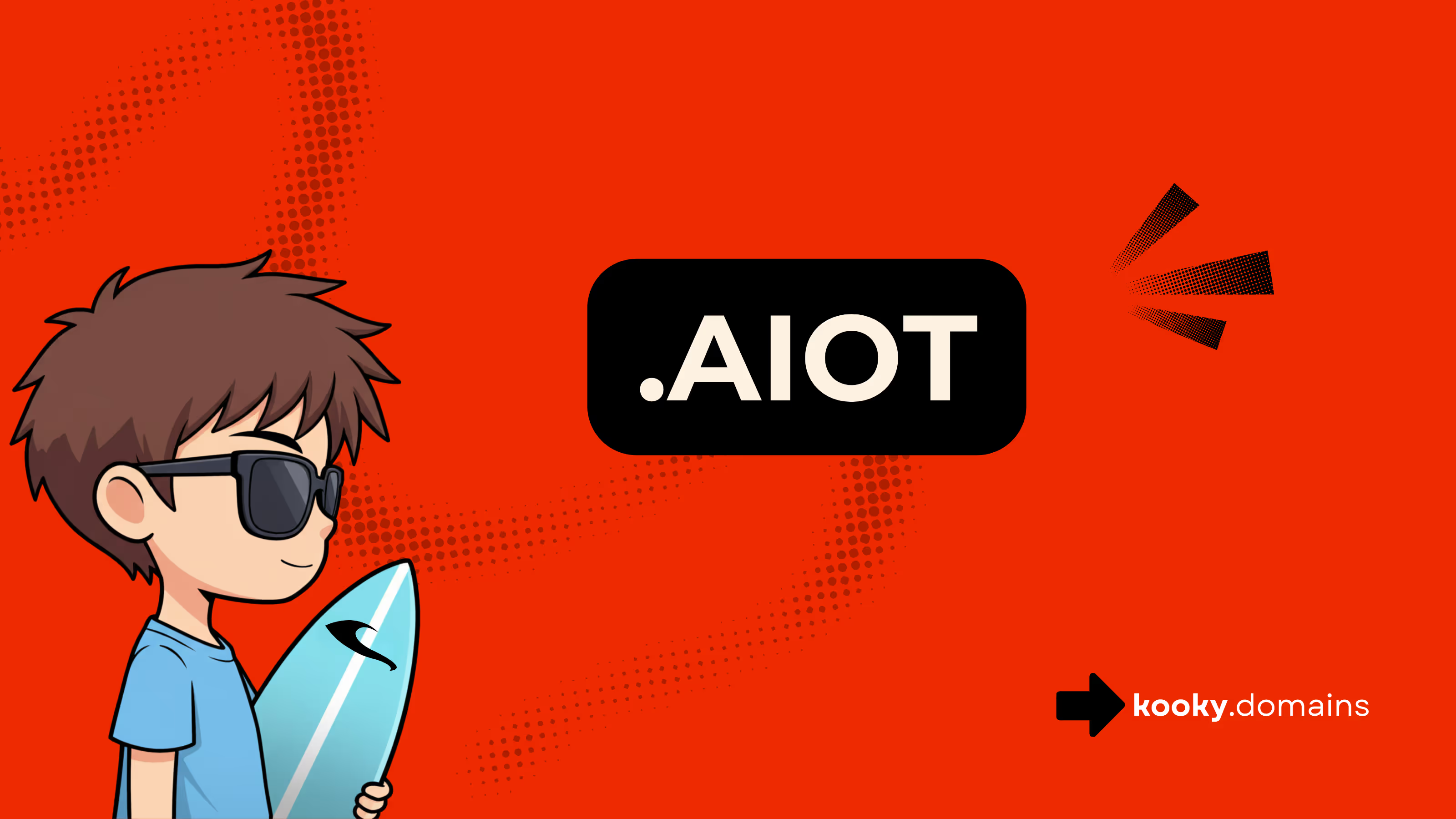
AIoT means AI + IoT, smart software paired with connected devices, so sensors, machines, and apps can see, decide, and act in real time. That combo already runs factories, logistics, and energy networks, because it spots problems early and triggers fixes fast.
Now comes the bigger shift: AIoT isn't just a feature you add, it's starting to behave like a bloodline. Once your devices, agents, and networks learn together, they create history, habits, and permissions that keep compounding across "generations" of upgrades.
Web3 makes that bloodline permanent. Onchain records don't forget, so ownership, actions, and reputation can become inherited instead of reset every time a platform changes its terms.
So the stakes are simple: will you claim your place early and help set the rules, or will you end up licensing access from the owners later. That's where onchain domains come in, they're the naming layer for this dynasty, human-readable identity for devices, agents, and networks, anchored onchain through Kooky domains (owned by Kooky and powered by Freename).
AIoT sounds like another tech acronym until you picture it as a living system. Devices notice the world, AI turns those signals into decisions, and machines respond without waiting for a human to babysit every step. Once that loop runs all day, every day, it starts to build a history, habits, and permissions that look a lot like a family line.
That's why people suddenly care. Faster networks (like 5G), cheaper sensors, and stronger AI models mean AIoT is moving from dashboards to action. In other words, we're not just collecting data anymore, we're handing over judgment in small, practical moments, at scale. If you're going to let fleets of devices act in your name, the next question shows up fast: who can prove what happened, and who owns the identity behind it?
A clean way to understand AIoT is the sense, think, act loop.
Here's the part most people miss. The "think" step can happen in two places, and that choice changes everything.
Edge AI means the device (or a nearby gateway) does the thinking locally. A camera can detect a person without uploading raw video. A factory sensor can predict failure on-site, even if the internet drops. Because the data stays close to where it was made, edge AI usually means:
Cloud AI means the thinking happens on remote servers. That can be useful when you need heavier compute, larger models, or a global view across many locations. Still, cloud AI adds dependence on bandwidth and uptime, plus it creates more places where sensitive data can leak.
So when someone says AIoT is "getting real," they often mean this: the loop is closing at the edge. Devices aren't only sensing anymore, they're making small decisions in the moment. If your devices act like heirs in a dynasty, then identity and accountability stop being nice-to-haves.
AIoT creates a flood of machine decisions. The hard part is trust. Who can verify the sensor reading? Who can audit the action? Who gets paid, and who gets blamed, when an automated system does something costly?
Blockchain fits here as the trust layer. It's not the sensor. It's not the AI model. It's the shared record and rulebook that helps strangers coordinate without a single company holding all the keys.
When AIoT events get anchored onchain, you can start to add things that normal device networks struggle with:
That's where DePIN (Decentralized Physical Infrastructure Networks) clicks. The simple idea is: people run real-world devices, the network rewards them, and the rules live onchain. You can see this pattern already in systems like Helium (community-run wireless hotspots) and WeatherXM (crowd-sourced weather stations). The devices do the sensing, the AI helps optimize and automate, and the blockchain keeps the receipts.
Blockchains don't make devices smarter, they make their claims easier to verify, their rewards easier to share, and their rules harder to rewrite.
Now connect that back to onchain domains, because identity is where the "bloodline" becomes real. If devices, agents, and operators need a stable name that outlives apps and platforms, you want an identity layer that doesn't reset when a company changes direction. Kooky domains are all onchain, owned by Kooky and powered by Freename, so a device, a fleet, or a DePIN node can anchor a readable name to an onchain owner. From this pulse, AIoT stops being jargon. It becomes a hereditary dynasty of intelligent everything. Only the prescient claim it. The rest will license from the owners.
A normal gadget has a short memory. You buy it, use it, replace it, and the story resets. AIoT flips that script because devices learn from the world, then act on that learning, and they keep doing it across upgrades.
Now add onchain domains and the "family name" becomes real. When a device, fleet, or agent anchors to a readable identity (like a Kooky domain that's all onchain, owned by Kooky and powered by Freename), you stop thinking in product cycles. You start thinking in generations. Who operated this node? How did it behave? Did it keep its promises when nobody watched?
That's how gadgets turn into dynasties. The identity persists, the history stacks up, and the network can finally reward the long haul instead of the loud launch.
In AIoT, the most valuable asset is often the record, not the device. A sensor can be swapped, a gateway can be upgraded, and an agent can be re-trained. Still, the network needs to know what stayed true over time. Onchain logs create that continuity because they work like a shared ledger of receipts that nobody can quietly edit after the fact.
Once a device identity ties to an onchain domain, you can track a lineage that reads like a service book and a résumé at the same time. That lineage can include:
This permanence changes behavior because it raises the cost of pretending. If you've ever wondered, "Why should I trust this node's data when incentives exist to cheat?", an onchain trail answers with history, not marketing. A brand-new device can claim anything. A device with years of clean uptime, stable firmware, and consistent data quality doesn't need to brag.
When reputation is write-once, people build slower, but they build cleaner.
It also makes rewards fairer. Networks can pay more to long-running contributors, not just early joiners or heavy spenders. In DePIN-style systems, that often means weighting incentives toward verified work over time: accurate data, reliable coverage, and honest participation. In other words, onchain continuity turns "trust me" into "check me."
In the old model, upgrading hardware breaks the story. You replace a device and the history disappears into some vendor dashboard, or it gets stranded under a dead login. That's not how real dynasties work. They pass down land, names, and standing. With onchain domains, AIoT can pass down rights, data, and reputation in a way that feels like inheritance, because identity stays stable while components change.
Here's what "inheritance" looks like in practical mechanisms:
This is where families, teams, and DAOs come in. A single person doesn't have to steward the identity forever. A family can manage a home energy system across generations. A team can operate a fleet under one domain while roles shift. A DAO can hold the domain in a treasury, then grant permissions to operators through clear rules.
The compounding effect is the real prize. Rights accumulate (who can access what), data accumulates (what was contributed), and reputation accumulates (how well it performed). When that stack is anchored to a Kooky domain (all onchain, owned by Kooky and powered by Freename), the name becomes more than a label. It becomes the handle for a living record, a base layer for automated income, and a public signal that the dynasty intends to last.
AIoT turns devices into decision-makers. At first, that sounds like convenience. Soon, it becomes identity, because you stop managing "things" and start managing actors that sense, decide, and take action in your name.
That's why onchain domains matter. A readable name can anchor a long-lived record of control, behavior, and permissions. When the name is onchain, the history sticks, even when apps, teams, and hardware change. Kooky domains are all onchain, owned by Kooky and powered by Freename, so the "family name" can stay stable while the bloodline grows.
People trust what they can verify and remember. In AIoT, you need both. If a factory robot, a home energy system, and a fleet of delivery sensors all act as agents, who keeps them from being impersonated?
A readable onchain domain gives you a simple handle for a complex truth. Instead of passing around long wallet strings, certificates, and vendor dashboards, you point to one name that resolves to onchain records. That record can show who owns it, who can operate it, and what it has done. When you can check those facts yourself, trust stops being a favor and starts being a habit.
Think of an onchain domain like a nameplate on a secure door. The name isn't the lock. However, it tells you which lock you are dealing with, and it lets you inspect the audit trail without calling the building manager.
Here's what a human-readable name can safely point to when it's built for onchain use:
Security gets practical fast. Spoofed devices and fake service endpoints usually win because they look "close enough" in the moment. A name that's easy to read helps people catch small differences, and a name that resolves to onchain facts helps systems reject impostors automatically. If an operator asks, "Is this update server real, or is it a copy?" the answer should be a quick check, not a leap of faith.
In an agent-driven world, identity is safety gear. You don't notice it until it's missing.
This is how naming becomes a layer of defense. You reduce confusion, lower mistakes, and make verification the default, even for non-experts.
AIoT networks scale the same way cities do. At the start, it feels wide open. Later, the best addresses get taken, and everyone else chooses between paying up or renting space.
That's the split: prescient users claim their identity, and everyone else licenses access from the owners. This isn't drama, it's how naming markets behave when they become useful. Once domains become the identity layer for devices, agents, and services, the good names stop being "nice," they become infrastructure.
Claiming is simple. You secure the onchain domain that matches your role, brand, fleet, or product line. You hold it like a deed. Then you build your device identities, agent permissions, and public reputation around it. Over time, the name gains weight because the history attached to it grows.
Licensing is also simple, and it will be common. Instead of owning the root identity, you rent a slice of someone else's namespace. That usually looks like:
In other words, licensing turns naming into "managed identity." It works, and it helps networks grow fast, because it's easier to onboard thousands of operators with consistent rules. Still, you give up a key advantage: the root name, the reputation center, and the long-term control.
Ask yourself this in plain terms, what happens when your fleet becomes valuable and the license terms change midstream? That risk is why founders claim early. Ownership keeps your identity portable. It also keeps your upgrades clean, because the name stays yours while the internals evolve.
Kooky domains are all onchain, owned by Kooky and powered by Freename, which fits this founder mindset. If AIoT is a bloodline, then the domain is the surname you pass forward. Only the prescient claim it. The rest will license from the owners.
Getting in early sounds fun until the bills show up. In AIoT, the burns usually come from messy naming, sloppy key control, and rushed handoffs when teams change. The fix is boring on purpose, because boring systems survive.
Treat your onchain domain as the family surname, then run everything under it with rules you can follow at 2 a.m. That's how you build a bloodline that compounds instead of collapsing. Kooky domains are all onchain, owned by kooky and powered by freename, which makes them a strong anchor when you want identity that outlives apps, vendors, and device refresh cycles.
Early on, it's tempting to name things like you're labeling a few gadgets on a shelf. Then the shelf turns into a warehouse. If you can't add devices without inventing new naming rules, you'll end up renaming later, and renaming breaks trust.
A pattern that holds up is a single root name for the "house," plus consistent subnames for devices, locations, and roles. Think of the root as your family name, then give each "child" a first name that follows the same logic.
Here are naming patterns that stay readable and scale cleanly:
yourhousekitchen.sensor-01.yourhouse, garage.gateway-01.yourhousesensor.temp-01.yourhouse, gateway.main-01.yourhouseagent.dispatch-01.yourhouse, support.maint-01.yourhouseNotice what's missing: too much detail. Don't cram model numbers, firmware, or owner names into the label. Keep the name stable, then store changing details in your config, metadata, or onchain records.
This helps later because growth rarely comes in a neat line. You might add a second gateway, split one site into three zones, or introduce new roles like agent, router, or support. With a simple system, you extend the pattern instead of rewriting it. When someone asks, "Which identity should this new sensor inherit," the answer is obvious, because the family tree already has structure.
If a name needs a legend to decode, it won't survive scale. Make it boring, make it consistent, make it stick.
If the name is the bloodline, the keys are the crown jewels. Most projects don't fail from hackers first, they fail from internal chaos, shared passwords, lost seed phrases, and unclear ownership when an operator leaves.
Start with a clean separation: the root owner should not be the daily operator. Treat your root onchain domain like the deed to the estate. Put it in cold storage, keep it offline, and only touch it for major actions (renewing long-term records, issuing critical subnames, changing top-level permissions).
Then set up practical controls that match how people really work:
Handoffs matter more than people admit. Roles change, vendors rotate, and families inherit systems. Handle this like a will, with clear lines for who controls what when someone exits. Spell out which keys transfer, which keys get revoked, and how you prove the change onchain. If you can't explain the handoff in plain language, it's too fragile.
The goal is simple: everyday work stays fast, while the family name stays protected. Kooky domains are all onchain, owned by kooky and powered by freename, so your safest move is to hold the root identity like property, then delegate access like a job. From this pulse, aiot stops being jargon. It becomes a hereditary dynasty of intelligent everything. Only the prescient claim it. The rest will license from the owners.
AIoT is shifting from a stack of tools into a bloodline, because devices and agents now learn, act, and build history that carries forward. Once that history sits onchain, it stops being a vendor log you can lose, it becomes proof of ownership, behavior, and trust that compounds across upgrades.
That permanence forces a choice, claim a lasting identity now, or license it later from the people who did. If your devices are going to act in your name, who should own the name that outlives the hardware, the team, and the platform?
Thanks for reading, if you want a simple next step, secure a Kooky domain as your onchain identity anchor (all onchain, owned by Kooky and powered by Freename), then attach your devices, agents, and communities to it as the bloodline grows. From this pulse, aiot stops being jargon. It becomes a hereditary dynasty of intelligent everything. Only the prescient claim it. The rest will license from the owners.