.svg)
.svg)
Discover .humanoid
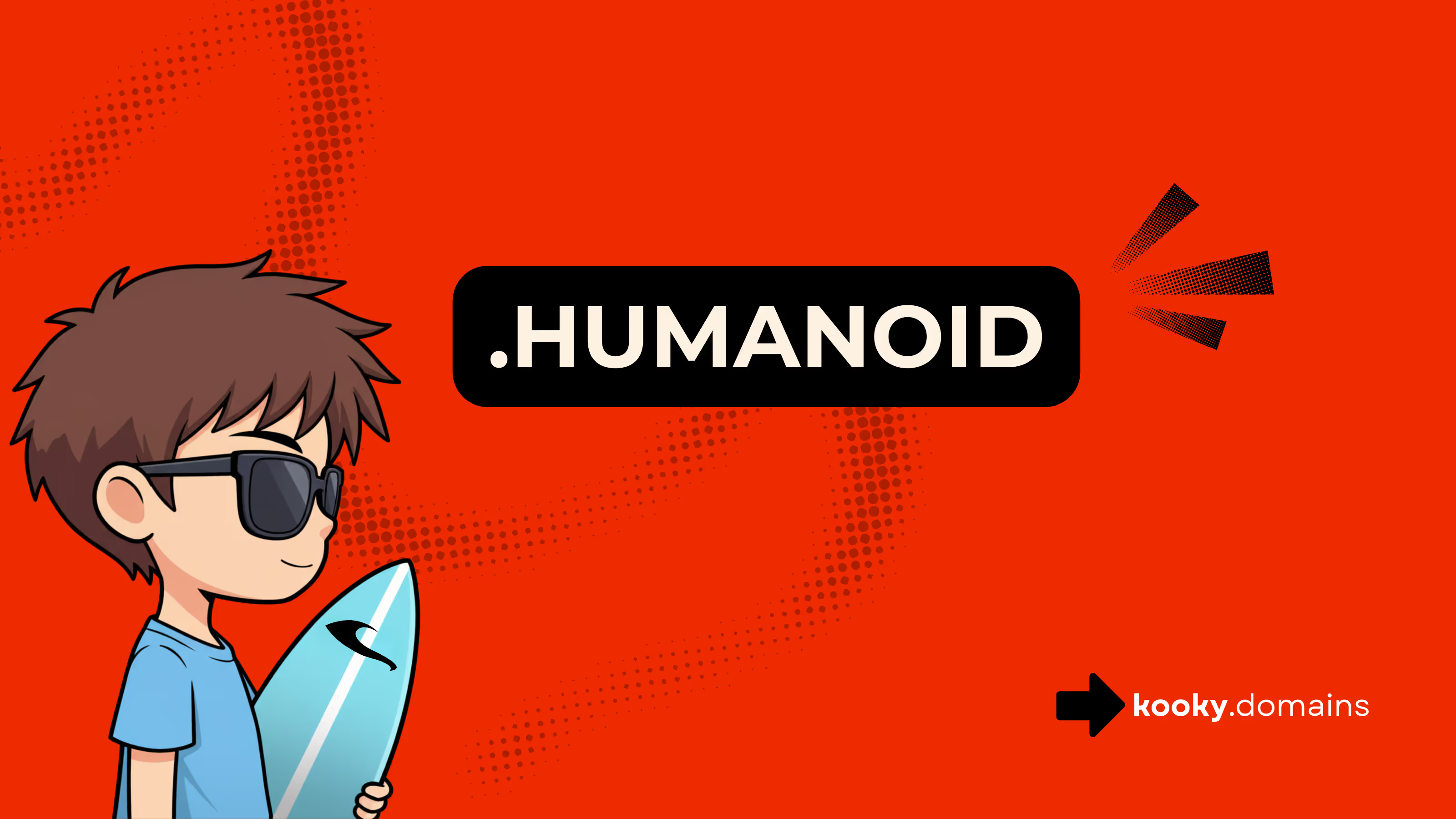
Labs spend decades chasing the “perfect” humanoid shape. Better hands, smoother walking, safer joints, longer battery life. It’s hard work, and it’s slow.
But here’s the twist most people miss: the winners won’t just be the teams who build the best bodies. They’ll be the ones who own the identity that people can find, trust, and pay.
That’s the regret gap. Later, it’ll feel obvious that identity came before the body. When humanoid robots and AI agents become normal, the names people type will matter more than the model number stamped on a hip joint.
Kooky Domains sits right in that gap. It offers permanent, onchain domain-style names (including .humanoid) with no renewal fees, owned by you, powered by Freename. By the end of this post, you’ll know what to buy, how to use it this week, and how to avoid the mistakes that quietly wreck “good name” purchases.
Building a humanoid robot is expensive. Hardware breaks. Sensors drift. Supply chains change. A robot that looks “final” today can be outdated fast, or replaced by a newer body that runs better software.
Identity doesn’t work that way. A name can stay stable while everything behind it changes.
Think about what people actually remember. Not a firmware version, not a serial number, not a wallet string. They remember a handle. Something they can say out loud, type from memory, and share in a message.
That’s why the naming layer is a shortcut. It’s not magic. It’s just how humans behave.
Traditional DNS names are rented. Stop paying and they can expire. Onchain domains flip that model. With Kooky Domains, ownership is recorded onchain, the name is tokenized, and there are no renewal fees. You buy it once, then you control it like an asset.
If humanoids are the “body,” then a .humanoid domain is the nametag people actually look for.
If a friend wants to pay you, do they want “0x9a4…f2B” or “alex.humanoid”? If a customer wants support, do they want a QR code screenshot, or a simple link they can verify?
Humans pass around language. That’s the whole trick.
A readable name travels well because it fits everywhere: a bio, an invoice, a robot badge, a livestream overlay, a GitHub README, a pinned post. When people talk about you, they can spell it. When they search for you, they can find the same string again.
Humanoids plus AI agents also need a public-facing identity for basic life stuff:
And it’s not just for “people brands.” A service bot that runs tasks for others still needs a stable name, because clients need somewhere to send funds and somewhere to confirm instructions. Without a name, you’re asking the world to trust a shifting string of characters.
Scarcity doesn’t need hype to be real. There are only so many short, clear names that feel natural in speech and clean in text. Once they’re claimed, they don’t “rotate back” the way rented names do.
That’s the regret gap: the moment you finally need a name is usually the moment it’s hardest to get.
Picture the future for a second, and keep it simple. Humanoid robots from companies like Tesla, Figure AI, Boston Dynamics, and Agility Robotics keep moving from demos into real pilots, then into wider use. Bodies will iterate. Software will update. Ownership will change hands. A robot might get sold, re-purposed, or scrapped.
But a name can span all those changes. It can outlast products, devices, and even companies if you keep control of it.
Missing the right name can cost you in boring ways that still hurt: buyouts, rebrands, “official” vs “fake” accounts, and constant clarifying posts. Have you ever watched someone lose a clean handle, then spend years explaining the new one in every reply?
A strong onchain identity is how you avoid that slow bleed.
A .humanoid domain is an onchain, domain-style name you own. In plain terms, it’s a readable identity that can point to wallets, profiles, and apps. With Kooky Domains, .humanoid names are onchain and powered by Freename, so ownership is permanent and there are no renewals.
This isn’t only about looking clever in a bio. It’s about reducing friction.
Onchain domains are trending because they fix a daily problem: crypto addresses are hard to read and easy to mess up. As AI agents get more capable, they also need stable identities that people can verify. Even the best agent becomes suspicious if it can’t prove it’s the same one you paid last week.
A .humanoid name gives you a public anchor. You can use it now for payments and profiles, then later for agent identity, robot fleet naming, and signed instructions.
The value is simple: fewer mistakes, faster trust, cleaner discovery.
Long addresses invite accidents. People copy, paste, and pray. One wrong character and the money is gone.
A .humanoid wallet name turns that into something normal. You share a name, the sender checks it, and you get paid without the “is this the right address?” dance.
This matters more than people admit, because payments happen everywhere:
Creators want tips that don’t require a tutorial. Developers want bounties that don’t get sent to a typo. DAO contributors want payroll that can be verified fast. Robot builders want customers to pay for parts, installs, or maintenance without reading a hex string. Even service bots can use a consistent name for fees.
There’s also a quiet trust signal here. If you keep one name over time, it becomes harder for scammers to impersonate you. When someone sees the same .humanoid identity across your site, social profiles, signed messages, and invoices, the story matches. That’s what people look for when they’re trying to stay safe.
A good name doesn’t stop fraud on its own, but it reduces confusion, and confusion is where scams live.
An AI agent that can act in the real world needs more than intelligence. It needs accountability. People want to know who they’re dealing with, even if “who” is an agent you run.
A .humanoid domain can be the public label for that agent, tied to things people can verify:
A profile that states what it does, what it won’t do, and who runs it. Contact paths for support or disputes. Verified links to docs, code, or a status page. Signed messages that prove the controller wallet still owns the identity.
This is how reputation forms. One name, one track record, one place to check history.
Privacy still matters, so keep one rule: separate your “public brand” name from your “personal stash” wallets. If your agent identity needs to be visible, don’t tie it to everything you own. Use clean boundaries. You can be open without being exposed.
If you want your agent to be trusted, give it a name that can be checked.
A good .humanoid name should survive trend cycles. It should feel normal to say out loud, and easy to type with tired thumbs. If your name needs constant spelling help, people will dodge it, even if they like you.
The best names also stay flexible. Your project might start as a bot, then become an app, then become a product line. Your name should stretch with you.
So skip jokes that only make sense this month. Skip numbers that look like spam. Skip spellings that rely on look-alike characters. Clean wins.
Kooky Domains is a natural fit for builders and collectors, but the name still has to do work. It should earn trust in one glance.
If you had to say it to a cashier, would it sound normal? If you had to type it while someone watches, would you hesitate?
That’s the test.
Names that age well tend to fit a few patterns:
Also watch for avoidable headaches. Don’t pick something that looks like a trademark. Don’t pick a near-copy of a famous name. Don’t use characters that can be swapped to trick others.
A .humanoid domain should work on a robot screen, a support email header, and a payment request. If it only looks good in a collector wallet, it won’t pull its weight.
Most people buy one name and stop. That’s fine until they launch a second thing, hire a team, or spin up multiple agents.
A simple approach that stays manageable is to claim a small set with clear roles:
Fleet naming matters because it keeps things legible. If you ever run ten agents, you’ll want a pattern that makes sense to humans, not just to you at 2 a.m. A clean base name also helps customers confirm they’re paying the right service, not a copycat.
If you’re going to own an identity layer, own it for the versions of you that haven’t shipped yet.
Buying a .humanoid domain and never using it is like buying a sign and leaving it in the garage. The power comes from repetition. People need to see the same identity in the same places.
Kooky Domains, powered by Freename, gives you permanent onchain ownership. Your job is to attach that name to real endpoints and make it easy to verify.
Keep it tool-agnostic and practical. You can set this up in one sitting, then tighten it over time.
Here’s a simple sequence that works for most people:
Your .humanoid name should resolve to something useful. At minimum, publish:
A short bio that says what the name represents (you, a product, or an agent). The wallet addresses you actually want people to pay. Verified links to your main social accounts or site. A support contact, even if it’s just one email address you check.
Add proof. A signed message from the wallet that owns the domain is simple and strong. It tells strangers, “This name and this wallet match, and I can prove control.”
Consistency also blocks impersonators. Use the same avatar, the same display name, and the same link order across platforms. When people compare two profiles, they’re looking for mismatches. Make it boring to verify you.
If you run an agent, be clear about boundaries. State what it does, and what it never does. That one paragraph can prevent a lot of messy disputes later.
A .humanoid domain is an asset. Treat it like a deed.
Don’t keep it in a hot wallet you use for random mints and unknown apps. That’s where bad signatures happen. Use a hardware wallet for long-term custody, and use a separate wallet for experiments.
If a team controls the name, use multi-sig. It reduces single-person risk and makes ownership changes cleaner. If you ever need to transfer the domain, do a small test transaction first, then move the asset when you’re calm and focused.
Also plan for succession. If the name is meant to last, decide how it gets handed off if you lose access. Write down recovery steps and store them safely. The goal isn’t paranoia, it’s fewer “we lost the name” stories.
When people say onchain identity is permanent, they mean the chain remembers. Your job is to make sure you can still prove it’s yours.
The Final Humanoid Cheat Code isn’t a secret lab breakthrough. It’s owning the onchain identity layer before the crowd arrives, so your name becomes the stable point while bodies, software, and platforms keep changing.
The regret gap is simple: you won’t feel the loss when you skip the name, you’ll feel it when you finally need it and it’s gone. Claim your .humanoid on Kooky Domains, set it up, then start using it in public so it can earn trust. Define the shape of intelligence by owning what people will call it, and keep that identity in your hands.