.svg)
.svg)
Discover .surfshop
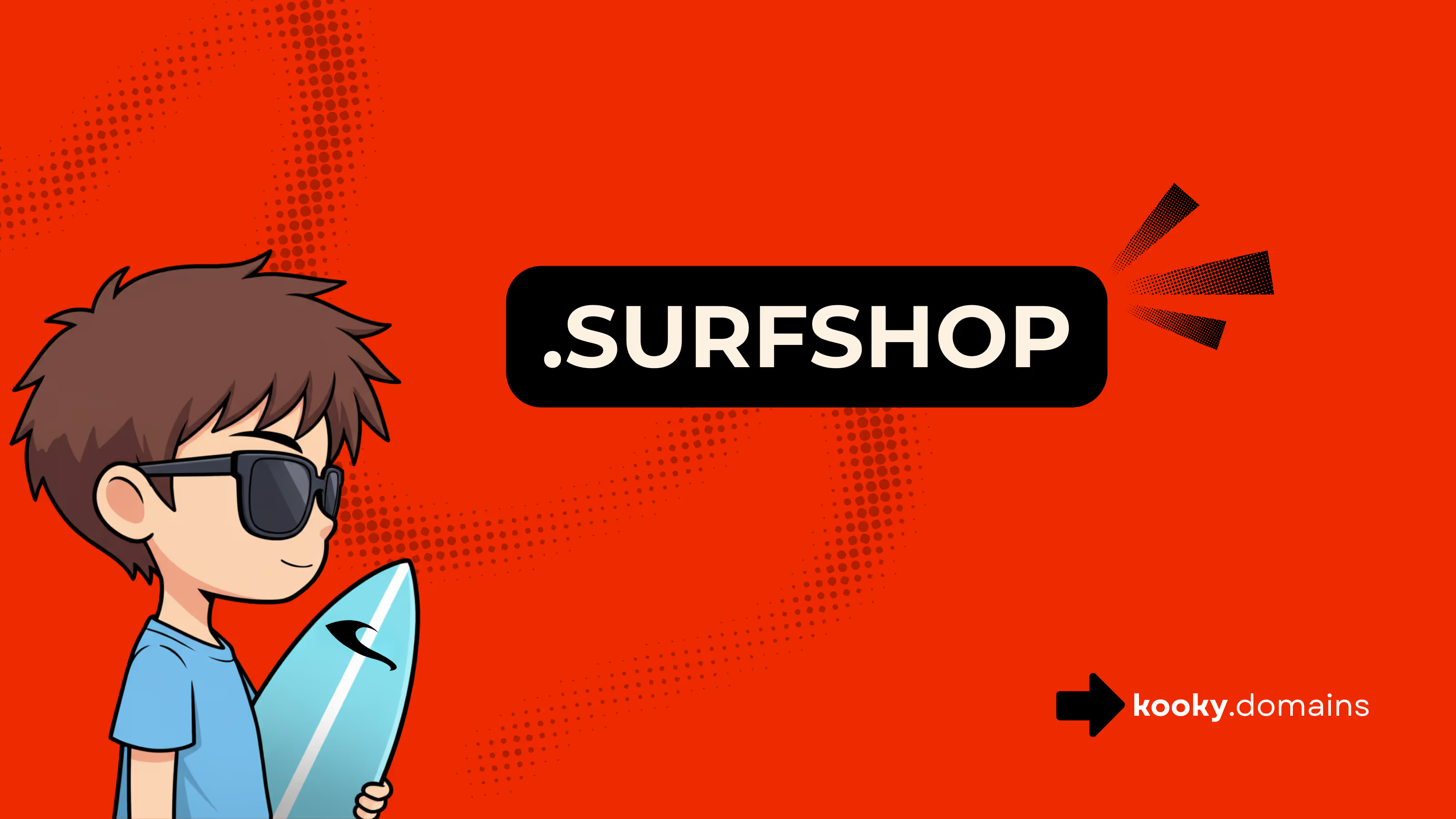
The best “shop” on the beach used to be a building. A little shack with wax in the heat, salt on the floor, and a bell on the door that never stopped ringing.
Now the best shop can be a name, one people recognize and protect.
It’s like a new swell hitting the sandbar. One wave changes the lineup, and only the quickest paddlers get into position. In Web3, that wave is simple: the “shop sign” can be an onchain domain, a name you can own and keep in the family. No renewals, no landlord, no surprise shutoff.
On Kooky Domains, names are onchain, owned by Kooky and powered by Freename. That means the name can act like property, not a rental. If you think “Surfshop” is just a word, ask anyone who’s ever chased a favorite logo across stickers, tees, and board bags. A name can outlive the storefront, and it can outlive you.
A surfshop brand grows the same way a local break earns respect, one clean day at a time.
First it’s the basics: you help a kid pick their first soft-top, you tell a traveler where not to paddle out, you fix a ding even when the repair rack is packed. Then it turns into reputation. Photos go up on the wall. The logo gets cleaner. The staff becomes a crew.
Over time, the shop’s value stops being only inventory. It becomes identity.
That identity is the name people say out loud, type into search, tag in photos, and slap onto a cooler. It’s the name that gets passed around at beach barbecues, and worn like a badge. If you’ve ever seen a shop logo tattoo, you already know the truth: the name can be stronger than the building.
What happens when the shop moves, but the name stays?
That question is no longer theoretical. Leases end. Coastal rent spikes. Storm seasons get weird. A shop that used to live steps from the sand might end up inland, or it might split into pop-ups, online drops, and event tents. If the name is the anchor, you can shift everything else without losing the crowd.
Localism used to mean geography. If you weren’t from that stretch of coast, you didn’t get the same nods. But brand trust works differently. Trust can follow the people who earned it.
That’s why so many strong surf brands feel like community hubs. Shops host film nights, shaper talks, team rider meet-ups, and small events that make the place feel like more than a register and a rack of leashes. People don’t just buy gear, they buy belonging.
A permanent onchain domain fits that shift because it can serve as a stable home base even when everything else changes. Social accounts get locked. Platforms change rules. Links get flagged. Algorithms bury posts. A name you own can still point your customers where you want them to go.
Think of it like the one landmark that never moves, even when the tide does.
Every beach has that moment: a set rolls through, someone hesitates, and another surfer takes the wave. The same thing happens with names. The people who don’t paddle early often end up chasing scraps.
Knockoffs can make quick money. A copied logo on a cheap tee sells fast to tourists who don’t know better. But it doesn’t create heritage. It doesn’t build trust. It doesn’t create stories that last longer than the summer.
A verified, owned-onchain name helps fans spot the real shop, the real merch, and the real drops. It gives you a simple thing to say when confusion hits: “That’s not us. This is us.”
And when your name is the asset, you’re not just protecting sales. You’re protecting the family story behind the brand.
Here’s the simplest way to think about an onchain domain: it’s a name you own like property, not rent like a subscription.
Traditional domains are usually a lease. You pay, you renew, you keep paying. Miss the renewal and someone else can scoop it up. Prices can change. Access can get messy if the “domain admin” is an old email nobody can log into.
Onchain ownership flips that. When a name is tokenized and held in your wallet, it behaves more like a deed. You control it as long as you control the keys.
Kooky Domains positions this in plain terms: permanent ownership, no renewal fees ever, and stronger resistance to takedowns. The names are owned by Kooky and powered by Freename, which is known for blockchain domains that are bought once and kept, rather than renewed each year.
This isn’t about tech bravado. It’s about making sure the sign stays up.
Ask any shop owner what they fear online, and you’ll hear the same few stories.
A credit card expires and the domain renewal fails. A staff member leaves and nobody knows the login. A registrar raises prices and holds the name hostage. A busy season hits, and the reminder email gets lost under supplier invoices.
In the regular web, one small admin mistake can wipe out years of brand momentum.
With a permanent onchain domain, the goal is simpler: no renewals, no yearly scramble. If the name lives in your wallet, it doesn’t “expire” because someone forgot to pay a bill.
That’s where the bloodline idea gets real. A family can keep the name, but only if they treat it like an heirloom. Keys matter. Planning matters. If you handle those basics, the shop sign can stay in the family even when the storefront changes hands.
A surfshop isn’t one thing anymore. It’s retail, lessons, repairs, events, and content, all moving at once.
An onchain domain can act like the front door to all of it.
Picture what that looks like in real life:
You can also map parts of the shop into clean sub-names that people remember. For example: shop.surfshop for merch, rentals.surfshop for boards and suits, lessons.surfshop for bookings. The point isn’t the exact format, it’s the habit you create: one trusted name that routes people to the right place.
Kooky Domains runs on Freename rails, which are built for onchain names meant to function as readable identity and brand addresses. For a surf brand, that means fewer moving parts, and one flag planted in the sand.
Names are scarce by design. There’s only one “perfect” version of any name, and once it’s taken, it’s taken.
That’s why this moment feels like a new set approaching. People can wait, watch, and hope, or they can paddle early and claim position. If your brand is called Surfshop, or you’re building toward that kind of iconic simplicity, the cost of hesitation isn’t just losing a name. It’s watching someone else build confusion around it.
Here’s a clean, practical way to take action without getting lost in hype:
A quick warning that matters: scams follow attention. If you’re hunting a valuable name, fake links and copy sites will try to catch you. Keep it boring, use official sources, and don’t sign random wallet prompts just because they look “surf-themed.”
A good surf name works like a good board. It paddles easy, turns clean, and still feels right when the waves change.
Before you claim anything, say the name out loud. Can someone hear it once and spell it? Does it fit on a sticker? Does it look right on a tee pocket?
A few naming lanes that age well:
Simple core name: “Surfshop”, “NorthJetty”, “Tidecraft”
Place-based: your beach, point, or town name paired with “surf” or “shop”
Crew-based: the nickname locals already use for your crew
Product-based: a board model name, a signature fin, a repair nickname
If budget allows, consider grabbing close variants that customers might type by mistake. Misspellings are common when people are sunburnt, tired, and trying to find your link fast. The goal isn’t to hoard, it’s to reduce confusion and protect the path back to the real shop.
An onchain name is only as safe as the keys that control it. That sounds intense, but the fix is mostly common sense.
Start with three habits:
Use a hardware wallet for high-value names when possible.
Back up recovery info offline, in more than one safe place.
Limit who can move the asset, even if many people help run the shop.
Then do the part most brands skip: an inheritance plan.
If the name is a bloodline asset, treat it like one. Write clear instructions that a spouse, sibling, or trusted business partner could follow. Keep it simple: where the keys are stored, who has permission, what to do if someone dies or steps away, and how the name should transfer.
Some owners also choose shared control setups so one person can’t move the name alone. That can make sense for a family business, but only if everyone understands the process and keeps it updated.
The nightmare story isn’t “someone hacked us,” it’s quieter: lost keys, lost shop sign, years of trust floating out to sea. A calm plan prevents that.
A beach empire doesn’t start with a giant store. It starts with a name people trust, and a crew that protects it. When “Surfshop” becomes a bloodline, the real inheritance isn’t just boards and inventory, it’s the identity customers come back for.
The swell metaphor still holds. One wave changes the lineup, and the early paddlers get the clean face. Wait too long, and you’re watching someone else ride your idea while selling copies on the sand.
The next step is simple: search for the best-fitting onchain domain on Kooky Domains (owned by Kooky and powered by Freename), claim it, set the basics, then write a clear inheritance plan so the name stays in the family.