.svg)
.svg)
Discover .qld
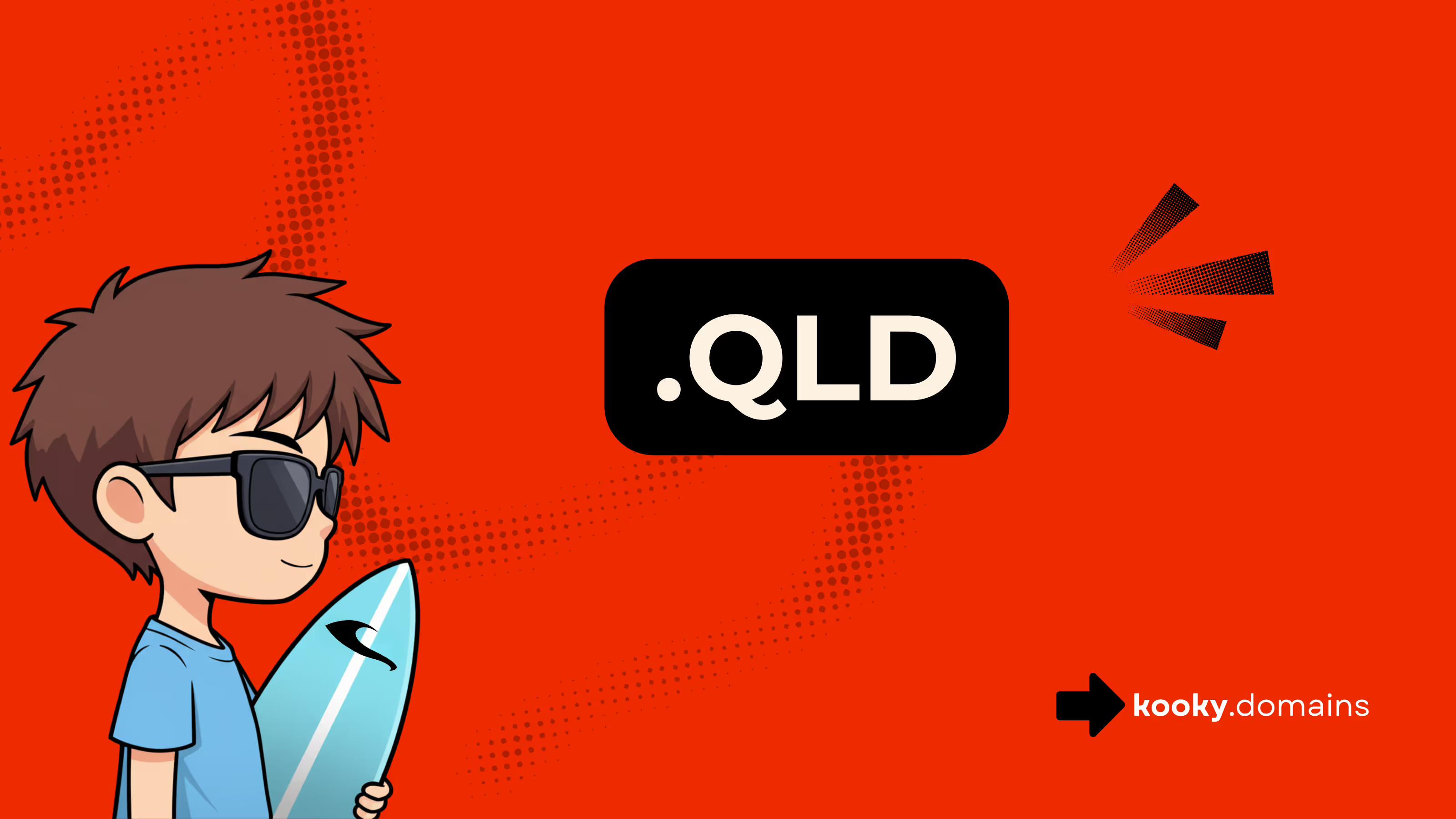
Even superyacht owners can look a bit “mainland” next to someone who owns .qld. Not because a boat isn’t impressive, but because a rare, place-coded ending reads like a title. It feels like reef-to-rainforest aristocracy, a flag you can wear in public without saying a word.
To keep it simple, an onchain domain is a name recorded on a blockchain, held in a crypto wallet, and moved like a digital collectible. There’s no usual registrar account to reset, and no annual rent in the normal sense. You hold it, or you don’t.
One important detail upfront: this .qld is a Kooky onchain TLD powered by Freename, it’s not a government address, and it’s not the same thing as Queensland government domains. Think of it as an identity and branding system, not an official state service. This article covers what it is, what it signals, and how people use it as both a flex and a brand anchor.
In Kooky and Freename circles, .qld is presented as an onchain top-level domain (TLD). That means it’s not just one name like yourname.qld. It’s the ending itself, the namespace other names can sit under. Owning the ending is a different kind of power than owning a single address.
With traditional domains, you rent a name under someone else’s rules. Policies can change, renewals can lapse, and access depends on logins, registrars, and support tickets. With an onchain naming system, the record of ownership sits on a blockchain and control sits in your wallet.
That mental model matters. When people see .qld, they don’t read it like a normal web address. They read it like a badge. Short, geographic, and loaded with meaning, it suggests status before anyone clicks.
“Onchain” just means the ownership record lives on a blockchain. In practice, many onchain domains behave like NFTs: your wallet holds the token that proves control. If you can sign with the wallet, you can manage the name. If you transfer the token, you transfer the name.
Here’s the clean contrast with regular domains, without the drama:
That doesn’t make onchain “better” for every job. It makes it different. If you want a name that feels owned, not leased, onchain hits a nerve.
Queensland government sites can use endings like .qld.gov.au. That’s part of Australia’s regulated domain system. It carries formal trust signals and rules about who can register.
This .qld does not sit in that system. It’s a separate onchain naming network, so you shouldn’t treat it as an official Queensland mark, and you shouldn’t expect it to behave like a normal website address in every browser. That distinction matters because it sets the right expectation: identity and branding, not government authority.
A superyacht is loud in a marina. A rare, place-coded onchain ending is loud everywhere, in bios, profiles, intros, and receipts. It’s a symbol you can carry into any room because it travels with your identity.
The flex is social, but it’s also strategic. Scarcity is easy to explain, and even easier to spot. People don’t need a whitepaper to get it. There’s only one .qld owner in the same way there’s only one owner of a custom license plate number in a small town. You can feel the exclusivity in one glance.
And the vibe does a lot of work for you. Queensland imagery has range: outback distance, reef color, rainforest depth, big skies, and sun-baked confidence. When that’s baked into the ending of your name, your brand starts with a story.
Most domains compete at the “name” layer. You try to get a clean handle, it’s taken, you add a dash or extra word, then you hope people remember it.
With a TLD like .qld, the scarcity sits above the names. It’s the identity layer. That’s why it reads as elite. It’s the difference between owning an apartment and owning the building’s name on the front sign.
In real life, this shows up in small moments. Someone drops a handle in a group chat, another person copies it, and the room gets messy. An onchain name can act like a signature people can check. When you keep using the same ending across touchpoints, the pattern becomes hard to fake.
.qld carries place energy, even for people who’ve never been to Queensland. It suggests heat, distance, and confidence. It also swings between luxury and grit without changing outfits.
A tourism brand can use .qld to hint at private charters and reef days. A rugged gear maker can use it to signal dust, work, and weekends away. An Aussie founder can use it as a shorthand for where they’re from, and what kind of builder they are. A Web3 community can use it as a banner that feels local, even when members are global.
The trick is that the ending does the framing. You don’t need to explain the whole brand in your bio if the domain already sets the scene.
If .qld only worked as a flex, it would get old fast. The better use is as a structure, one ending that can hold a whole set of names under it. In a Freename-style system, subdomains are the building blocks. They turn one rare thing into many useful things.
Think of it like owning a stamp. The stamp itself is rare, but the real impact comes from every letter you mark with it.
People tend to use .qld in four practical ways: as a personal identity, as a brand hub, as a community naming layer, and as a partner program that feels exclusive. You don’t need to do all four. The best setups pick one main job, then add two supporting names.
Subdomains are where a TLD stops being a trophy and starts being a toolkit. You can create names under .qld that are easy to read and hard to forget.
Picture simple examples like studio.qld for your main brand page, crew.qld for internal links, drops.qld for limited releases, or tickets.qld for event access. A founder might run press.qld for media, careers.qld for hires, and terms.qld for the boring but necessary stuff.
What makes this feel strong is the shared banner. Every name reinforces the same ending, and the ending reinforces the same story. It’s not a pile of random links, it’s a map with one north star.
Onchain domains are often used as memorable names for crypto wallets, profiles, and sign-ins where supported. Instead of pasting a long address, you share a name. Instead of juggling ten usernames, you show one identity.
Want one link that feels like a flag? That’s the emotional pitch, but there’s a practical edge too. Consistency lowers confusion. If your community sees the same onchain name across posts, payments, and profiles, fake accounts have a harder time blending in.
That doesn’t mean scams disappear. It means you give your audience a steady reference point. In public communities, that alone is worth a lot.
A TLD can also work like a business surface. In many naming platforms, the owner of a namespace can offer registrations under that ending, setting rules, supply, and pricing in the system’s tools.
The honest way to think about this is simple: if people want names under your banner, you can charge for them. Some platforms also promote revenue sharing on registrations or secondary sales, but the exact terms vary by platform and can change, so it’s smart to confirm the current rules in the official docs before you build a plan around it.
Even without heavy monetization, offering a small set of curated subdomains can create value. A tight roster of member names can feel like a club, not a coupon.
If you have to explain your domain for five minutes, you lose the magic. The goal is one sentence, then a link people can click, then proof that you use it everywhere.
Positioning also matters because .qld can be misunderstood. Some people may assume it’s a government site. Others may think it’s a normal web domain that works in every browser. Your job is to be clear, calm, and confident, so curiosity turns into trust.
A good rule is to lead with what it does, not how it works. Most people don’t care about blockchains, they care about what the name unlocks.
Here are a few human ways to say it in conversation, without turning into a tech pitch.
You can say you “own .qld onchain,” and it’s your identity ending for links and Web3 profiles. You can say it’s “a blockchain-based naming ending,” and you use subdomains to run campaigns and community pages. You can say it’s “like owning the sign above the door,” then point to the names underneath.
You can also keep it even simpler: it’s your home base name, it’s held in your wallet, and it’s the same wherever you show up. If someone asks why, you can answer with vibe and use in the same breath: it’s Queensland-coded, and it keeps your brand in one banner.
The best part is that you don’t need people to fully get it right away. You only need them to remember it.
Clarity is your first safety feature. Don’t hint that it’s an official Queensland government domain, and don’t design pages that mimic government branding. If you want long-term trust, be direct about what it is: an onchain name used for identity and community.
A few habits help protect the value:
Keep one clear landing page that explains what visitors can do there. Use consistent naming across social profiles so the pattern becomes familiar. Treat your wallet like the keys to a building, use strong security, and avoid sharing signing requests you don’t understand.
Most of all, don’t use a rare ending to run short cons. People remember the ending, and reputation sticks to it.
.qld works because it carries two weights at once: status and utility. It reads like a crown, but it can also act like a naming system you build on, with subdomains that keep your brand and community under one banner. Used well, it feels like reef-to-rainforest aristocracy, bold, sunny, and hard to copy.
Decide what your kingdom would include, your personal identity, your brand hub, or a community roster, then commit to using .qld everywhere people might look for you. When your name shows up the same way in every place that matters, recognition stops being luck and starts being design.