.svg)
.svg)
Discover .etournament
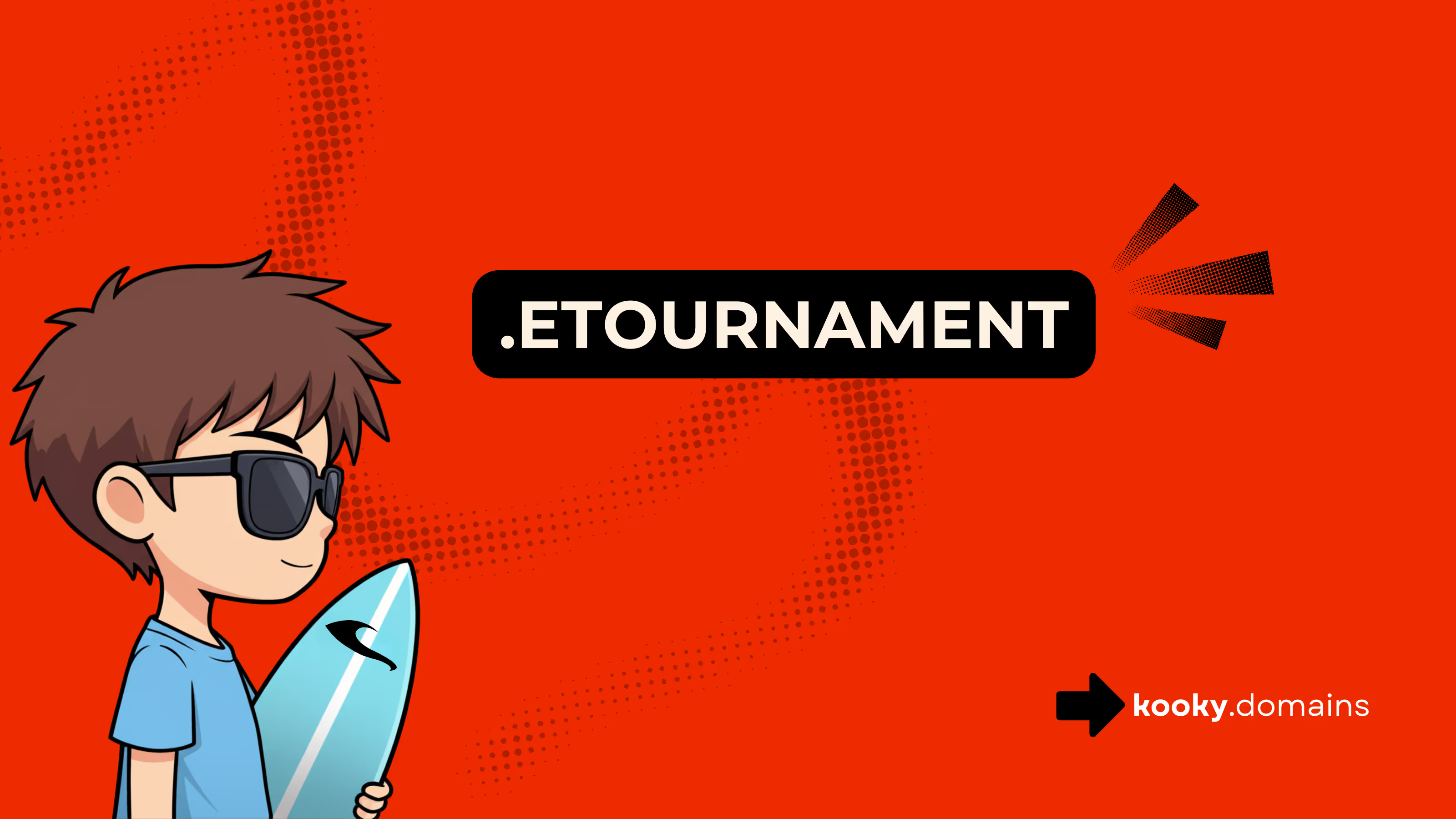
ETOURNAMENT. Picture that word lit up like a stadium sign, hanging above a bracket, a stream, and a prize pool that spans time zones.
Now here’s the twist: when people say “Own Etournament Forever,” they’re usually not talking about renting a normal web domain. They mean owning “etournament” as an onchain digital asset, closer to an NFT-style name than a traditional DNS address. Instead of renewals and registrars, ownership is recorded on a blockchain and held in your wallet.
But what does “forever” actually mean in practice, and what doesn’t it mean? And if you’re a tournament organizer, team, creator, or sponsor, what would you even do with a name like this beyond hype?
This guide breaks down the value, real-world uses, how buying typically works for onchain domains, and how to protect the asset so “forever” doesn’t turn into “lost.”
“Forever” in onchain terms usually means no yearly renewals. You pay once to mint or buy the name, then ownership sits in your wallet address until you transfer it. It’s more like owning a collectible with utility than renting a spot in a registrar’s database.
That’s a different model from traditional DNS domains (.com, .gg, .io). With DNS, you rent the right to use a name through a registrar, renew it on a schedule, and accept that policies, disputes, or account problems can put your domain at risk. You can still build a great brand on DNS, but you don’t truly hold the asset the same way you hold crypto or NFTs.
It’s also important to be honest about the limits. “Forever” does not mean risk-free. You can lose an onchain name if you lose your keys, approve a malicious transaction, or get tricked into transferring it. There’s also market risk. A premium word can hold value, or it can cool off if attention shifts.
One more reality check: public sources don’t confirm .etournament as a recognized DNS extension, and they also don’t confirm it as a widely listed onchain extension available to buy right now. So treat any listing you see as something you should verify carefully on official channels before sending funds.
If you’re looking at a listing that describes .etournament as a Kooky onchain domain, owned by Kooky and powered by Freename, “powered by” generally means the underlying minting tech and management tools come from that provider (how names are issued, how records are set, and where resolution may work). If you can’t confirm those details directly from official project pages and verified marketplace listings, don’t guess.
Think of the blockchain record as a title deed. The “owner” is not a username and password on a website, it’s the wallet address that holds the asset.
A wallet (like MetaMask) has an address, which is a public identifier, and private keys, which are the secret that proves you control it. If the onchain domain is in that wallet, you control it. You can hold it, transfer it, or sometimes set records on it (like where it points, or what wallet it represents).
That portability is the point. Your ownership isn’t tied to one registrar account. It travels with your wallet.
Onchain domains tend to feel like freedom because they remove some of the usual friction. The biggest differences are simple:
The tradeoffs are just as real. Private keys are unforgiving, scams are common, and a single bad signature can move the asset instantly. “Forever” means you’re the final line of defense.
Some names need explaining. “Etournament” doesn’t. It’s short, global, and tied directly to competition. Even if someone has never heard of your org, they can guess what the destination is about in one second.
That clarity is a big deal in esports because attention is scattered. Fans jump from TikTok to Twitch to Discord, and they don’t want a puzzle. A clean name also helps when your event grows beyond one title or one region. “Etournament” still fits whether you’re running mobile brackets, FPS qualifiers, or creator showdowns.
There’s also a practical branding truth: 11 letters can beat 30. Long brand names get shortened by fans anyway. If your official name is hard to say on stream, people will rename you in chat. A simple word reduces that drift.
And for buyers who care about business outcomes, a premium generic term can support different paths:
None of that requires hype. It’s the same logic as good signage. If the sign is clear, more people walk in.
The best esports names are easy to repeat. They sound good out loud, and they look clean in overlays. Imagine a caster saying, “Brackets and rules are at etournament,” or a creator dropping it mid-stream without breaking flow. That’s the advantage: it doesn’t feel like a coupon code.
A simple name can also reduce confusion with fake accounts. If your identity is consistent across stream panels, social bios, sponsor decks, and ticket pages, it’s easier for fans to spot impostors. Brand recall isn’t only about marketing, it’s also a safety feature.
Esports runs on fast movement of money and perks. Prize payouts, sponsor fees, creator collabs, refunds, and community rewards all create moments where mistakes happen.
A human-readable onchain name can act like a payment handle, a consistent identity you can place on graphics, invoices, and event pages. Instead of pasting a long wallet address, you show a name people can recognize.
That matters when you’re paying across borders. Esports is global by default. Clear recipient naming can reduce errors, speed up approvals, and lower the “are we sending this to the right place?” stress that every organizer knows too well.
You don’t need every fan to be into crypto for an onchain name to be useful. The smart approach is to use it where it reduces friction now, then expand later if your audience asks for more.
Start with outcomes, not buzzwords. Does it make it easier to find the real event page? Does it reduce payment mistakes? Does it help sponsors trust you faster? Those are “today” benefits.
Here are practical ways organizers and teams use an onchain identity even when most fans never touch a wallet:
Prize pools are a trust test. Teams want to know payouts are real, sponsors want transparency, and creators want clean paperwork.
A readable onchain name can help standardize payouts and inbound payments, especially when multiple people are involved. Ever sent funds to the wrong address? It happens because wallet strings look the same at a glance. A readable name makes it easier to verify you’re paying the right recipient before you hit confirm.
Keep expectations realistic, though. Wallet and exchange support varies across naming systems and networks. Before you rely on an onchain name for payouts, test it with the wallets your partners use, confirm the exact network, and document the process for your staff.
Tournament info often gets scattered. Brackets on one platform, rules in a Google Doc, stream links in a tweet, results in Discord. Fans miss updates and then blame you for it.
Using a single memorable domain name as the “home base” solves that. It can point to a standard website, a link hub, an event platform page, or a decentralized site if that’s your style. The tech choice matters less than the habit: you always send people to the same place.
When your socials get noisy or an account gets limited, having a stable destination keeps the event from feeling fragile. It also makes sponsor placements cleaner because you can promise one URL that stays consistent across campaigns.
Esports scams are blunt. Fake ticket links, fake prize claims, fake “sponsor” DMs, and cloned Twitter accounts that look real for one day, long enough to steal money.
Onchain ownership can act as a public proof point because anyone can check who holds the asset. That doesn’t stop scams by itself, but it gives you a clear anchor to rally around.
Simple habits help more than fancy features:
When fans learn “this is the one real link,” scammers have a harder time.
Because public sources don’t confirm .etournament availability as a standard DNS extension or a widely documented onchain extension, the first step is verification. If a site claims to sell .etournament as a Kooky onchain domain powered by Freename, confirm you’re on the official, verified path before connecting a wallet.
Onchain purchases are not forgiving. If you buy from the wrong place, you don’t “reset your password.” You just lose funds or assets.
Below is a beginner-friendly flow that applies to most onchain domain purchases, plus security habits that protect the “forever” part.
If any step feels unclear, stop. A real project will still be there after you double-check.
Self-custody is powerful, but it rewards careful habits.
“Own Etournament Forever” is really about onchain ownership of a name, not renting a domain with renewals and gatekeepers. If .etournament is available through a legitimate onchain domain issuer, the upside is clear: more control, a stronger esports brand, simpler payments, and a public proof point when impostors show up.
The responsibility is just as clear: security is the cost of independence. Pick your top use case first, confirm the official purchase path, then set your records right away so fans and partners always know where the real event lives. Long-term trust in competitive gaming isn’t built by being loud, it’s built by being easy to verify.