.svg)
.svg)
Discover .ethicalhacker
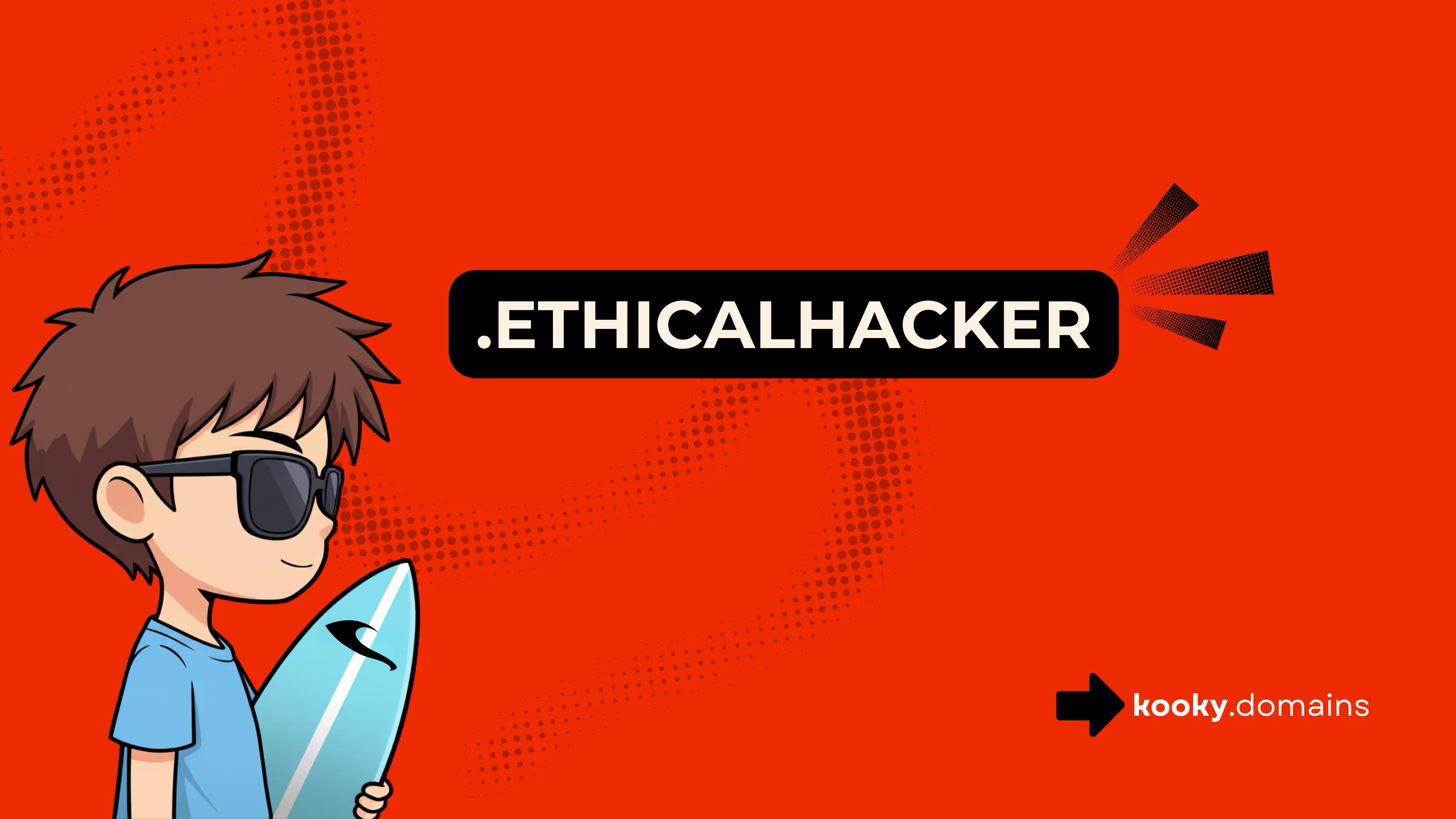
What if .ethicalhacker wasn’t a normal domain at all? Not a rented web address that expires, gets renewed, or slips out of your hands because a card failed. Instead, picture it as a permanent, onchain title you control, a name you hold like an asset, not a subscription.
“Ethical hacker” can sound edgy, but the meaning is simple. It’s a legal, permission-based security tester (a “white hat”) who looks for weaknesses, reports them, and helps teams fix issues before criminals find them. In a space full of fake profiles and copied handles, that label carries real weight.
That’s why owning ethicalhacker forever matters. It’s a rare, myth-sized handle that can follow you across wallets, apps, and profiles, with proof of ownership you can show anytime. This is not about hype, it’s about reputation, verifiable identity, and signaling trust when trust is in short supply.
A real ethical hacker doesn’t “hack whatever they want.” They test systems with permission, inside clear rules, then report what they found so it can be fixed. That one detail, permission, is the whole point. It’s the difference between being respected and being blocked.
When people see “ethical hacker,” they often think of practical outcomes, not slogans. Bug bounties, penetration tests, security reviews, and responsible disclosure all sit under that umbrella. A company wants to know, “Can this person find flaws without causing damage?” A community wants to know, “Will this person help protect users, or stir trouble?” The title signals you understand that line and choose the right side.
It also hints at temperament. Good security work takes patience and careful writing. You can find a serious bug, but if you can’t explain it cleanly, the fix might never ship. Ethical hackers earn respect by being useful, calm, and clear when the stakes are high.
Ethical hacking starts with consent. That means written permission, a defined scope (what you can test), and a safe way to report results. If you ever wonder why some people get praised for “hacking” and others get banned, scope is usually the answer.
Most teams recognize a few common paths:
Ethics is also about how you handle proof. You show enough evidence to confirm the issue, but you don’t dump sensitive data or publish steps that invite copycats. The best white hats can prove impact without putting users at risk.
Online, labels shape expectations in seconds. “ethicalhacker” reads like a badge. It attracts builders who care about security, and it warns scammers that you might spot their tricks.
At the same time, it’s a magnet for impersonation. In crypto and security circles, copied usernames and near-identical accounts are routine. A scammer doesn’t need your skill, they just need your vibe. They copy your name, your avatar, and your tone, then they DM someone who trusts you.
A stable identity helps reduce that confusion. When your name has a clear owner, strangers get a stronger signal about who is real, and who is just borrowing your reputation.
“Forever” can sound like marketing, so let’s keep it grounded. With an onchain domain-style name, ownership is recorded on a blockchain and controlled from your wallet. There’s no annual renewal cycle where a missed payment wipes you out. You hold the name like a tokenized asset, not like a rented slot.
That’s very different from traditional DNS domains. DNS is built around renewals, registrars, and rules that can change. You can build a brand for years, then lose it because a renewal failed or a third party stepped in. If you’ve ever had to fight for a username on a platform, you already know the feeling. It’s your identity, but you don’t fully own it.
Onchain ownership also gives you portability. Your name can move with you, even if your tools change. Wallets change, apps come and go, social networks shift, but an onchain name can stay the same anchor point.
This doesn’t mean you’re invincible. It means your ownership is easier to prove and harder to quietly rewrite.
A normal domain is like renting an apartment. You can decorate, but you keep paying, and a missed payment can cost you everything. An onchain name you own forever is closer to owning the deed.
In practical terms, you can:
The real win is not “number go up.” The real win is control. If your identity matters to your work, removing renewals removes a common failure point.
Onchain ownership is harder to seize or revoke than a platform account. A social profile can get locked, shadow-banned, or removed, and you might never get a human response. An onchain name does not depend on a single company’s admin panel.
Still, honesty matters. Apps can choose what they display, and marketplaces can set policies. “Can’t be taken away” does not mean “everyone must show it.” It means you keep the proof of ownership, and you can present that proof anywhere that supports it.
Your security habits still matter, too. If someone steals your wallet keys, they can steal what the wallet controls. If you want a forever name, you need forever-grade wallet hygiene: hardware wallet, strong backups, and no rushed signing.
Owning ethicalhacker forever is only step one. Step two is making it the anchor that ties your identity together. Think of it like a lighthouse. People might meet you on X, GitHub, Discord, or a forum, but the lighthouse is the place they can always check.
This matters because impersonation usually wins through speed. The scammer shows up first, looks convincing, and pushes the target to act fast. Your job is to make verification easy, even for someone who has never met you.
You do that by creating one source of truth, then linking everything back to it. The goal is not to look famous. The goal is to look consistent over time, because consistency is hard to fake for long.
Start with the places where trust is built and checked quickly: your social bios, your developer profiles, and your public landing page.
Use ethicalhacker as the handle or the badge, then point outward:
Then create one simple page that acts as your hub. It can be a lightweight landing page that lists your verified accounts, your contact method, and your security disclosure rules. If someone copies your username, how does a stranger know which one is you? They check the hub, then they check whether the other accounts link back to the same anchor.
Security work often starts with a short message: “Can you take a look?” That’s where identity matters most, because the other side is deciding whether you’re real, and whether paying you is safe.
A consistent onchain name helps in three ways:
First, it can make recognition easier across programs and communities, especially in crypto security where teams move fast and contributors are global.
Second, it can reduce payment mistakes. Human-readable wallet naming is a simple safety feature. It cuts the risk of sending funds to the wrong address after a copy-paste error.
Third, it supports long-term proof. When your handle stays the same across time, your past writeups, talks, and disclosures connect more cleanly to the same identity, even if you rotate wallets or change platforms.
A strong name raises expectations. That’s good, but it’s also a responsibility. If you call yourself ethicalhacker, people will assume you care about safety, consent, and clear reporting. They’ll also assume you can back up your claims with work.
The safest way to build that brand is to be boring in the right ways. Keep receipts. Write clear reports. Show learning in public. You don’t need to posture. Quiet competence travels far in security circles.
It also helps to be precise about what you do. “Security” is wide. Are you strong in web apps, smart contracts, cloud configs, or social engineering defenses? A narrow promise that you can keep beats a broad promise that falls apart under pressure.
Keep this lightweight, so you’ll actually maintain it:
This is the stuff that turns a cool handle into a trustworthy identity.
The quickest trust killers are usually social, not technical.
Vague claims are one. If every post sounds like “I’m elite,” people assume you’re hiding a lack of work. Toxic flexing is another. It makes teams think you’ll embarrass them instead of helping them fix issues.
Publishing exploit code without context can also backfire. Sometimes it’s valid research, but if it reads like a how-to for harm, you’ll lose serious contacts fast.
The biggest mistake is testing without permission. Even if you “meant well,” it’s still crossing a line. In security, trust is the product, and the name is just the label on the box.
Owning ethicalhacker forever is not about looking mysterious. It’s about taking a respected label and turning it into a durable identity you can prove, keep, and build on. When your name is onchain, there are no renewal fees to forget, and the ownership signal is simple to verify.
Kooky Domains offers onchain, permanent domain-style names with no renewal fees, owned by you, and powered by Freename. If ethicalhacker fits the work you do (or the work you’re committed to earning), take the next step: search the name on Kooky Domains, secure it if it’s available, then set it up as your public anchor across profiles, payments, and security workflows. Your reputation deserves a home that lasts.