.svg)
.svg)
Discover .brisbane
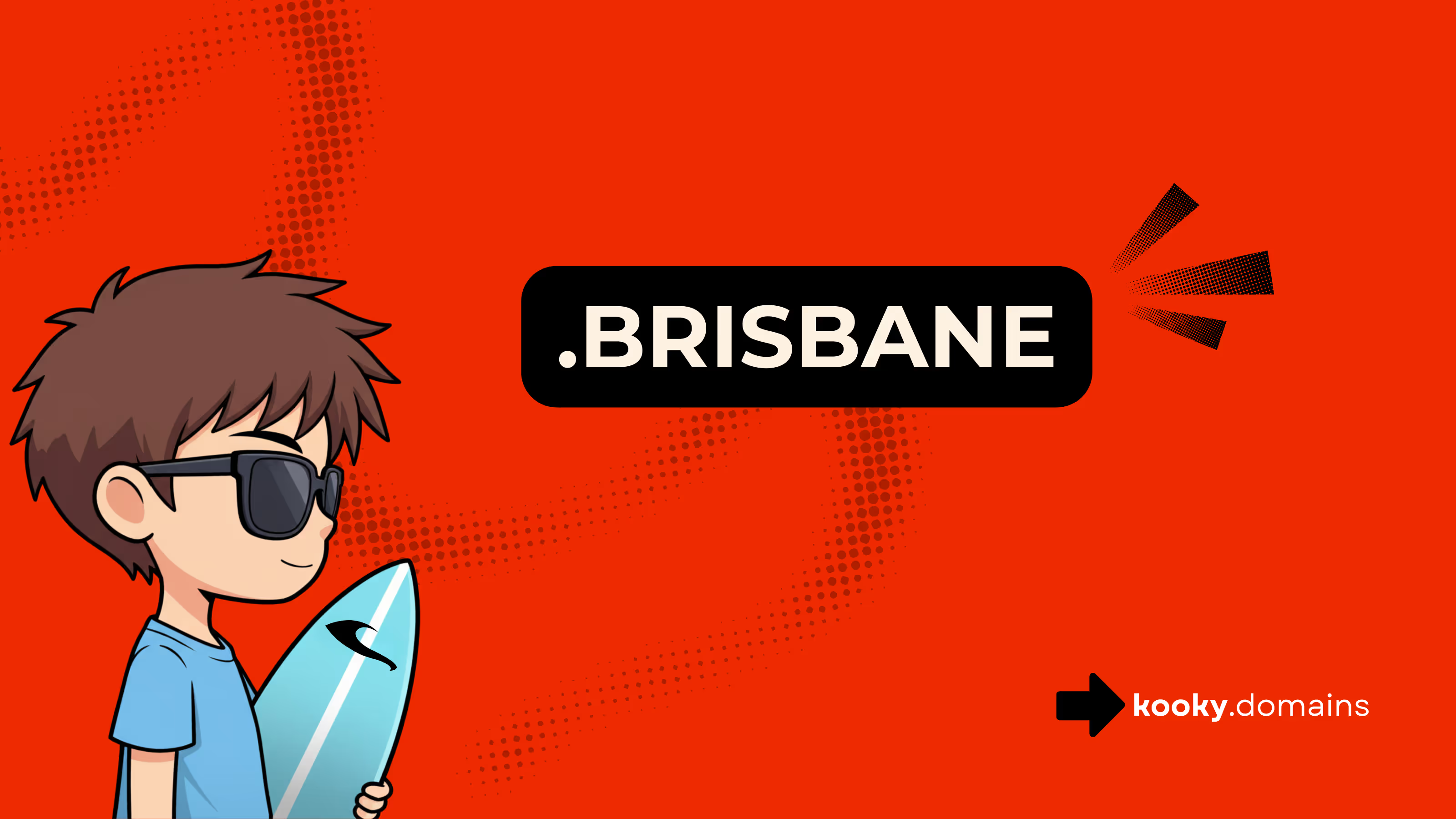
Brisbane used to be a place you lived, a team you backed, a line in your bio. Now it’s turning into something closer to a family crest. Brisbane is now a bloodline, not because anyone owns the city, but because the name itself can be owned, kept, and passed on.
That shift comes from onchain, domain-style names, the kind you hold like an asset in your wallet. With Kooky Domains (powered by Freename), the idea is simple: you aren’t renting a name with renewals and surprise policy changes. You buy it once, it sits in your wallet, and you control it as long as you control your keys.
City-name identity hits harder than a random handle because it already has meaning. “Brisbane” carries local pride, social proof, and instant context. If a clean version becomes scarce, speed decides who writes the story and who’s left watching, stuck adding extra words just to get close.
A bloodline is something you can protect, inherit, and show with pride. In this context, it’s a name that doesn’t disappear when a platform changes rules, when a subscription lapses, or when a username gets taken.
People often treat online identity like a rental. You build an audience on a handle, then one policy update later, you’re locked out, shadow-banned, or forced to rename. An onchain name flips that dynamic. It becomes property, not permission.
The “Brisbane” part adds weight because it’s not abstract. It’s a real signal that says where you’re from, what you stand for, or the community you want to be found by. That’s why the word “bloodline” lands. It suggests longevity. A name you can carry across apps, wallets, and networks over time, and one day hand to someone else without begging a support desk.
This isn’t gatekeeping a city. Nobody is claiming Brisbane the place. It’s about claiming a scarce label in a new identity layer, and scarcity changes behavior fast.
Brisbane already lives on shirts, bumper stickers, gym flags, and business signage. People put it in bios because it helps strangers place them in seconds. When that badge becomes onchain, it turns from “I say I’m Brisbane” into “I can prove I hold the name.”
That proof matters in small, daily ways. A creator can link a wallet to a consistent identity. A builder can ship under a stable name. A community host can post one handle and have it mean the same thing across time.
There’s also a quiet status element. If you’ve ever seen a clean, one-word name online, you felt it: it reads like a crown. Not loud, not cringe, just obvious. A city name can carry that same feel, because it already has history behind it.
Scarcity is easy to explain: there’s one “best” version of a name. Once it’s gone, it’s gone. When someone says, “Only the fastest claim the name,” they’re not being dramatic, they’re describing how first-claim systems work.
Latecomers fall into a regret loop. They start with the clean version, see it’s taken, then try small edits. They add “official,” then “hq,” then a number. Each compromise makes the name harder to remember and easier to spoof.
Speed isn’t about hype. It’s about avoiding a future where your identity is permanently stuck in second place, and you have to explain the extra letters every time you share it.
Owning an onchain name changes the tone of your online presence. It’s not just a label, it’s a handle you can keep even if you switch platforms, rebuild a brand, or change what you do for work.
With Kooky Domains, the pitch is permanence. These names are issued onchain and powered by Freename, which means ownership is tied to your wallet. If you hold the token, you hold the name. No renewals hanging over your head.
That permanence creates practical benefits for crypto-native users and for people who just want a stable identity:
None of this requires deep technical knowledge. If you’ve used a wallet before, you already understand the core idea: whoever controls the keys controls the asset.
Wallet addresses are accurate, but they’re not friendly. They’re hard to read, easy to mistype, and almost impossible to remember. A name fixes that. It becomes the public-facing identity you share, while the wallet address stays in the background.
People use onchain names in a few common ways:
A readable payment identity: you share a name, not a string of characters, which reduces copy-paste mistakes and builds trust fast.
A consistent profile handle: you can keep the same identity across multiple apps that support onchain naming, and even when exact integrations vary, the ownership layer stays the same.
A directory-style anchor: one name can point people to the right you, whether that’s a profile, a project page, or a verified set of links. When your identity is scattered across platforms, that single anchor is a relief.
The important part is staying honest about what any given name connects to. Features and integrations can differ by app, but ownership and transferability are the steady baseline.
A made-up username can work, but it has no built-in story. “Brisbane” does. It implies a place, a culture, and a set of references people already understand. That’s brand gravity, the kind you don’t have to explain.
Who benefits from a Brisbane onchain name?
Creators who want a memorable identity that fans can type without guessing.
Collectors who value scarce, clean names the way people value rare plates or short domains.
Event hosts and community builders who need one label that looks legit on posters, tickets, and social posts.
Local businesses stepping onchain, where a city tag can help customers feel instant familiarity.
Even if you’re not trying to “build a brand,” your name still shapes how people treat you. A clean, city-based identity often feels more trustworthy than a random mash of letters, because it looks like someone got there first and thought long-term.
The moment you decide you want a Brisbane onchain name, you face a fork in the road. Do you chase the flashiest version, or do you choose the version you can defend for years? That choice matters more than most people think, because once a name becomes part of your identity, changing it later is costly.
Recent public chatter around a “Brisbane Bloodline” theme on Kooky helped spotlight the idea of city-name scarcity, and it appears that the cleanest, most desirable variants can sell out quickly, leaving secondary markets as the only option. Even if you aren’t chasing that exact collectible, the lesson carries across all onchain naming markets: act like your name will still represent you when trends die.
A smart approach keeps you out of traps like overpaying for a name you can’t use, buying a confusing look-alike, or picking something that feels clever today and embarrassing later.
Start with the boring truth: short, clear names win. They’re easier to say out loud, easier to type, and harder to impersonate. If you’re thinking, “Should I add extra words to make it unique,” ask yourself the real question, will you enjoy repeating that extra word in every DM and every podcast intro, because you will.
Strong patterns tend to look like this:
Pure identity: a clean “brisbane” variant, if you can get it, because it’s the closest thing to owning the sign on the door.
Personal brand: brisbane plus your name or a clear tag, like brisbanealex or brisbanekim, not brisbane-xX-kimmyXx.
Project-first: a project name tied to the city, so it’s obvious what it is and who it’s for.
Community label: a name that can outlive one person, so the “bloodline” idea becomes real. If it can be passed to a future organizer without losing meaning, it’s built to last.
The best test is simple: picture the name printed on a hoodie, a banner, and a business card. If it still feels clean, you’re close.
Ownership doesn’t cancel responsibility. Before you buy or mint any Brisbane onchain name, do a fast risk scan. This isn’t legal advice, it’s common sense that keeps you from obvious mistakes.
Check for look-alikes. Small spelling swaps and letter tricks can create names that confuse buyers or followers. Confusion is bad for trust, and it can drag you into disputes you don’t want.
Avoid copying known brands. A name can be onchain and still create real-world problems if it impersonates a business or public figure. If your plan depends on people mistaking you for someone else, it’s not a plan, it’s a time bomb.
Think about storage early. If the name is permanent, your wallet habits need to be solid. Use a secure wallet setup, keep recovery info safe, and don’t treat your identity asset like a throwaway NFT you can replace later.
A good name should make your life simpler. If it adds stress, doubt, or constant explanations, it’s not the right buy.
Brisbane as a bloodline is a choice to own identity, not rent it. When a city name becomes an onchain asset, it stops being just a vibe in your bio and starts acting like a real badge you control, carry, and pass on.
The payoff is clear: status that doesn’t need shouting, clarity people remember, and control that doesn’t expire. If Brisbane means something to you, don’t wait for the clean version to disappear and force you into compromises. Go search for your Brisbane name on Kooky Domains, claim the strongest version you can, and lock it in as a permanent onchain asset with no renewals.